
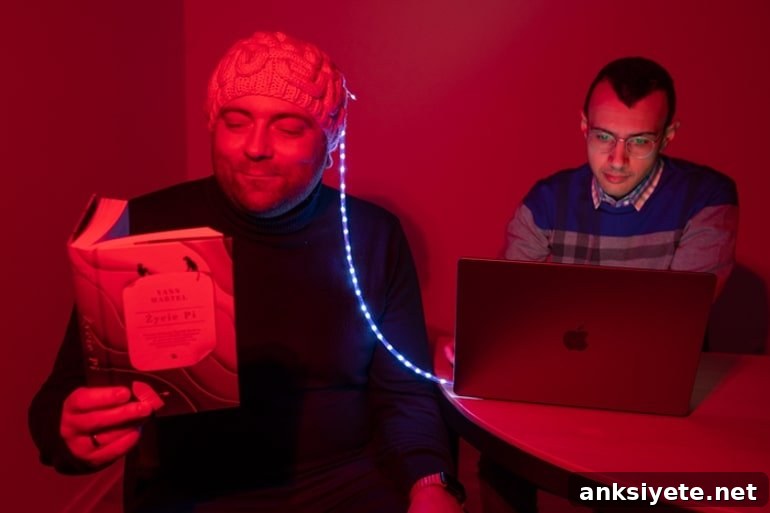
Summary: A newly developed technique called parallel near-infrared interferometric spectroscopy (πNIRS) markedly improves real‑time, noninvasive monitoring of cerebral blood flow across the brain.
Source: Institute of Physical Chemistry of the Polish Academy of Sciences
Monitoring adequate blood supply to the brain is essential both for preventing neurological disease and for guiding treatment. The parallel near‑infrared interferometric spectroscopy method, πNIRS, promises to make cerebral blood flow monitoring faster, more sensitive, and more practical for clinical use.
Blood circulation sustains every organ, and the brain is especially dependent on a continuous supply of oxygen and glucose. On average, about 50 ml/min/100 g of blood perfuses brain tissue—roughly 80–90 ml/min/100 g in gray matter and 20–30 ml/min/100 g in white matter. Inadequate blood flow and oxygen delivery cause neuronal death and can lead to stroke; in Poland alone stroke affects approximately 70,000 people annually. Reliable, noninvasive monitoring of cerebral blood flow (CBF) is therefore central to early diagnosis, prevention, and treatment of many brain disorders.
Existing imaging methods each have strengths and limitations. Functional magnetic resonance imaging (fMRI) is widely used to map local hemodynamic changes and neuronal activity with high spatial resolution, but it is expensive, immobile, and often impractical for young children or critically ill patients. Optical techniques offer portable, lower‑cost alternatives.
Functional near‑infrared spectroscopy (fNIRS) noninvasively measures regional brain oxygenation by detecting how chromophores in tissue absorb light in the 660–940 nm range and is frequently applied during patient monitoring and neurosurgery. Diffuse correlation spectroscopy (DCS) enables continuous monitoring of blood flow dynamics, typically using continuous‑wave (CW) lasers; however, many CW approaches cannot provide absolute flow values. Interferometric near‑infrared spectroscopy (iNIRS) expands capabilities by retrieving complex optical information, but conventional iNIRS has been limited by single‑channel detection and slow integration times, preventing capture of rapid hemodynamic changes that reflect neural activity.
Introducing parallel interferometric NIRS (πNIRS)
Researchers at the International Centre for Translational Eye Research (ICTER) adapted iNIRS to overcome these limitations by developing parallel interferometric near‑infrared spectroscopy (πNIRS), a multi‑channel approach that dramatically increases the speed and sensitivity of interferometric detection. Rather than relying on a single detection channel, πNIRS collects light with multi‑mode fibers and records interferometric signals across thousands of channels using an ultrafast two‑dimensional CMOS camera running at approximately 1 MHz frame rates. In this configuration, each camera pixel effectively serves as an independent detection channel, and signals from many pixels can be spatially averaged to reduce integration time while preserving interferometric amplitude and phase information.
By leveraging more than 8,000 parallel detection channels, the πNIRS prototype achieved integration times as short as about 10 milliseconds—on the order of 100 times faster than conventional iNIRS systems. This increased temporal resolution enables πNIRS to resolve rapid, stimulus‑evoked blood flow dynamics linked to neuronal activation and to detect subtle absorption changes at multiple spatial locations. Improved throughput and speed translate directly into enhanced detection sensitivity and more accurate monitoring of transient hemodynamic events.
- This advancement paves the way for fast, noninvasive continuous monitoring of human cerebral blood flow in vivo, which may improve diagnosis and treatment of brain diseases. Rapid detection of CBF changes could also accelerate development of noninvasive brain‑computer interfaces to assist people with disabilities and strengthen Polish expertise in diffusion optics—notes Dawid Borycki of ICTER.
Validation experiments confirmed πNIRS can monitor prefrontal cortex activity in vivo. The method stands to benefit from ongoing advances in LiDAR and ultrafast volumetric imaging, as well as falling costs for high‑speed CMOS sensors, enabling broader clinical and research deployment. πNIRS can measure blood flow and absorption changes from multiple spatial sites, improving diagnostic assessment of cerebral circulatory disorders and supporting prediction of treatment outcomes.
Funding: The International Centre for Translational Eye Research (MAB/2019/12) project is conducted by the Institute of Physical Chemistry, Polish Academy of Sciences within the International Research Agendas programme of the Foundation for Polish Science, co‑financed by the European Union through the European Regional Development Fund.
About this neurotech research news
Author: Marcin Bernatek
Source: Institute of Physical Chemistry of the Polish Academy of Sciences
Contact: Marcin Bernatek – Institute of Physical Chemistry of the Polish Academy of Sciences
Image: The image is credited to ICTER, Karol Karnowski, PhD
Original Research: Open access. “Continuous‑wave parallel interferometric near‑infrared spectroscopy (CW πNIRS) with a fast two‑dimensional camera” by Dawid Borycki et al., published in Biomedical Optics Express.
Abstract
Continuous‑wave parallel interferometric near‑infrared spectroscopy (CW πNIRS) with a fast two‑dimensional camera
Interferometric near‑infrared spectroscopy (iNIRS) is an optical method for noninvasive measurement of the brain’s optical and dynamic properties in vivo. Traditional iNIRS systems commonly use single‑mode fibers for light collection, which limits collected light throughput and forces relatively long integration times (on the order of one second). Those longer measurement windows prevent detection of rapid blood flow changes associated with neural activation.
To address this limitation, πNIRS uses multi‑mode fiber collection together with a high‑speed two‑dimensional camera so that each pixel functions as an individual iNIRS channel. By processing and spatially averaging signals across many pixels, πNIRS significantly reduces the required integration time while retaining interferometric access to amplitude and phase. With more than 8,000 parallel channels, the method enabled sensing of cerebral blood flow with roughly 10 ms integration time—about 100 times faster than conventional iNIRS.
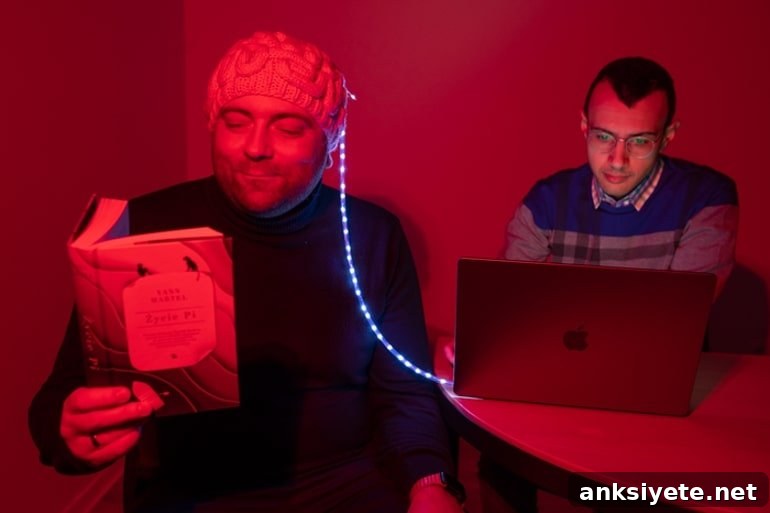
This report outlines the theoretical basis and practical implementations of πNIRS, describes a continuous‑wave (CW) πNIRS prototype validated in liquid phantoms, and presents in vivo demonstrations: monitoring pulsatile blood flow in a human forearm and recording prefrontal cortex activation as a subject read unfamiliar text, evidenced by measurable changes in forehead blood flow.