
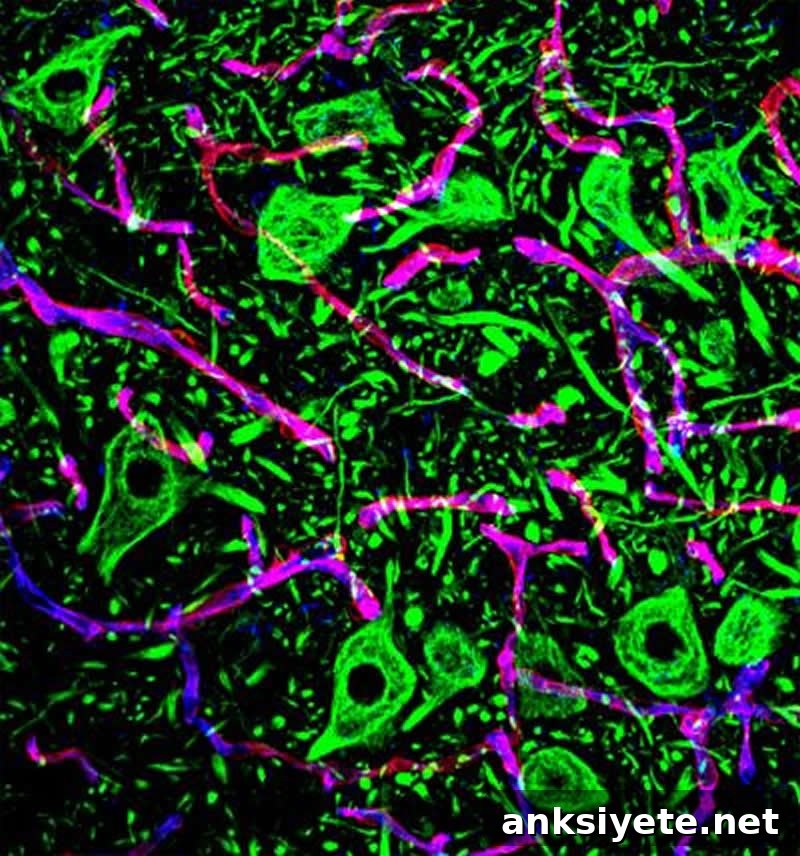
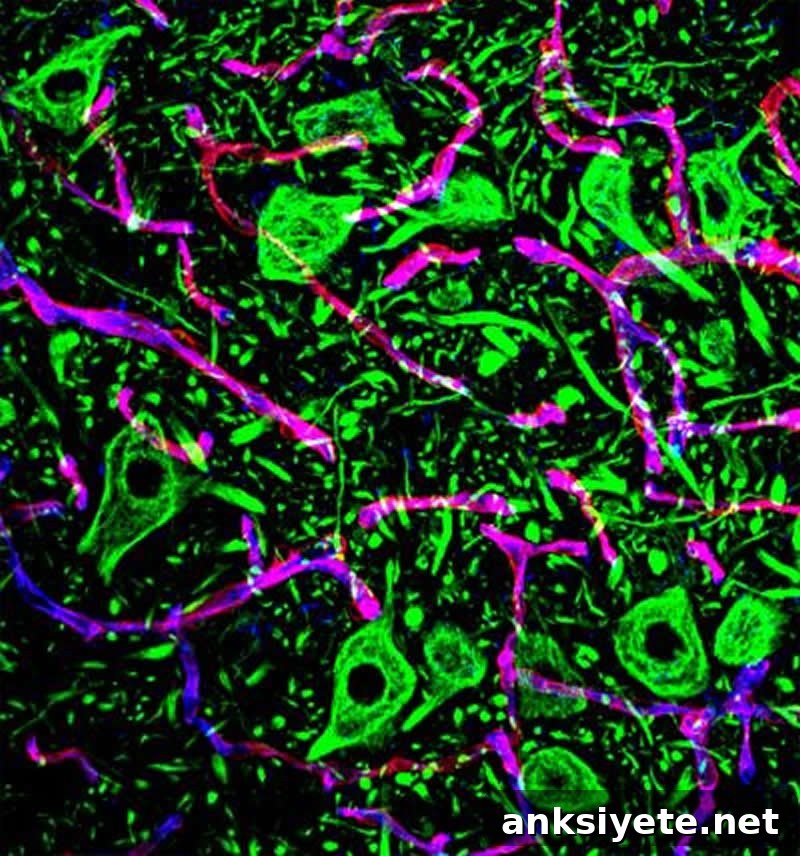
New research finds vascular damage in mice with ALS contributes to early development of the neurodegenerative disease, while repairing damage delays disease progression.
Neuroscientists at the Keck School of Medicine of USC have identified a vascular contribution to early amyotrophic lateral sclerosis (ALS) pathology in mice and shown that repairing that damage can delay motor neuron degeneration. Their results were published online March 3, 2014 in the Proceedings of the National Academy of Sciences (PNAS).
“Both people and transgenic rodent models of ALS show spontaneous breakdown of the blood–spinal cord barrier, but until now it was unclear how these microscopic lesions affect disease onset and progression,” said Berislav V. Zlokovic, M.D., Ph.D., director of the Zilkha Neurogenetic Institute and the study’s lead investigator. “In this work we demonstrate that early motor neuron dysfunction in mice correlates with the degree of blood–spinal cord barrier damage, and that restoring barrier integrity delays motor neuron degeneration. These findings point to a vascular mechanism that may be relevant to the human disease.”
The investigators tested an experimental therapeutic that appears to protect the blood–spinal cord barrier in ALS-model mice and to postpone motor neuron dysfunction and degeneration. The compound, an activated protein C analog known as 3K3A-APC, was developed by ZZ Biotech, a company spun out by the research team. Prior to its evaluation in these ALS models, 3K3A-APC had been studied for safety and efficacy in human stroke patients, which supports its translational potential.
ALS, commonly called Lou Gehrig’s disease, is a progressive neurodegenerative disorder that targets motor neurons — the nerve cells responsible for controlling voluntary muscles. As motor neurons deteriorate, patients experience muscle weakness, loss of mobility, and eventually difficulty breathing, speaking, swallowing and performing daily activities. The disease typically strikes adults between ages 40 and 70, with an average age of onset near 55. In the United States roughly 15 people are diagnosed with ALS each day and tens of thousands live with the condition at any given time.
Causes of ALS remain incompletely understood and there is no cure. Currently, the only U.S. Food and Drug Administration‑approved medication shown to modestly extend survival is riluzole, which prolongs life by a few months on average. Clinical care also relies on supportive therapies and assistive devices to manage symptoms and improve quality of life. Research into new targets and therapeutic strategies is essential to slow or stop disease progression.
This study highlights the role of the neurovascular unit — the complex of motor neurons, blood vessels, endothelial cells and pericytes — in ALS onset and progression in mice. The authors report that disrupting the vascular components of the spinal cord accelerates motor neuron injury, while treatments that preserve or restore vascular integrity can delay that injury. The work suggests that protecting the blood–spinal cord barrier may be a viable approach to slow ALS-related neurodegeneration, at least in preclinical models.
Notes about this research
The international research team included collaborators from The Scripps Research Institute, the University of Rochester Medical Center, West China Hospital (Sichuan University), and the Ludwig Institute for Cancer Research at the University of California, San Diego. Funding was provided by The ALS Association and the National Institutes of Health (grant numbers cited in the original publication).
Acknowledgments and sources
Article submission credit: Alison Trinidad, University of Southern California Health Sciences.
Source: University of Southern California Health Sciences press release. Image credit: Ethan A. Winkler and Berislav V. Zlokovic/USC; image adapted from the press release.
Original research: Winkler EA, Sengillo JD, Sagare AP, Zhao Z, Ma Q, Zuniga E, Wang Y, Zhong Z, Sullivan JS, Griffin JH, Cleveland DW, Zlokovic BV. “Blood–spinal cord barrier disruption contributes to early motor‑neuron degeneration in ALS‑model mice.” Proceedings of the National Academy of Sciences. Published online March 3, 2014.