
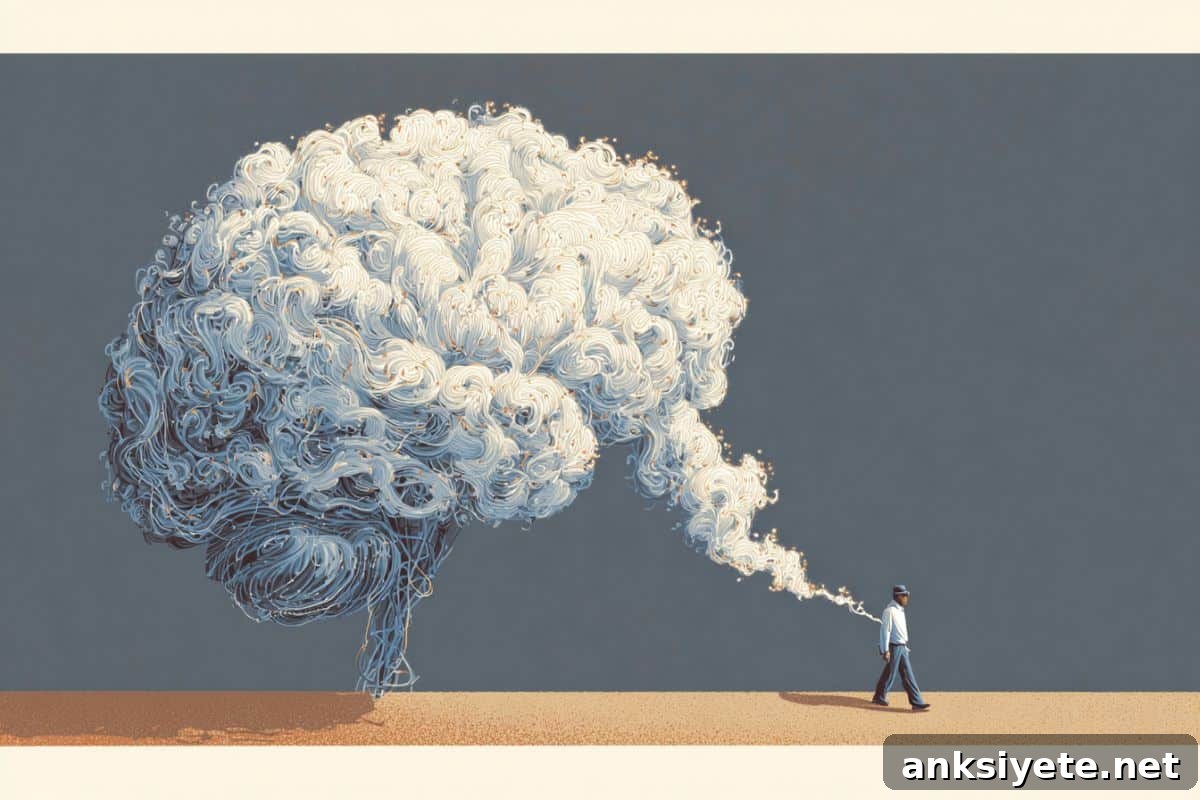
Summary: Quitting smoking often reflects a biological tug-of-war in the brain: an overactive reward system versus a weakened self-control network. A recent clinical trial shows that a noninvasive brain stimulation method, repetitive transcranial magnetic stimulation (rTMS), can tip that balance toward control and substantially reduce cigarette use.
By stimulating the brain’s capacity for restraint, researchers reduced participants’ cigarette consumption by an average of 11 cigarettes per day—outperforming strategies focused on suppressing craving-related brain activity.
Key Research Findings
- Targeting self-control: Stimulating the dorsolateral prefrontal cortex (DLPFC), the area linked to decision-making and impulse control, proved most effective.
- Top-down regulation: Strengthening the control system led to reduced activity in reward-related regions, such as the orbitofrontal cortex, indicating that enhanced executive control can naturally dampen craving circuits.
- Meaningful reduction: Participants receiving DLPFC stimulation cut smoking by more than 11 cigarettes per day on average—significantly more than those receiving sham treatment or stimulation aimed at the reward centers.
- Biological corroboration: Reduced self-reported craving and lower carbon monoxide measures aligned with the declines in cigarette consumption.
- Personalized application: Researchers used brain imaging to precisely tailor magnetic pulses to each participant’s anatomy and brain activity.
Source: Medical University of South Carolina
For many smokers, quitting is less a failure of willpower than a reflection of competing brain systems.
A study reported in the Journal of Psychiatric Research tested whether rTMS—a noninvasive method that delivers targeted magnetic pulses to specific brain areas—could rebalance those systems. Scientists at MUSC Hollings Cancer Center applied rTMS to brain regions involved in self-control and reward, then measured smoking behavior and brain activity.
A brain-based approach to a persistent problem
Tobacco smoking remains a leading preventable cause of illness and death. Even with medications and counseling, long-term cessation rates are low—fewer than one in ten smokers remain abstinent over the long term. Addiction reflects not only learned behavior but also altered brain circuitry: reward pathways become hyperactive while executive control weakens.
Lead investigator Xingbao Li, M.D., explained that these imbalances create a biological hurdle to quitting. The team designed a randomized, double-blind clinical trial to determine whether rTMS helps by enhancing top-down control or by directly suppressing reward-related activity.
Participants seeking treatment were randomly assigned to one of three groups: high-frequency excitatory rTMS over the left DLPFC to strengthen control, low-frequency inhibitory rTMS over the left medial orbitofrontal cortex (mOFC) to dampen reward signaling, or a sham procedure that mimicked treatment without delivering active stimulation. Each person received 15 sessions over three weeks, and functional MRI guided where stimulation was applied for individualized targeting.
“This approach represents precision medicine for brain stimulation,” the researchers noted, emphasizing the use of imaging to find the optimal cortical target for each participant.
Helping the brain regain control
Outcomes were clear and striking. The group receiving 10 Hz stimulation to the left DLPFC reduced cigarettes per day by an average of more than 11—substantially greater than reductions in the mOFC-targeted and sham groups. Those in the DLPFC group also reported lower craving and showed decreases in carbon monoxide, a biological marker of smoking. These behavioral and biological effects persisted for at least one month after the treatment period.
By contrast, inhibiting the medial orbitofrontal cortex to suppress reward signals did not produce meaningful improvements in cigarette use, craving, or carbon monoxide levels.
Pre- and post-treatment brain scans illuminated the mechanism: DLPFC stimulation increased activity in prefrontal executive regions and decreased activity in reward-related areas, including the orbitofrontal cortex. Importantly, the extent of the brain activity shift correlated with the magnitude of smoking reduction—participants with greater increases in prefrontal activation tended to cut down more on cigarettes.
These findings suggest a top-down mechanism: boosting executive control allows the brain’s regulatory systems to suppress reward-driven urges, making it easier to resist smoking.
Implications for patients and treatment
The study’s results are clinically relevant, especially for people who cannot tolerate standard cessation medications or who relapse after multiple attempts. In particular, patients with cancer and other serious illnesses often continue to smoke despite the health risks; a brain-based tool that strengthens self-control could be an important complement to existing counseling and pharmacotherapy.
At MUSC Hollings Cancer Center, tobacco treatment services already combine counseling, medications, and behavioral support. rTMS could become an additional option that targets the neural circuitry underlying addiction rather than only addressing symptoms.
This trial was relatively small and not powered to establish definitive quit rates, but it identified which rTMS strategy appears most promising. Larger and longer trials are underway to confirm durability and to refine treatment protocols.
As Dr. Li summarized: the study compared approaches and identified a clear winner—strengthening prefrontal control—to guide future research and clinical development.
Frequently asked questions
A: Strengthening the brain’s control center (the DLPFC) helps it suppress reward-driven impulses. In practice, empowering executive control appears to be more effective than attempting to silence craving centers directly, because a stronger control system regulates reward circuits naturally.
A: No. rTMS is noninvasive and uses magnetic pulses like those used in MRI equipment to stimulate neurons. It does not require anesthesia and is not the same as electroconvulsive therapy, which involves generalized seizures and anesthesia.
A: rTMS is approved for certain conditions such as depression and is used in some smoking cessation protocols, but the precision, fMRI-guided approach tested in this trial is still being validated in larger studies to confirm long-term quit rates and optimal treatment schedules.
Editorial notes
- This article was edited by a Neuroscience News editor.
- The journal paper was reviewed in full by our staff.
- Additional contextual information was added by the editorial team.
About this brain stimulation and addiction research report
Author: Leslie Cantu
Source: Medical University of South Carolina
Contact: Leslie Cantu, Medical University of South Carolina
Image: Image credit: Neuroscience News
Original research: Open access. “DLPFC rTMS is more effective than sham or orbitofrontal stimulation for smoking cessation and alters frontal brain activity: A double-blind, sham-controlled randomized clinical trial” by Xingbao Li et al. Journal of Psychiatric Research. DOI: 10.1016/j.jpsychires.2026.02.053
Abstract
Title: DLPFC rTMS is more effective than sham or orbitofrontal stimulation for smoking cessation and alters frontal brain activity: A double-blind, sham-controlled randomized clinical trial
Objective
Repetitive transcranial magnetic stimulation (rTMS) shows promise for helping people stop smoking, but the neural mechanisms remain unclear. This study tested whether rTMS reduces smoking by improving executive control or by suppressing reward-related brain activity by comparing excitatory stimulation of the DLPFC with inhibitory stimulation of the medial orbitofrontal cortex (mOFC).
Methods
In a double-blind, sham-controlled trial, treatment-seeking adults with tobacco use disorder were randomized to 15 sessions of individualized, fMRI-guided rTMS: sham rTMS; excitatory 10 Hz rTMS over the left DLPFC (3,000 pulses per session); or inhibitory 1 Hz rTMS over the left mOFC (900 pulses per session). fMRI scans were obtained before and after the treatment course. Primary outcomes were changes in cigarettes per day (CPD) and BOLD activity.
Results
Thirty-five of 46 participants completed the study (sham = 9; 10 Hz L-DLPFC = 12; 1 Hz L-mOFC = 14). The 10 Hz L-DLPFC group showed a greater reduction in CPD than the other groups (−11.14 vs. −4.92 and −6.43; p < 0.0001). DLPFC stimulation increased prefrontal activity and decreased orbitofrontal activity, and the magnitude of CPD reduction correlated with increased DLPFC activation.
Conclusions
Enhancing executive control via 10 Hz rTMS over the left DLPFC produced larger reductions in smoking than attempting to suppress reward circuitry via 1 Hz rTMS over the left mOFC. The results suggest that strengthening prefrontal regulation of reward processing is a key mechanism by which rTMS supports smoking reduction.
Trial registration
clinicaltrials.gov Identifier: NCT04903028.