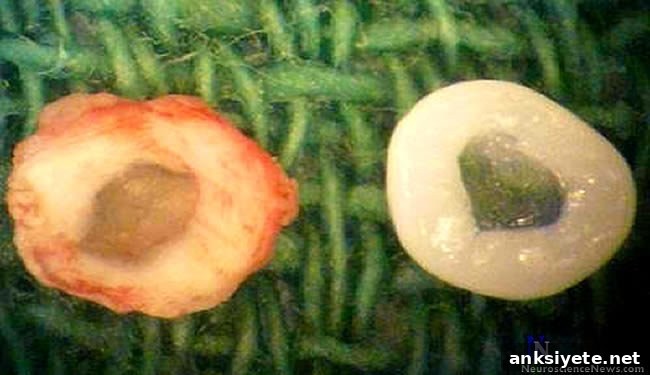
Each year, millions of people worldwide experience chronic lower back and neck pain. To address that widespread problem, biomedical engineers at Cornell University in Ithaca and neurosurgeons at Weill Cornell Medical College in New York City have developed a biologically based spinal implant that may one day offer a safer, more natural option for patients with damaged intervertebral discs.
Led by Lawrence Bonassar, Ph.D., associate professor of biomedical and mechanical engineering at Cornell, together with Roger Härtl, M.D., associate professor of neurosurgery at Weill Cornell Medical College and chief of spinal surgery at NewYork-Presbyterian/Weill Cornell Medical Center, the team created tissue-engineered spinal discs that have been successfully implanted and evaluated in animal models.
The research team also included Robby Bowles (Cornell Ph.D. ’11) and Harry Gebhard, M.D., from Weill Cornell Medical College. Their findings were published in 2011 in the Proceedings of the National Academy of Sciences.
How the bioengineered discs work
Natural intervertebral discs have a layered structure: a tough outer ring called the annulus fibrosus surrounds a softer, gel-like core known as the nucleus pulposus. The nucleus pressurizes under load and helps the spine bear weight, while the annulus gives structural support and contains the nucleus.
Bonassar’s lab engineered artificial discs that mimic these components using biologically compatible materials. The outer ring is constructed from collagen to recreate the annulus, while the central region is filled with an alginate hydrogel that replicates the gel-like nucleus. The implants are seeded with living cells that repopulate the structure and generate new extracellular matrix, allowing the construct to integrate with surrounding tissue over time.
Unlike current mechanical implants made of metal and plastic, which can wear, loosen, or produce debris, these tissue-engineered discs are designed to mature and strengthen as the seeded cells produce new tissue. In animal tests so far, the implants have maintained roughly 70–80 percent of their initial disc height, and their mechanical properties improved as the cells remodeled the construct in vivo.
Potential benefits over traditional treatments
Degenerative disc disease and herniated discs are major contributors to disability and chronic pain. Standard surgical approaches for severe cases often remove the damaged disc (discectomy) and fuse the adjacent vertebrae to stabilize the spine. While fusion can stop pain caused by nerve compression, it frequently limits spinal mobility and can alter spinal biomechanics—sometimes leading to reduced function or new problems at adjacent levels.
Artificial disc replacements composed of metal and plastic components, approved for some patients, aim to preserve motion but carry risks associated with mechanical wear, component migration, and particle debris. A biologically based disc that integrates with the vertebral endplates and remodels over time could offer important advantages: better integration with native tissue, reduced long-term mechanical wear, fewer foreign-body complications, and potentially more natural spinal biomechanics.
Roger Härtl notes that a biologically integrated implant could make surgery less invasive, reduce long-term side effects, and preserve mobility—important considerations for active patients and athletes.
Research progress and support
The collaboration began in 2006 with seed support shared between Ithaca and Weill Cornell, and the project has advanced into preclinical animal testing. The work has attracted several grants and awards, including funding from international and philanthropic sources that supported continued development and evaluation of the technology.
While these results are promising, the implants remain at the preclinical stage. Additional studies will be necessary to confirm safety, durability, and functional benefits in larger animal models and, ultimately, in human clinical trials before such implants could become a standard treatment option for degenerative disc disease.
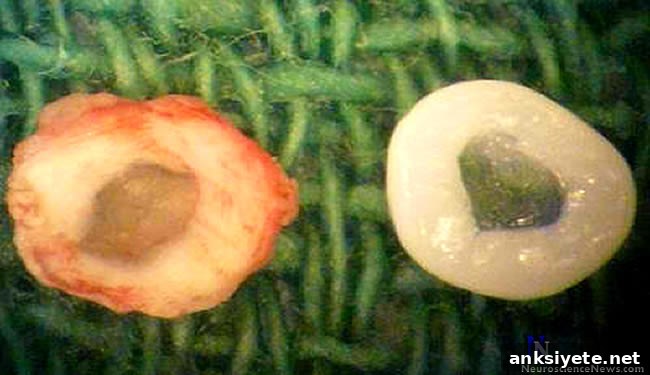
Notes about this research on back pain and spinal implants
Original article author: Anne Ju — Cornell University.
Press contacts: Syl Kacapyr and Blaine Friedlander — Cornell University.
Source: Cornell University press release (originally published August 2011).
Original scientific abstract: “Tissue-engineered intervertebral discs produce new matrix, maintain disc height, and restore biomechanical function to the rodent spine,” published in Proceedings of the National Academy of Sciences by Robby D. Bowles, Harry H. Gebhard, Roger Härtl, and Lawrence J. Bonassar.
Image credit: Bonassar lab.