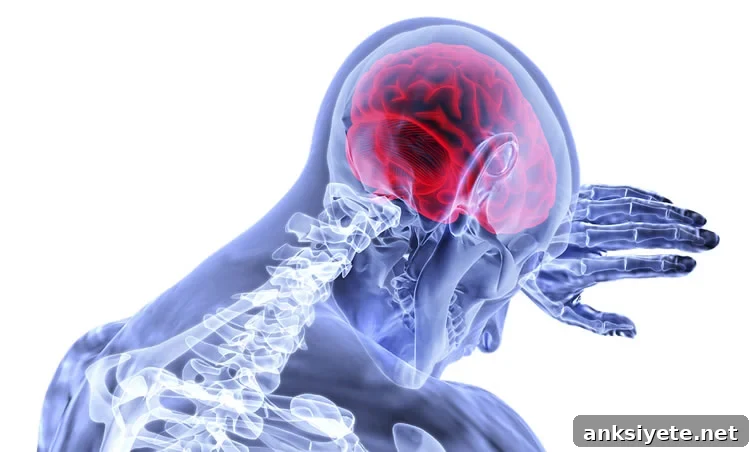
Summary: Elevated production of kynurenic acid has been linked to schizophrenia. New findings point to cell-specific treatment targets that could reduce kynurenic acid synthesis and ease symptoms of the disorder.
Source: Macquarie University
A study published in Molecular Psychiatry has uncovered inflammation-related biochemical changes in schizophrenia that disrupt normal neuronal communication. For the first time, researchers present direct evidence of increased kynurenic acid production in the brain — a metabolite that blocks a key glutamate receptor — and they identify cellular sources and pathways that could be targeted to improve therapies for people living with schizophrenia.
This research is a collaboration between Neuroscience Research Australia (NeuRA), UNSW Sydney and Macquarie University.
The investigators observed higher levels of kynurenic acid in the brains of individuals with schizophrenia, suggesting an overactive branch of tryptophan metabolism that is amplified by inflammation and detrimental to brain function.
“We found that inflammation plays an important role in the brain pathology of schizophrenia. However, we do not know which avenue of inflammation leads to the brain pathology of schizophrenia,” said Professor Cynthia Shannon Weickert, from NeuRA and UNSW Sydney.
These results build on previous work implicating immune cells in schizophrenia and add evidence that astrocytes — the brain’s supportive glial cells — also contribute by producing excess kynurenic acid. That dual perspective offers a clearer view of the molecular and cellular mechanisms by which neuroinflammation can harm the brain.
In normal metabolism, the amino acid tryptophan is a precursor for serotonin, but when the immune system is activated, tryptophan is diverted into the kynurenine pathway. Kynurenine can be metabolized toward quinolinic acid or kynurenic acid; the current study narrows the problem in schizophrenia to elevated kynurenic acid. Astrocytes appear to be the main source of this increase, producing more of the enzyme that converts kynurenine into kynurenic acid.
Kynurenic acid serves a physiological role by protecting neurons from overexcitation through blockade of the N-methyl-D-aspartate receptor (NMDAR). However, excessive NMDAR inhibition is linked to psychotic symptoms, so too much kynurenic acid may contribute to the cognitive and clinical features of schizophrenia.
“We have pinpointed the source of the problem,” said Professor Gilles Guillemin of Macquarie University, a leading expert in tryptophan metabolism. “That understanding highlights a new, cell-specific target for treatments designed to lower kynurenic acid production. The next question is why people with schizophrenia express higher levels of the enzyme that makes kynurenic acid.”
The study also found that blood measures of kynurenine-pathway metabolites reflect brain changes associated with schizophrenia. In particular, altered plasma kynurenine and tryptophan ratios correlated with reduced prefrontal cortex volume and impaired attention, indicating the pathway could yield clinically useful blood biomarkers to predict brain and cognitive outcomes.
Associate Professor Thomas Weickert from NeuRA explained: “Researchers have sought a reliable biomarker for schizophrenia for many years. Our data suggest that measuring plasma kynurenine and tryptophan may provide a rapid, minimally invasive indication of brain and cognitive status, and could help tailor treatments as new drugs targeting this pathway are developed.”
Dr. Edwin Lim from Macquarie University’s Department of Biomedical Sciences urged caution: while reducing elevated kynurenic acid appears promising, lowering it too far may remove its protective effects. “Too much kynurenic acid is clearly harmful in schizophrenia, but too little risks exposing neurons to excitotoxic damage,” he said. Establishing population baselines will be essential before introducing biomarker-guided treatments.
“This study contributes important new pieces to the complex puzzle of schizophrenia,” said Professor Peter Schofield AO, CEO of NeuRA. “These findings can guide the development of novel medications aimed at the specific cellular and molecular causes of the disorder.”
The research emphasizes both mechanistic insight and translational potential. By linking increased kynurenic acid production to astrocyte enzyme expression and showing that peripheral blood markers mirror brain alterations, the study opens avenues for more precise diagnostics and safer, targeted interventions. Before clinical application, larger studies are needed to determine safe therapeutic windows and to validate blood biomarker thresholds across diverse populations.
Source:
Macquarie University
Media Contacts:
Gilles Guillemin – Macquarie University
Image Source:
The image is in the public domain.
Original Research: Open access
“Dysregulation of kynurenine metabolism is related to proinflammatory cytokines, attention, and prefrontal cortex volume in schizophrenia” — Jochen Kindler, Chai K. Lim, Cynthia Shannon Weickert, Danny Boerrigter, Cherrie Galletly, Dennis Liu, Kelly R. Jacobs, Ryan Balzan, Jason Bruggemann, Maryanne O’Donnell, Rhoshel Lenroot, Gilles J. Guillemin & Thomas W. Weickert. Molecular Psychiatry (2019), DOI: 10.1038/s41380-019-0401-9.
Abstract
The kynurenine pathway (KP) connects immune activation to neurotransmitter signaling by metabolizing tryptophan. Kynurenic acid (KYNA), a KP metabolite and an NMDAR antagonist, is elevated in the brains of people with schizophrenia. This study assessed: (1) KP enzyme mRNA in brain tissue, (2) brain KP metabolite levels, and (3) plasma KP metabolites, comparing schizophrenia and control groups stratified by proinflammatory cytokine expression. Two independent postmortem brain cohorts (71 patients with schizophrenia, 72 controls) and a separate clinical cohort (96 patients with schizophrenia, 81 controls) were analyzed for KP markers, cognition, and brain volumes. In the prefrontal cortex of the high-cytokine schizophrenia subgroup, the kynurenine/tryptophan ratio, KYNA levels, and mRNA for tryptophan dioxygenase (TDO) and kynurenine aminotransferases (KAT I/II) were significantly increased. KAT mRNA correlated with glial fibrillary acidic protein mRNA, implicating astrocytes. In plasma, the high-cytokine schizophrenia subgroup showed an elevated KYN/TRP ratio that correlated inversely with attention and dorsolateral prefrontal cortex volume. These findings support a role for inflammation in a subgroup of patients with schizophrenia and propose a molecular route by which proinflammatory cytokines might shift peripheral TRP to KYN and, through increased astrocytic KAT expression, elevate KYNA in the brain, contributing to prefrontal volume loss and attentional deficits.