
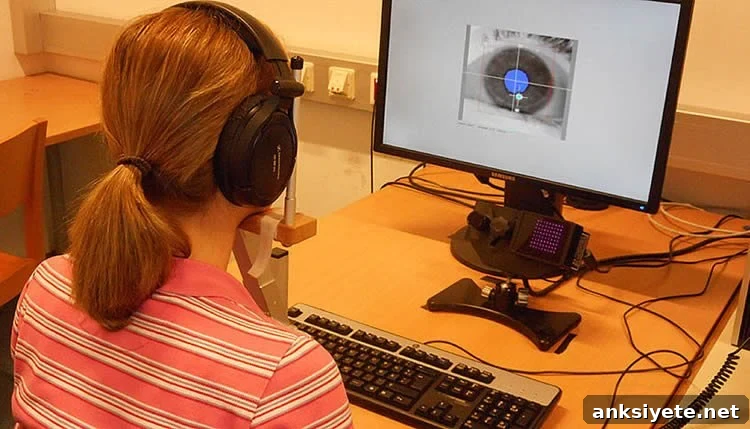
When people listen to music, their emotional responses are reflected in measurable changes in pupil size. Researchers at the University of Vienna and the University of Innsbruck in Austria were the first to demonstrate that both the emotional content of music and listeners’ personal involvement with music influence pupil dilation. Published in the journal Frontiers in Human Neuroscience, this study shows that tracking pupil size offers an objective way to probe emotional reactions to music.
Pupil size normally adjusts to ambient light—contracting in bright conditions and dilating in low light—but it is also sensitive to cognitive and emotional states. Thoughts, mental effort, and emotions can modulate pupil diameter: for example, pupils dilate during intense mental calculations or in response to emotionally charged images. Sounds and voices with high emotional arousal similarly produce larger pupil dilations than neutral background noises.
Despite music’s well-known capacity to evoke strong emotions, systematic investigation of music-induced pupil responses had been limited. To address this gap, a research team led by Bruno Gingras (University of Innsbruck), in collaboration with Manuela Marin and Estela Puig-Waldmüller (University of Vienna) and W. Tecumseh Fitch, measured pupillary reactions to short musical excerpts from the Romantic era, a period noted for expressive and emotionally intense compositions.
The study used 80 piano trio excerpts selected for stylistic consistency and normalized for loudness. Thirty participants provided subjective ratings for each excerpt on dimensions such as felt arousal, tension, pleasantness, and familiarity. A separate group of 30 participants, who were unaware of the study’s purpose, listened to the same excerpts while their pupil sizes were recorded using an eye tracker. After listening, these participants completed a brief questionnaire about their relationship to music and their impressions of the excerpts.
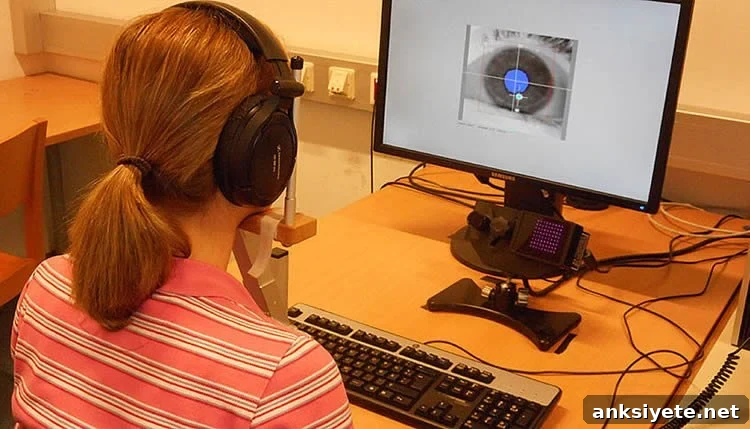
Analyses of the data revealed clear effects: musical excerpts rated as more arousing elicited larger pupil dilations than calm or relaxing excerpts. In addition, listeners who reported that music plays a significant role in their lives showed greater pupillary responses overall. The findings indicate that pupil size reflects a combination of bottom-up influences (the acoustic and emotional properties of the music) and top-down factors (individual listener characteristics and engagement).
Detailed statistical modeling uncovered interactions between emotional qualities and personal preferences. For instance, although excerpts rated as tense or highly arousing tended to produce larger dilations, this effect was less pronounced for excerpts that listeners particularly liked. The results also revealed a sex difference in this sample, with males showing larger dilations than females under the tested conditions. These outcomes highlight the complexity of physiological responses to music and suggest that both stimulus-driven arousal and subjective appreciation shape how pupils respond.
The authors emphasize that pupillometry offers a promising, objective measure of emotional engagement with music because pupil responses are largely involuntary and provide a window into preconscious processes. Unlike self-report measures, pupil size can reflect immediate autonomic and cognitive reactions without relying on deliberate reporting. This makes pupillometry a useful complement to behavioral and self-report methods in studies of music perception, emotion, and listener engagement.
While the current study focused on Romantic piano trio excerpts and a relatively small sample, the researchers call for further work that includes a broader range of musical genres, larger and more diverse participant groups, and more detailed measures of musical involvement. Such extensions would clarify how different musical features—tempo, harmony, melodic contour, and timbre—interact with listener traits to shape physiological responses. Potential applications include basic research into emotion and cognition, improved methods for evaluating musical engagement, and further exploration of music’s therapeutic and educational roles.
Source: Bruno Gingras – University of Vienna
Image Credit: The image is credited to Bruno Gingras
Original Research: Full open access research for “The eye is listening: Music-induced arousal and individual differences predict pupillary responses” by Bruno Gingras, Manuela M. Marin, Estela Puig-Waldmüller, and W. Tecumseh Fitch in Frontiers in Human Neuroscience. Published online November 10, 2015. DOI: 10.3389/fnhum.2015.00619
Abstract
The eye is listening: Music-induced arousal and individual differences predict pupillary responses
Pupillary responses are a well-established indicator of emotional arousal, but systematic investigation of these responses to music has been limited. In this study, short classical music excerpts were normalized for intensity and chosen for stylistic uniformity. Thirty participants supplied subjective ratings of felt arousal, tension, pleasantness, and familiarity for 80 excerpts. Pupillary responses to the same excerpts were measured in another thirty participants. The study examined listener-specific factors such as mood, stress reactivity, the self-reported role of music in life, liking for the excerpts, and subjective responses to music. Linear mixed model analyses showed that a greater role of music in life was associated with larger pupil dilations, and that excerpts rated as more arousing or tense predicted larger dilations. Interactions indicated that arousal and tension had reduced effects on pupil size when excerpts were strongly liked. Males showed larger dilations than females in this sample. Overall, the results point to a complex interplay between stimulus-driven and listener-driven influences on pupillary responses to music.