
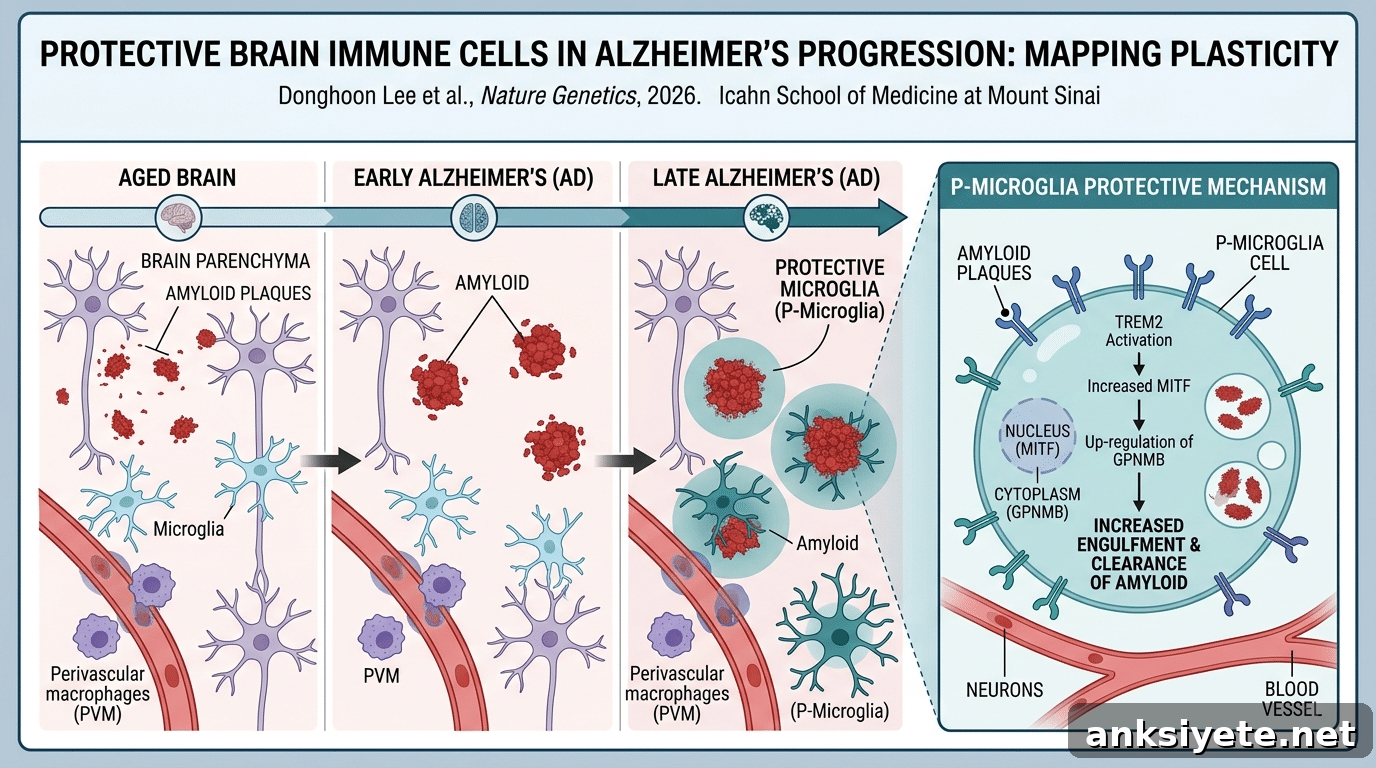
Summary: Researchers have mapped more than 830,000 immune cells of myeloid origin from human brain tissue and identified a disease-associated microglial subtype that expands as Alzheimer’s disease progresses. Driven by a TREM2-centered molecular signaling cascade that includes MITF and GPNMB, these microglia exhibit enhanced capacity to engulf and clear toxic material. The study offers a detailed cellular and molecular roadmap for therapies that aim to strengthen the brain’s own immune defenses rather than relying solely on approaches that target amyloid plaques.
Key Facts:
- Unmatched dataset: The analysis covered over 830,000 myeloid-origin immune cells collected from the prefrontal cortex of 1,607 donors, producing the most comprehensive reference to date of how brain immune populations change with aging and Alzheimer’s disease.
- Protective microglial population: A distinct, disease-associated microglial subtype becomes more prevalent as Alzheimer’s advances and appears to protect neural tissue by increasing phagocytic and clearance functions.
- Essential signaling pathway: The protective state of these microglia depends on a molecular pathway involving TREM2, MITF, and GPNMB, with experiments indicating that TREM2 signaling is necessary for their beneficial activity.
Source: Mount Sinai Hospital / Mount Sinai School of Medicine
Understanding how brain immune cells respond to aging and Alzheimer’s disease is critical for developing new interventions. A new, large-scale study led by researchers at the Icahn School of Medicine at Mount Sinai and published in Nature Genetics provides an unprecedented map of human brain myeloid cells, revealing cellular changes and molecular mechanisms that accompany disease progression.
The research team, led by Donghoon Lee, PhD, and Panos Roussos, MD, PhD, profiled more than 830,000 immune cells of myeloid origin, including resident microglia and perivascular macrophages, from the prefrontal cortex of 1,607 human donors. These donors represented a broad range of ages and stages of Alzheimer’s pathology, enabling the researchers to trace how specific immune cell populations shift during normal aging and in the context of neurodegeneration.
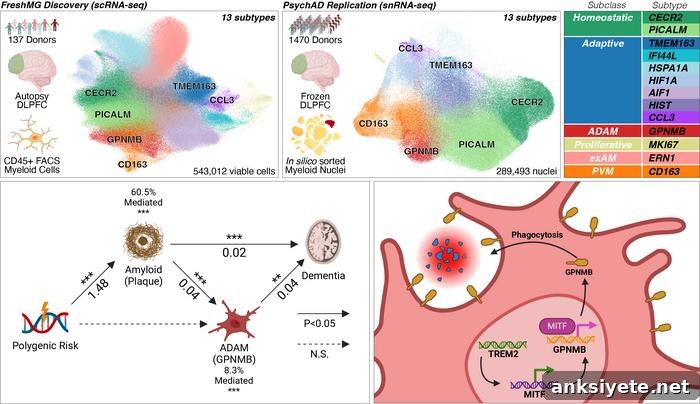
By profiling brain tissue at this scale, the investigators defined six major subclasses further divided into 13 distinct myeloid subtypes, documenting how each population adapts with age and across stages of Alzheimer’s disease. Among these, a disease-associated microglial subtype stood out for its increasing abundance in affected brains and for gene expression patterns consistent with enhanced debris clearance and protective activity.
Rather than promoting neurodegeneration, the disease-associated microglia identified in this study appear to mount a protective response: they upregulate pathways associated with phagocytosis and clearance of harmful protein aggregates and cellular debris. Crucially, the researchers traced the molecular support for this protective state to a signaling axis that depends on TREM2 and involves MITF and GPNMB. Laboratory experiments using both human tissue and mouse models demonstrated that the protective phenotype and its beneficial effects on brain health rely strictly on intact TREM2 signaling.
“Our study provides the clearest picture yet of how the brain’s immune cells adapt during aging and Alzheimer’s disease,” said Donghoon Lee, PhD, Assistant Professor of Genetics and Genomic Sciences and Psychiatry at Mount Sinai and first and corresponding author of the paper. “By identifying the specific immune cells that appear to protect the brain—and the molecular signals they rely on—we have uncovered potential new targets for therapies aimed at slowing Alzheimer’s disease progression.”
These findings also shed light on why variants in immune-related genes such as TREM2 and APOE are linked to altered Alzheimer’s risk: changes in genes that regulate microglial function can shift the balance between protective and damaging immune responses in the brain. The detailed cellular atlas and defined molecular pathway provided by this work offer a practical framework for future research and drug development that seeks to bolster endogenous immune mechanisms, for example by enhancing TREM2-dependent signaling to expand protective microglial states.
Editorial Notes:
- This article was edited by a Neuroscience News editor.
- Journal paper reviewed in full.
- Additional context added by our staff.
About this Alzheimer’s disease research news
Author: Elizabeth Dowling (Media Contact)
Source: The Mount Sinai Hospital / Mount Sinai School of Medicine
Contact: Elizabeth Dowling – The Mount Sinai Hospital / Mount Sinai School of Medicine
Image: Graphical abstract credit: Mount Sinai Health System
Original Research: Peer-reviewed publication “Plasticity of human microglia and brain perivascular macrophages in aging and Alzheimer’s disease” by Donghoon Lee, Panos Roussos, et al. Nature Genetics
DOI: 10.1038/s41588-026-02716-6