
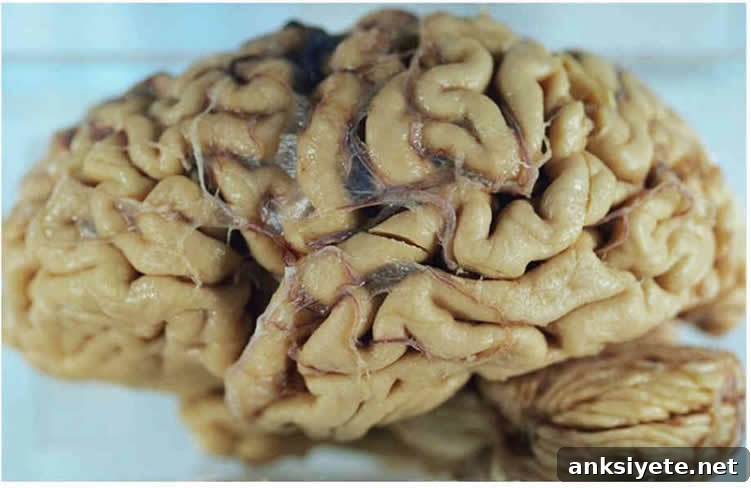
Summary: Researchers report that the brains of people with Alzheimer’s disease contain lower levels of the exercise-related hormone irisin. Increasing irisin in the brain may slow progression of the neurodegenerative condition.
Source: Queen’s University
Queen’s University researcher Fernanda De Felice (Psychiatry), together with collaborators from the Federal University of Rio de Janeiro, has identified an exercise-linked hormone that may slow the progression of Alzheimer’s disease. This work was published in Nature Medicine.
New findings reveal that irisin — a hormone whose production increases with physical activity — has an important role in the brain, and that people with Alzheimer’s disease have reduced levels of this molecule. The discovery brings researchers closer to developing treatments that mimic the beneficial effects of exercise by restoring irisin activity in the brain.
“Over the past several years, studies from research groups worldwide have shown that exercise can help prevent certain forms of dementia, including Alzheimer’s,” says Dr. De Felice, a scientist at the Centre for Neuroscience Studies at Queen’s. “This has driven an intense search for the molecules responsible for exercise’s protective effects. Because irisin appears to restore disrupted synapses — the connections that allow brain cells to communicate and form memories — it could become the basis for a therapy to combat memory loss in Alzheimer’s disease.”
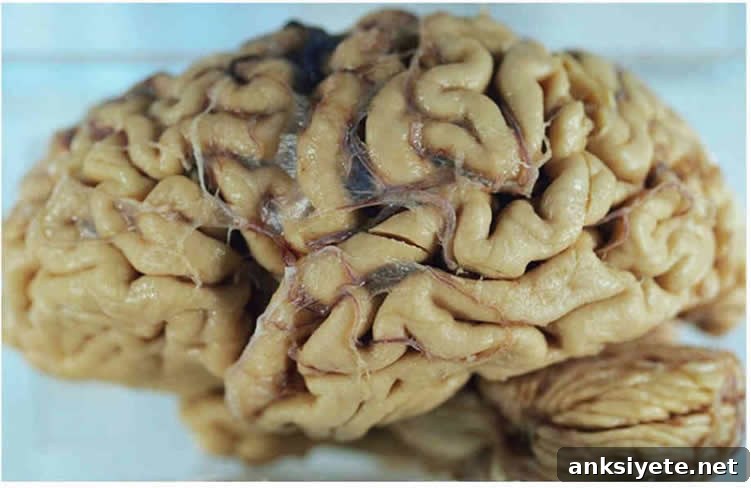
Developing a drug that increases irisin levels in the brain could offer a promising new approach to slow or prevent the progression of Alzheimer’s disease.
“It is important to remember that Alzheimer’s is a highly complex disorder and treating patients before irreversible brain damage occurs is challenging,” Dr. De Felice explains. “By the time a person is diagnosed, significant brain injury has often already taken place. Identifying protective mechanisms linked to exercise — such as FNDC5/irisin signaling — could provide a strategy to preserve synapses and memory before cells are lost and dementia becomes irreversible.”
The research team also notes that many individuals living with dementia have additional age-related conditions — arthritis, heart disease, obesity, vision problems and depression among them — that can limit mobility and make sustained physical activity difficult. For those patients, treatments that reproduce the beneficial molecular effects of exercise could be particularly valuable.
Dr. De Felice’s next research steps will focus on determining the most effective and safe methods to deliver irisin or to stimulate its pathway in the human brain.
Source: Anne Craig — Queen’s University
Publisher: NeuroscienceNews.com organized this summary.
Image Source: NeuroscienceNews.com image is in the public domain.
Original Research: Abstract for “Exercise-linked FNDC5/irisin rescues synaptic plasticity and memory defects in Alzheimer’s models” by Mychael V. Lourenco et al., Nature Medicine. Published December 27, 2018.
DOI: 10.1038/s41591-018-0275-4
MLA: Queen’s University. “Exercise Hormone May Slow Alzheimer’s Progression.” NeuroscienceNews, 7 January 2019.
APA: Queen’s University (2019, January 7). Exercise Hormone May Slow Alzheimer’s Progression. NeuroscienceNews.
Chicago: Queen’s University. “Exercise Hormone May Slow Alzheimer’s Progression.” Accessed January 7, 2019.
Abstract
Exercise-linked FNDC5/irisin rescues synaptic plasticity and memory defects in Alzheimer’s models
Defective brain hormonal signaling has been associated with Alzheimer’s disease (AD), a condition defined by synapse loss and memory impairment. Irisin is an exercise-induced myokine produced by cleavage of the membrane-bound precursor FNDC5, which is also expressed in the hippocampus. The researchers found that FNDC5/irisin levels are reduced in the hippocampus and cerebrospinal fluid of people with AD and in experimental models of the disease. Reducing FNDC5/irisin in the brain impairs long-term potentiation and novel object recognition memory in mice. Conversely, increasing brain FNDC5/irisin levels restores synaptic plasticity and memory in Alzheimer’s mouse models. Peripheral overexpression of FNDC5/irisin also rescues memory deficits, while blocking FNDC5/irisin peripherally or in the brain diminishes the neuroprotective effects of physical exercise on synaptic plasticity and memory in AD mice. By demonstrating that FNDC5/irisin mediates many beneficial effects of exercise in AD models, these results identify FNDC5/irisin as a promising candidate for opposing synapse dysfunction and memory loss in Alzheimer’s disease.