
TAU researchers find unresponsive patients’ brains may recognize photographs of their family and friends.
Patients diagnosed as being in a vegetative state are awake, breathe on their own, and often cycle through sleep and wakefulness, yet they show no overt responses to their surroundings and traditionally have been considered without conscious awareness. Because they cannot communicate, loved ones and caregivers are left uncertain whether the patient is aware of them at all.
Using functional magnetic resonance imaging (fMRI), Dr. Haggai Sharon and Dr. Yotam Pasternak of Tel Aviv University’s Functional Brain Center and Sackler Faculty of Medicine, in collaboration with clinicians at the Tel Aviv Sourasky Medical Center, report that some patients in a vegetative state show brain responses to photographs of people they know personally that suggest recognition and emotional processing.
The research, published in PLOS ONE, adds to the growing body of work using neuroimaging to probe residual cognitive and emotional function in disorders of consciousness. Contributors to the study included investigators from TAU’s School of Psychological Sciences, the Department of Neurology, the Sagol School of Neuroscience, and clinicians from the Loewenstein Hospital in Raanana.
Talking to the brain
For decades, the vegetative state was assumed to involve no awareness of self or environment. More recently, however, fMRI has revealed surprising cases in which some patients diagnosed as vegetative can carry out instructed mental tasks—such as imagining playing tennis—or even answer yes/no questions through distinct patterns of brain activity. Those demonstrations show that complex cognition can sometimes occur without observable behavior, but they do not directly address whether patients can experience personally meaningful emotions.
To investigate whether unresponsive patients might still process personally familiar stimuli, the researchers worked with four patients in a persistent (one month) or permanent (more than three months) vegetative state. During fMRI scans the patients were shown photographs of faces that included close family members and friends as well as unfamiliar people. Across all face photographs, face-selective regions of cortex were activated, indicating that the patients’ brains registered face stimuli and differentiated them from non-face visual input.
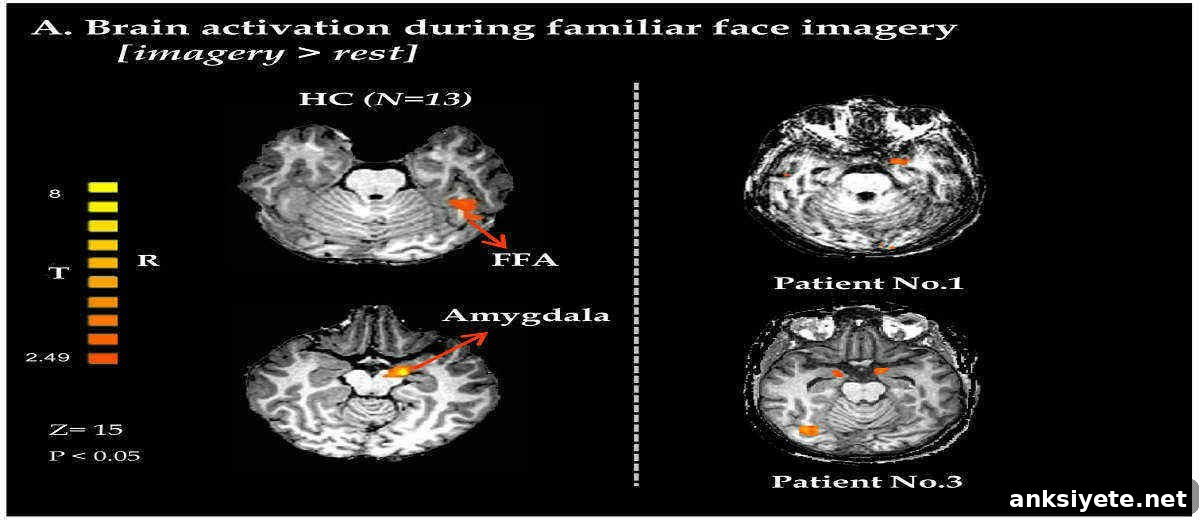
Crucially, when faces of close relatives and friends were presented, additional brain areas known to encode emotional significance and autobiographical information—regions associated with affective processing and personal memory—were also activated in some patients. These patterns suggest that, for these individuals, the brain was not only detecting faces but also linking those images to stored personal information and emotional value. In other words, the neural response resembled the patterns typically seen in healthy controls when they view pictures of people they know well.
The ghost in the machine
To probe internal, imagery-driven processing, the researchers then instructed the patients verbally to imagine their parents’ faces. One patient—a 60-year-old former kindergarten teacher who sustained head trauma after being struck by a car—showed complex, reproducible activity in face- and emotion-related brain regions that closely matched the activation seen in healthy individuals asked to perform the same mental imagery. The investigators describe this as particularly compelling evidence that at least some vegetative-state patients can generate internally driven, emotionally charged images and that these patients may retain a form of emotional awareness.
A second patient, a 23-year-old woman, displayed activation primarily in emotion-specific brain areas in response to the same imagery instruction. Notably, both of these patients regained consciousness within two months of the testing; neither later recalled being in the vegetative state. While recovery in these cases does not prove that all vegetative patients retain emotional awareness, it supports the interpretation that the observed responses reflect preserved, meaningful neural processing rather than random activity.
Dr. Sharon and colleagues emphasize that their findings do not demonstrate full subjective experience in every unresponsive patient, but they do indicate that personal, autobiographical, and emotional information can be accessed and processed by the brain even when behavioral signs of awareness are absent. The results therefore call for careful reassessment of assumptions about residual cognition and emotional life in disorders of consciousness.
Research into emotional processing and awareness in vegetative and minimally conscious states is relatively new, and the authors urge cautious interpretation while encouraging further study. The team has also begun studying patients in minimally conscious states to better characterize how networks involved in face recognition, emotion, and memory interact in response to familiar cues. Understanding these interactions may help clinicians improve diagnosis, guide family communication, and inform future therapeutic approaches aimed at engaging preserved cognitive and affective capacities.
Notes about this neurology research
Contact: George Hunka – American Friends of Tel Aviv University
Source: American Friends of Tel Aviv University press release
Image Source: Image credited to Haggai Sharon, Yotam Pasternak, Eti Ben Simon, Michal Gruberger, Nir Giladi, Ben Zion Krimchanski, David Hassin, and Talma Hendler / PLOS ONE and adapted from the original research paper.
Original Research: Open access research titled “Emotional Processing of Personally Familiar Faces in the Vegetative State” by Haggai Sharon, Yotam Pasternak, Eti Ben Simon, Michal Gruberger, Nir Giladi, Ben Zion Krimchanski, David Hassin, and Talma Hendler in PLOS ONE. Published online September 25, 2013.
Keywords: vegetative state, fMRI, emotional awareness, face recognition, personal familiarity, consciousness, Tel Aviv University, neuroimaging, disorders of consciousness.