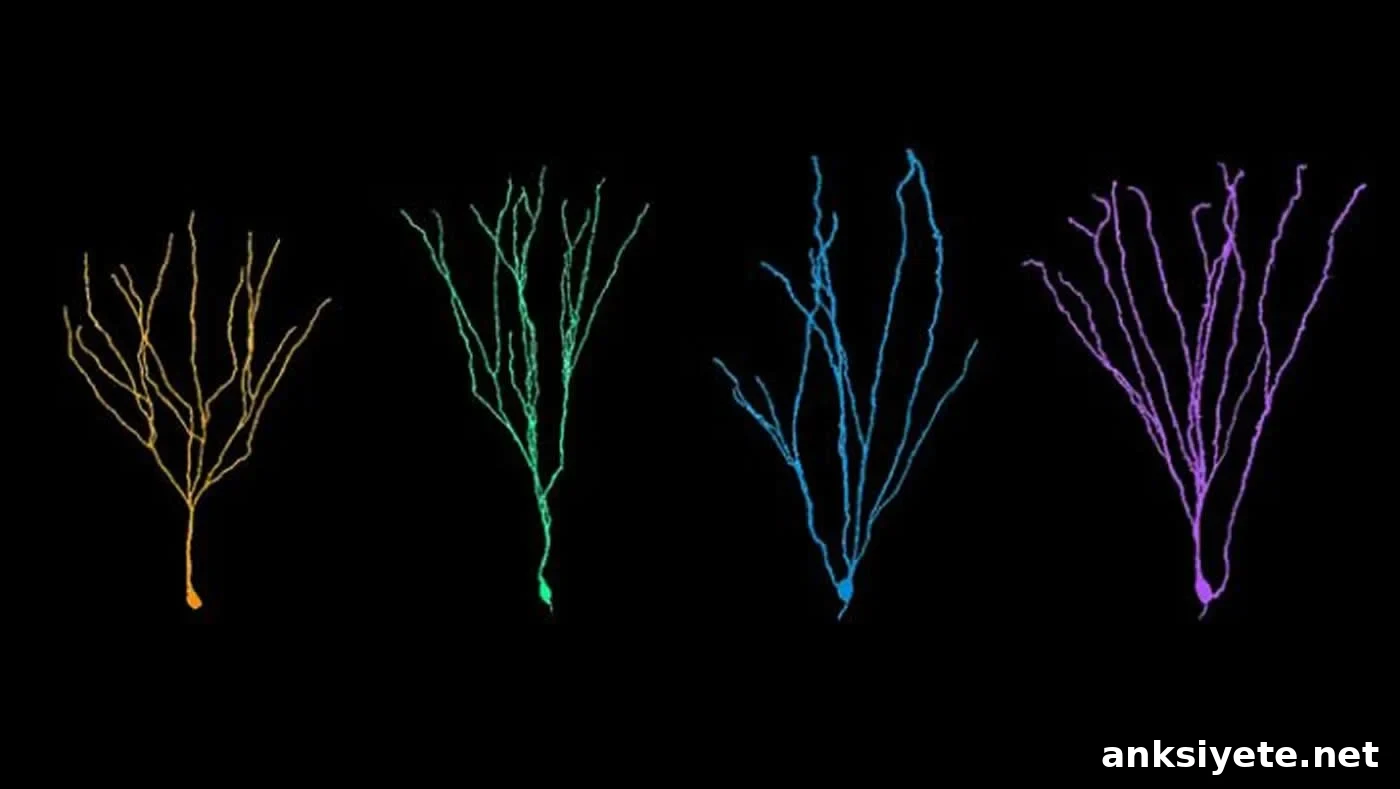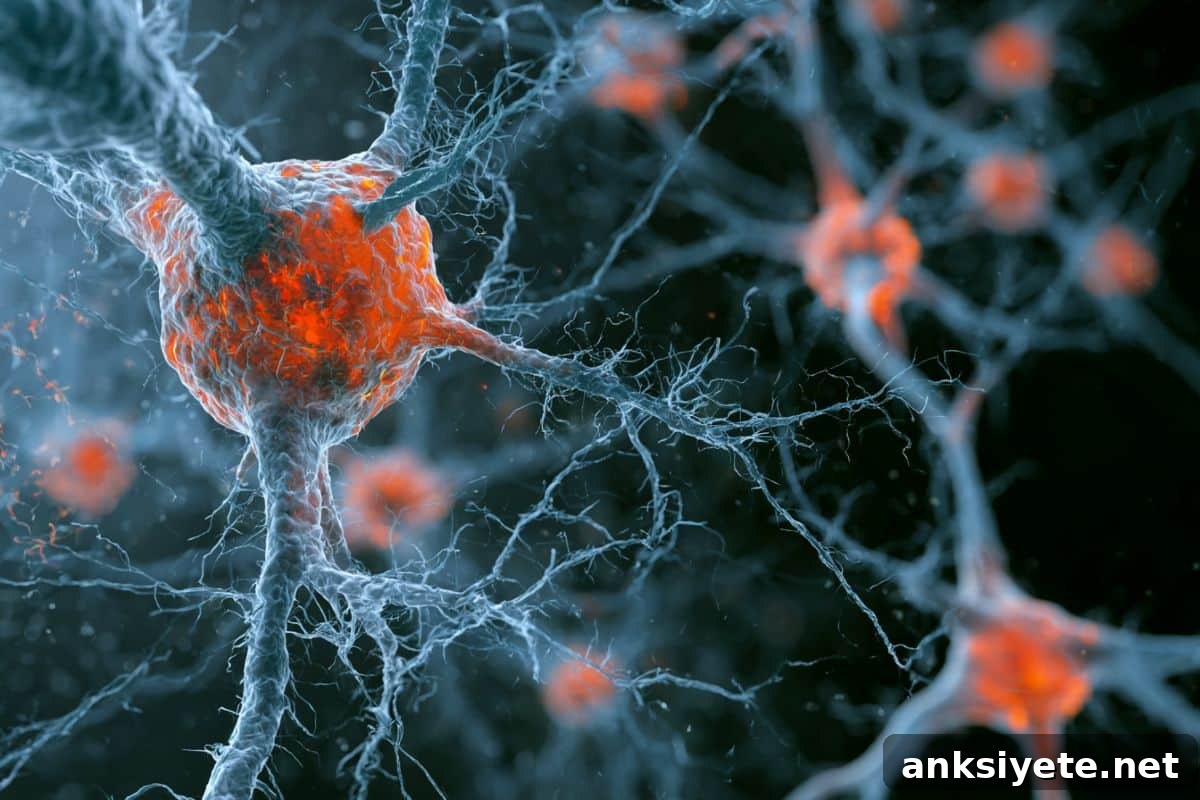
Summary: Alzheimer’s disease is defined by the gradual buildup of the protein Tau, which folds into toxic tangles inside neurons. As these Tau tangles spread through connected brain networks, cognitive abilities decline. Scientists long suspected that Tau moves from diseased to healthy cells, but the molecular carrier responsible for this intercellular transmission remained unclear. A new study identifies the native neuronal protein Arc as a key vehicle that toxic Tau exploits to move between cells.
Arc normally packages itself into tiny membrane-bound bubbles called extracellular vesicles (EVs) to transmit information between neurons. The study shows that pathological Tau binds to Arc and becomes co-packaged into these EVs, allowing Tau “seeds” to travel to neighboring cells and induce new Tau aggregation.
Key Facts
- Arc as a hijacked messenger: Arc is a neuronal protein that naturally forms capsid-like structures and is released in extracellular vesicles. In Alzheimer’s models, toxic, seeding-competent Tau binds to Arc and is carried inside these vesicles to other cells.
- Massive reduction in spread without Arc: In Alzheimer’s model mice genetically engineered to lack Arc, brain EVs contained almost no Tau and the capacity for onward transmission of Tau pathology was reduced by roughly 99%.
- A protective but risky role: Removing Arc entirely is not a safe cure. Without Arc, sick neurons cannot eject excess Tau, which then accumulates inside and accelerates cell death.
- Targeting EVs “mid-flight”: The authors propose that the most promising therapeutic approach is to neutralize Tau-containing EVs after they are released but before they enter healthy neurons, preserving the survival benefits Arc provides to diseased cells while stopping spread.
- Evidence from human tissue: The same Arc–Tau co-packaged EVs were isolated from post-mortem human Alzheimer’s brain samples, supporting relevance to human disease.
- Commercial interests disclosed: Senior author Jason Shepherd is a co-founder of VNV, LLC and holds stock in Aera Therapeutics, Inc., organizations involved with Arc-related intellectual property.
Source: University of Utah
Overview: Toxic Tau accumulation kills neurons and underlies progressive cognitive decline in Alzheimer’s disease. The new work shows that Arc, a protein essential for normal neuronal communication, is co-opted by Tau to spread disease between cells. Understanding this mechanism opens a potential route for interventions designed to stop disease progression rather than repair existing damage.
“Identifying this route of Tau transmission gives us a new way to think about stopping Alzheimer’s progression,” says Jason Shepherd, PhD, professor of neurobiology at University of Utah Health and senior author on the study. The results were published in the journal Cell.
A deadly hitchhiker
The researchers compared Alzheimer’s model mice that express pathological Tau with genetically matched mice lacking Arc. Arc is normally essential for synaptic plasticity and memory: it forms capsids that bud into extracellular vesicles and shuttle molecular cargo between neurons. The team found that toxic Tau associates with Arc and becomes loaded into the same EVs.
In Alzheimer’s, Tau proteins aggregate into large, sticky fibrils inside neurons; fragments of these aggregates act as infectious “Tau seeds” that template misfolding of healthy Tau in recipient cells. In the mouse models, EVs containing both Arc and seeding-competent Tau were able to transmit Tau pathology to previously healthy neurons and initiate new tangles.
When Arc was genetically removed, EVs purified from the brains of those mice had minimal Tau and largely lost their ability to seed Tau pathology. “Removing Arc severely reduced the transfer of Tau — it was nearly abolished,” says Mitali Tyagi, PhD, first author on the paper.
A double-edged sword
Although blocking Arc might seem like a straightforward way to stop Tau spread, the protein also serves a protective function for the original diseased neuron by allowing it to expel toxic material. In Arc-deficient mice, Tau remained trapped within neurons and accumulated to higher intracellular levels, accelerating cell death in early disease stages.
This dual role implies that simply inhibiting Arc would trade intercellular spread for increased loss of already compromised neurons. Instead, the authors recommend strategies that neutralize Tau-laden EVs after they leave the sick cell but before they contact healthy neurons, preserving Arc’s waste-clearance benefit while blocking propagation.
Future directions
Crucially, the team found Arc–Tau co-packaged EVs in human Alzheimer’s brain samples and observed a positive correlation between Arc levels and phosphorylated Tau within EVs from human tissue. These findings strengthen the argument that the mechanism seen in mice is relevant to human disease, although the authors stress that further work is required before therapeutic applications are developed.
Potential therapies could include antibodies or engineered molecules designed to circulate in the extracellular space and bind or destroy Tau-containing EVs selectively. Such interventions would not reverse existing neuronal damage but could slow or halt further spread of pathology and preserve cognitive function in patients at early stages.
“If we can selectively target these EVs, we may be able to prevent ongoing damage and limit cognitive decline in people with early Alzheimer’s or other Tauopathies,” Shepherd says. The research supports a shift in therapeutic focus from inhibiting release to intercepting pathogenic cargo after release.
Funding
This research was supported by multiple funders, including the National Institutes of Health (awards R01 NS115716, DSPAN F99, AG073236, and P30AG062421), the Chan‑Zuckerberg Initiative, the Alzheimer’s Association, the McKnight Brain Disorders Award, the Jon M. Huntsman Presidential Endowed Chair fund, the Max Planck Society, AIRC IG 26229, PRIN 2022EMZJL4, the Rainwater Foundation, the JPB Foundation, and the Cure Alzheimer Fund. Human samples were provided by the Massachusetts Alzheimer’s Disease Research Center.
Disclosures: Jason Shepherd is a co-founder of VNV, LLC and holds stock in and consults for Aera Therapeutics, Inc., which licenses intellectual property related to Arc capsids.
Key Questions Answered
Q: How does a healthy protein like Arc end up helping spread Alzheimer’s?
A: Arc forms capsid-like assemblies that are normally released in extracellular vesicles to transfer information between neurons. In disease, fragments of pathological Tau attach to those Arc-containing vesicles and ride them into neighboring neurons, where they can corrupt native Tau and seed new aggregates.
Q: Why not simply shut off Arc to stop the disease?
A: Completely removing Arc prevents neurons from clearing toxic Tau, causing Tau to build up inside those cells and accelerating their death. Removing Arc therefore reduces spread but increases early neuronal loss, making it an unsafe direct target.
Q: What is the best therapeutic strategy based on these findings?
A: The most promising approach is to neutralize Tau-containing EVs after they are released but before they reach healthy neurons — a “mid-flight” interception. This could stop propagation while preserving Arc’s beneficial role in reducing intracellular toxicity.
Editorial Notes
- This article was edited by a Neuroscience News editor.
- The underlying journal article was reviewed in full by the editorial team.
- Additional context was added by staff to clarify implications for therapy and future research.
About this research news
Author: Sophia Friesen
Source: University of Utah
Contact: Sophia Friesen – University of Utah
Image: Credit: Neuroscience News
Original research (open access): “Arc mediates intercellular tau transmission via extracellular vesicles” by Mitali Tyagi, Eric de Hoog, Matthew Grega, Kaelan R. Sullivan, Alicia C. Walker, Radhika Chadha, Ava Northrop, Balázs Fábián, Gerhard Hummer, Monika Fuxreiter, Bradley T. Hyman, Jason D. Shepherd. Cell. DOI: 10.1016/j.cell.2026.06.008
Abstract
Arc mediates intercellular tau transmission via extracellular vesicles
Tau pathology spreads from cell to cell, but the mechanisms of intercellular transmission have been unclear. This study identifies the neuronal gene Arc as essential for packaging Tau into neuronal extracellular vesicles via direct protein–protein interactions. EVs purified from transgenic rTg4510 mutant Tau mice crossed with Arc knockout mice contain less Tau and have reduced seeding potential. Both Arc and Tau are co-packaged in EVs derived from mouse and human brain tissue. Arc levels in human brain-derived EVs correlate positively with phosphorylated EV-Tau. Arc knockout mice show increased intracellular Tau accumulation and modestly higher cell toxicity early in disease. Intercellular Tau transmission is dramatically reduced in Arc knockout animals, indicating Arc’s critical role in Tau packaging into EVs and subsequent intercellular spread.