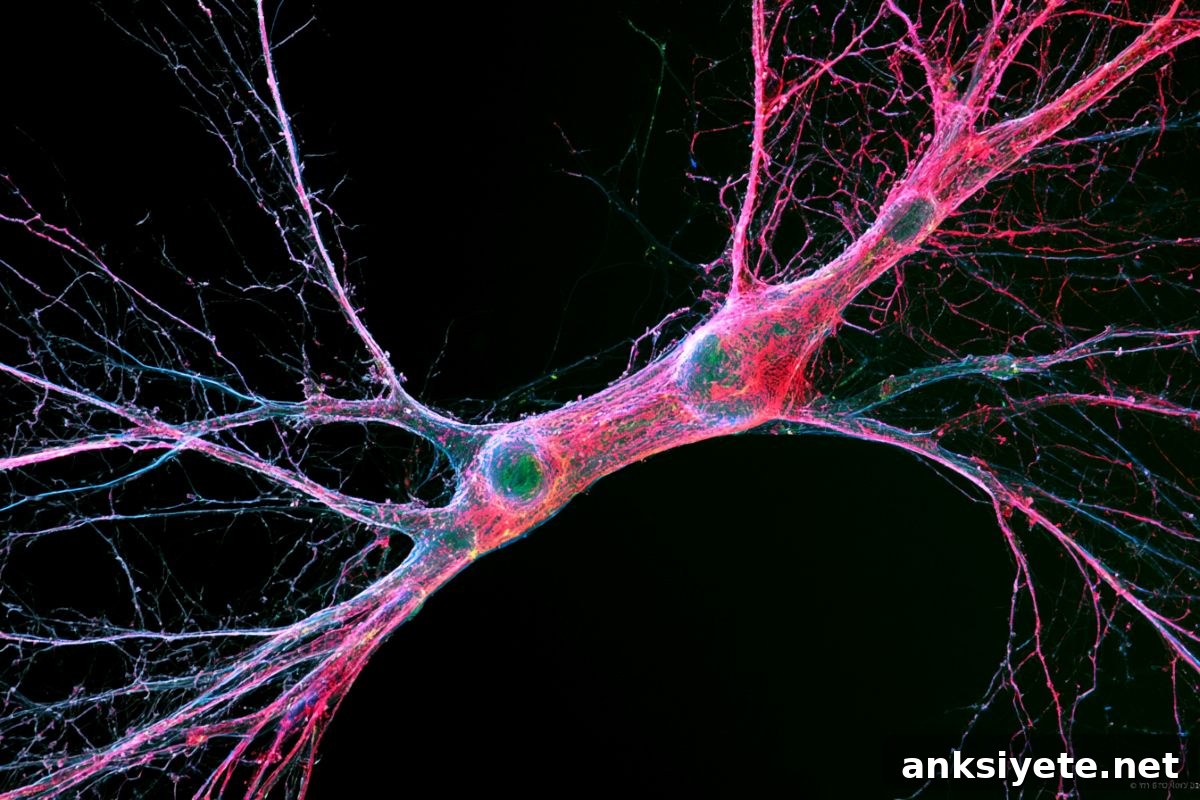
Summary: Researchers at Hiroshima University report that G protein-coupled receptor 3 (GPR3) acts like an immediate-early molecule that helps trigger stem cells to become neurons. The study shows GPR3 is induced within 30 minutes of growth factor exposure and functions as an autonomous amplifier of the cAMP-CREB pathway, linking early gene responses to the programs that support synapse formation and neuronal survival.
This rapid signaling cascade drives expression of the NR4A survival genes, connecting transient extracellular cues to lasting structural programs in developing neurons and suggesting new molecular targets for neurodevelopmental disorders such as autism.
Key Facts
- Unusually rapid receptor activity: GPR3 is induced within 30 minutes of growth factor stimulation, behaving like classical immediate-early genes rather than a late-expressed receptor.
- Autonomous signal amplification: GPR3 can initiate downstream signaling without requiring a conventional activating ligand, acting as a built-in amplifier that helps commit cells to a neuronal fate.
- Enhancement of cAMP-CREB signaling: Early GPR3 expression potentiates the intracellular cAMP-CREB cascade, converting short-lived external signals into sustained transcriptional programs.
- Direct link to synapse development: GPR3 activation promotes NR4A gene expression and increases Synapsin1 transcription, processes essential for presynaptic maturation and newborn neuron survival.
- Clinical relevance: Mapping how early transcriptional responses shape synaptic development could reveal therapeutic entry points for neurodevelopmental and neuropsychiatric conditions.
Source: Hiroshima University
Overview
Cell behavior is governed in part by surface receptors that couple to intracellular signaling molecules. While many receptors appear later during cellular maturation, this study identifies GPR3 as an exception: it is induced very early during neuronal differentiation and functions like an immediate-early gene to initiate downstream signaling.
Published in iScience on March 20, the Hiroshima University team describes how early GPR3 induction reshapes the transcriptional landscape that drives neuronal development, synapse formation, and plasticity — processes whose disruption is linked to disorders such as autism and cognitive dysfunction.
According to corresponding author Shigeru Tanaka, associate professor of molecular and pharmacological neuroscience at Hiroshima University’s Graduate School of Biomedical and Health Sciences, understanding these early transcriptional responses is essential because they set the stage for neuron identity, connectivity, and long-term function.
Using an analogy: cell surface receptors resemble a baseball glove waiting to catch a ball. Depending on how and where the ball is captured, different downstream actions follow. GPR3 is notable because it can act like a glove that triggers a sequence of responses even without a ball — in other words, it can function autonomously to help lock in differentiation decisions.
To dissect GPR3’s role, the researchers used PC12 cells, a standard rodent model for studying neuronal differentiation. PC12 cells respond to nerve growth factor (NGF) by extending neurites over 48 hours, a process that models early neurite outgrowth and synapse formation. The team monitored neuronal markers and found that GPR3 transcription increased within 30 minutes after NGF stimulation.
Tanaka notes this rapid induction is striking: “GPR3 is one of the very few G protein-coupled receptors showing immediate-early gene-like rapid induction within 30 minutes — comparable to classical immediate-early genes and unprecedented for this receptor family.”
Mechanistically, genetic analyses show early GPR3 induction amplifies cAMP-CREB signaling. This amplification converts transient extracellular signals into durable transcriptional responses, including upregulation of NR4A family genes (Nr4a1–3) and Synapsin1 (Syn1). NR4A transcription factors are immediate-early genes that support neuronal survival and presynaptic maturation; Synapsin1 contributes to synaptic vesicle regulation and synapse development.
In primary cortical neurons, deleting Gpr3 reduced developmental upregulation of Nr4a1–3 and Syn1 and lowered SYN1-positive vesicle density, supporting the model that GPR3 functions as an activity-dependent cAMP amplifier that couples early CREB activation to presynaptic transcriptional programs.
Implications and next steps
These findings establish a previously unrecognized signaling cascade linking immediate transcriptional responses to synapse development. The research team plans to further investigate how GPR3 contributes to synaptic function, neural circuit formation, and the mechanisms by which its dysregulation could contribute to neurodevelopmental disorders.
“Our ultimate goal is to clarify how activity-dependent transcriptional programs regulate brain development and to identify new therapeutic targets for neurodevelopmental and neuropsychiatric diseases,” Tanaka said.
Contributors to the study include Fumiaki Ikawa, Hiroko Shiraki, Kana Harada, Izumi Hide, and Norio Sakai from the Department of Molecular and Pharmacological Neuroscience at Hiroshima University’s Graduate School of Biomedical and Health Sciences. Funding was provided by the Japan Society for the Promotion of Science.
Key Questions Answered:
A: Immediate-early genes respond within minutes to external stimuli and initiate foundational cell behaviors. GPCRs typically appear later as cells mature and are not the first responders in transcriptional programs. Finding GPR3 acting with immediate-early dynamics shows that a receptor can actively drive early stages of neural development, not only respond after maturation.
A: GPR3 amplifies intracellular cAMP-CREB signaling after brief stimuli like NGF. The amplified cAMP-CREB pathway sustains transcription of downstream genes, including NR4A family members and Synapsin1, converting transient cues into long-lasting genetic programs that promote neurite outgrowth and synapse formation.
A: Precise timing of activity-dependent transcription is critical for correct neuronal differentiation and circuit formation. Disruption of early transcriptional programs can lead to miswired circuits. By identifying GPR3 as a master regulator of early timing, researchers can investigate whether its dysregulation contributes to conditions like autism and explore targeted interventions.
Editorial Notes:
- This article was edited by a Neuroscience News editor.
- Journal paper reviewed in full.
- Additional context added by our staff.
About this neuroscience research news
Author: Lika Araki
Source: Hiroshima University
Contact: Lika Araki – Hiroshima University
Image: The image is credited to Neuroscience News
Original Research: Open access.
Title: GPR3 is an immediate-early gene-like GPCR regulating CREB-dependent neuronal differentiation — Tanaka S, Ikawa F, Shiraki H, Harada K, Hide I, Sakai N. iScience
DOI: 10.1016/j.isci.2026.114944
Abstract
GPR3 is an immediate-early gene-like GPCR regulating CREB-dependent neuronal differentiation
GPR3 is a constitutively active Gs-coupled receptor whose transcriptional regulation during neuronal differentiation has been unclear. Here we identify Gpr3 as an immediate-early gene-like transcript rapidly induced by nerve growth factor (NGF) and cAMP signaling in PC12 cells. Using native elongating transcript-cap analysis of gene expression (NET-CAGE), the authors observed biphasic activation with a core promoter region approximately 200 bp upstream of the transcription start site.
Five cAMP response elements (CREs) within a 1-kb regulatory region cooperatively mediated stimulus-responsive transcription, with phosphorylated CREB enrichment selectively at the proximal −34 CRE. Early Gpr3 induction enhanced delayed Nr4a1–3 expression and promoted Synapsin1 (Syn1) transcription through an Nr4a1-dependent mechanism. In primary cortical neurons, Gpr3 deletion reduced developmental upregulation of Nr4a1–3 and Syn1 and decreased SYN1-positive vesicle density.
These results identify GPR3 as an activity-dependent cAMP amplifier that links early CREB activation to transcriptional programs controlling NR4A signaling and presynaptic maturation during neuronal differentiation.