
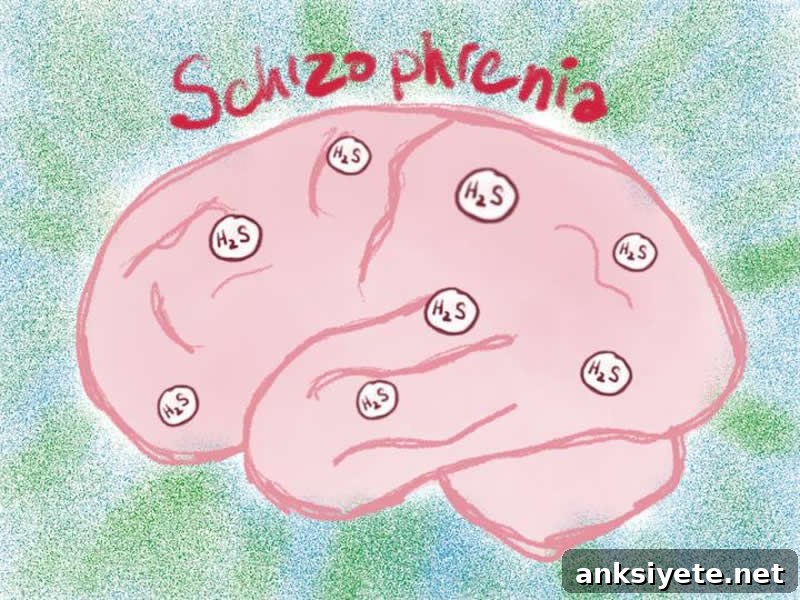
Summary: Research using mouse models, human postmortem brain tissue, and clinical samples suggests that a distinct subtype of schizophrenia is associated with abnormally high levels of hydrogen sulfide in the brain. Analysis of hair follicles from affected patients showed elevated MPST mRNA compared with those without this subtype. MPST is an enzyme involved in hydrogen sulfide production. These findings point to potential new diagnostic tests—possibly from a simple hair sample—and open a fresh direction for therapeutic development.
Source: RIKEN
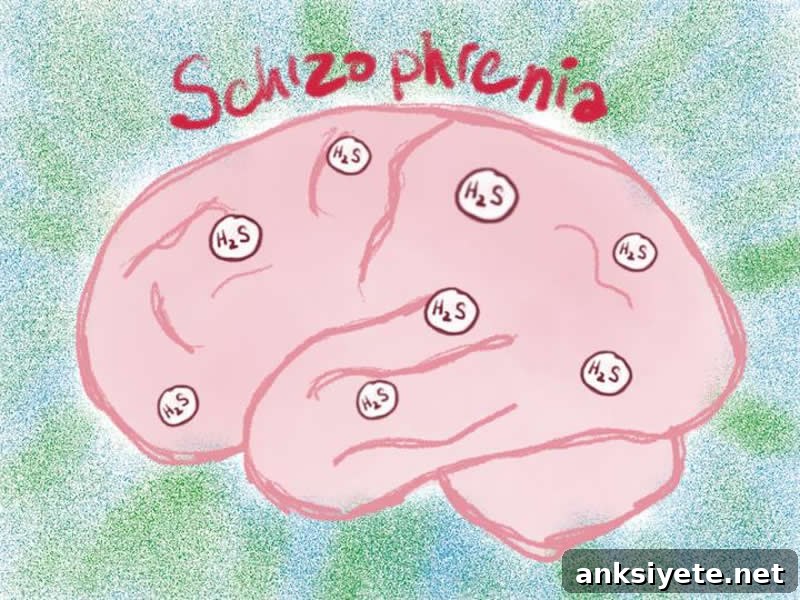
Researchers at the RIKEN Center for Brain Science in Japan, combining studies in model mice, postmortem human brains and people with schizophrenia, have identified a schizophrenia subtype linked to excess hydrogen sulfide production in the brain. Their experiments indicate this abnormality likely originates from developmental DNA modifications that persist throughout life. Besides suggesting a novel biological mechanism, elevated levels of the hydrogen sulfide-producing enzyme MPST may serve as a clinical biomarker for this subtype.
Objective, reliable markers help diagnose complex psychiatric disorders. One well-established behavioral marker for schizophrenia is impaired prepulse inhibition (PPI) of the startle response. Normally, a weak preparatory sound (a prepulse) reduces the startle caused by a subsequent louder noise. People with schizophrenia often show reduced PPI, meaning the prepulse fails to dampen the startle as it typically would. Although PPI itself is a behavioral readout, it served as a valuable starting point for the studies described here.
The RIKEN team began by comparing protein expression between mouse strains that display very low PPI and strains that show high PPI. Their proteomic analysis revealed substantially higher expression of the enzyme Mpst in low-PPI mice. Because Mpst facilitates the production of hydrogen sulfide and related polysulfides, the researchers measured sulfide levels and confirmed they were elevated in the low-PPI strain.
“Until now, no one had proposed a causal connection between hydrogen sulfide and schizophrenia,” said team leader Takeo Toshikawa. After finding this association in mice, the researchers set out to determine whether the same mechanism operated in humans and to explore how it arises.
To test causality, the scientists produced Mpst knockout mice on the low-PPI background and observed that these animals showed improved PPI compared with the regular low-PPI mice. Conversely, mice engineered to overexpress Mpst showed worsened PPI. These genetic manipulations support a direct role for excess Mpst and resultant sulfide accumulation in impairing PPI.
Extending the work to human tissue, the team found that MPST gene expression and MPST protein levels were higher in postmortem brains from individuals diagnosed with schizophrenia than in controls. Moreover, MPST protein levels correlated with the severity of symptoms prior to death. These observations strengthened the case for MPST and sulfide dysregulation as part of the disease biology.
Because a practical clinical test must be minimally invasive, the researchers evaluated MPST expression in hair follicles from over 150 people with schizophrenia. They observed significantly higher MPST mRNA levels in these samples compared with individuals without schizophrenia. While elevated MPST did not account for every case—indicating sulfide-related pathology represents a subset of schizophrenia—hair-based MPST measures show promise as an early biomarker that could identify individuals at risk before symptoms become pronounced.
Schizophrenia risk arises from interactions between genetic predisposition and environmental factors. Mouse and human data pointed toward stable increases in MPST driven by epigenetic changes—alterations to DNA regulation that persist over time. The researchers therefore investigated environmental triggers capable of inducing lasting MPST upregulation.
Given that hydrogen sulfide can have anti-inflammatory and antioxidative effects, the investigators hypothesized that early-life inflammatory stress might prime elevated sulfide production as a compensatory response. Supporting this idea, they found that markers of antioxidant defense and pathways compensating for oxidative stress and neuroinflammation during brain development were correlated with MPST levels in schizophrenia brains.
The team proposes a model in which inflammatory or oxidative insults during critical stages of brain development trigger an adaptive increase in hydrogen sulfide and polysulfide production. Epigenetic changes then lock in elevated MPST expression, creating a lifelong state of “sulfide stress” that impairs cellular energy metabolism and contributes to schizophrenia pathophysiology.
Current schizophrenia medications primarily target dopamine and serotonin systems, and many patients—roughly 30%—remain resistant to dopamine D2-receptor antagonists. These limitations and side effects have reduced pharmaceutical investment in novel therapeutics. According to coauthor Yoshikawa, these findings offer a new therapeutic principle: targeting sulfide synthesis or its downstream effects. The group is now testing whether inhibiting hydrogen sulfide production can alleviate symptoms in mouse models, a step toward potential new treatments for the subset of patients whose illness is driven by sulfide-related mechanisms.
Source:
RIKEN
Media Contacts:
Adam Phillips – RIKEN
Image Source:
The image is credited to RIKEN.
Original Research: Open access. Title: “Excess hydrogen sulfide and polysulfides production underlies a schizophrenia pathophysiology.” Reference: Ide et al., EMBO Molecular Medicine, doi: 10.15252/emmm.201910695.
Abstract (summary)
Comparing mouse strains with different behavioral vulnerability to schizophrenia-related traits, researchers identified elevated levels of the hydrogen sulfide/polysulfide-producing enzyme Mpst and increased sulfide deposition in the strain with lower prepulse inhibition. Mpst-deficient mice showed improved PPI and lower stored sulfide, while Mpst-overexpressing mice displayed impaired PPI. Human samples revealed upregulation of the hydrogen sulfide/polysulfides production system in schizophrenia. Mechanistic studies indicated that excess sulfide production dampens bioenergetic processes, and that maternal immune activation can induce upregulation of sulfide-producing and antioxidative genes, in part through epigenetic changes. These results suggest that inflammatory or oxidative insults during early brain development may induce a persistent increase in hydrogen sulfide/polysulfide production as a compensatory antioxidant response, ultimately contributing to schizophrenia-related deficits in energy metabolism.