
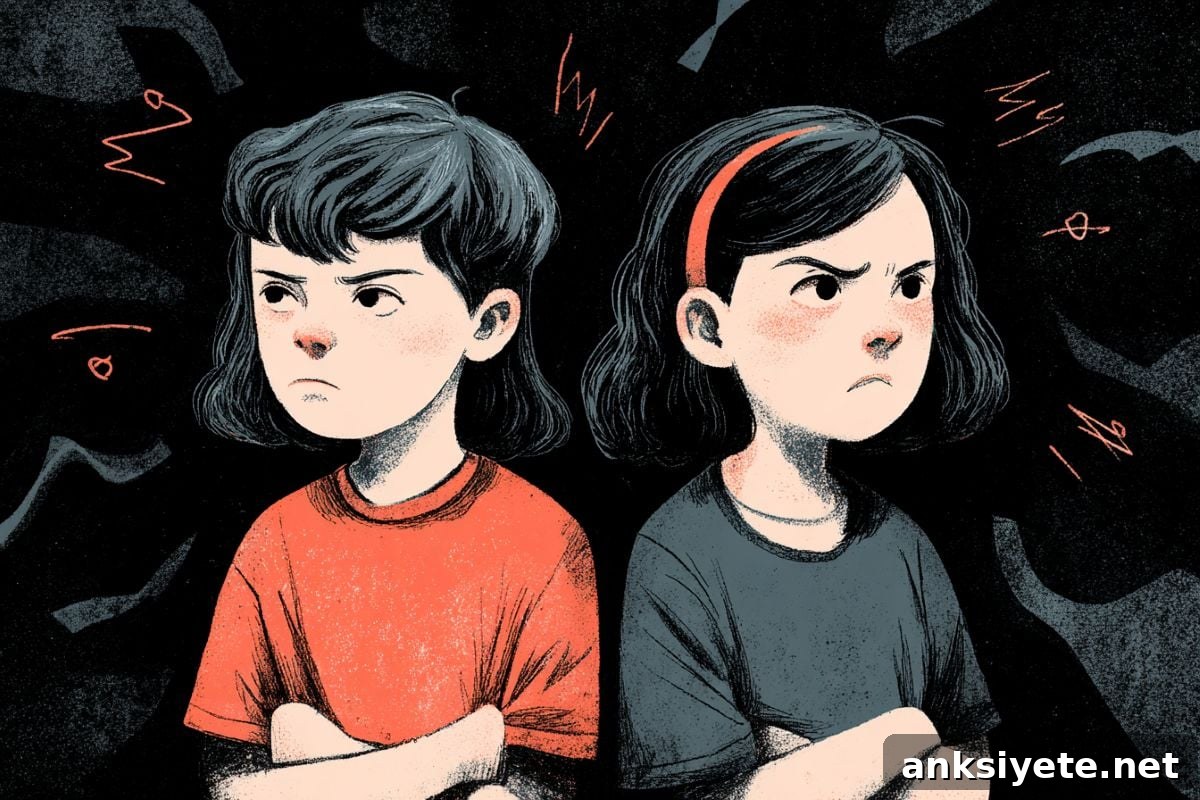
Summary: A new longitudinal study provides the first empirical evidence that parental disapproval—particularly from mothers—can break up close friendships. Researchers followed the best friendships of 394 public-school students to evaluate how maternal opposition affects peer relationships.
The findings show that mothers can be highly effective at disrupting friendships: when a mother voices strong disapproval or forbids a relationship, the chances of that friendship ending rise substantially. Yet the authors warn that this strategy often carries serious long-term costs, including a poorer social environment, increased child defiance, and the risk that vulnerable youth become isolated.
Key Facts
- Maternal interference as a friendship breaker: This longitudinal study is the first to demonstrate that forbidding a friend often predicts the end of that friendship, making maternal interference a potent mechanism for dissolving unwanted peer ties.
- Dissolution rate: The study followed 394 Lithuanian students (200 boys, 194 girls) aged 9–14 across three consecutive semesters. Although most pairs remained in the same classes the following school year, about one-third of identified best friendships did not survive; a substantial share of these breakups was associated with mothers’ negative views.
- Gradual degradation of relationship quality: Even when disapproval does not immediately end a friendship, it erodes warmth and perceived support over time—especially from the friend’s viewpoint—making the relationship less satisfying until it eventually collapses.
- Developmental differences: The general damaging pathway—maternal disapproval leading to reduced support and then to dissolution—applied across ages. Still, maternal disapproval was more strongly tied to falling perceptions of support among primary school children, while low support more readily triggered immediate breakups among middle-schoolers.
- Costs for parents and children: The senior author cautions that ending a friendship is not a parenting win. Forced breakups can leave children with few or no alternatives, push them toward other troubled peers, heighten defiance and emotional problems, increase bullying risk, and strain the parent-child relationship.
Source: FAU
Parents have long worried about their children’s companions and often express strong objections. But does forbidding a friendship actually work?
A two-year longitudinal study conducted by researchers at Florida Atlantic University and Mykolas Romeris University in Lithuania set out to answer that question. The study tracked close friendships among 394 Lithuanian public-school students over three consecutive semesters to see how mothers’ opinions affected those relationships.
Children identified their best friends and reported whether their mothers disapproved of or prohibited the relationship. Friends also rated relationship quality in terms of warmth and support. The analysis focused on stable, reciprocated best friendships—pairs of children who both reported being friends for most of at least one school year.
Despite continued class placement in the subsequent academic year, about one-third of these reciprocated best friendships dissolved. The study, published in Child Development, found that perceived maternal disapproval predicted later friendship breakup. In many cases, mothers’ objections were directly linked to the relationship’s end.
“Maternal interference in peer relationships can be quite successful,” said Brett Laursen, Ph.D., the study’s senior author and a psychology professor at FAU’s Charles E. Schmidt College of Science. “Mothers are often very effective at ending friendships once they condemn them.”
How does this happen? Sometimes children respond to direct parental pressure, choosing to distance themselves to avoid conflict at home or because they accept parental reasoning. Other times the effect is more indirect: disapproval creates tension around the friendship, reducing the perceived warmth and support—especially from the friend’s standpoint—which slowly undermines the bond until it collapses.
“Even when objections don’t produce an immediate split, they can degrade the social environment around the friendship,” said Goda Kaniušonytė, Ph.D., the study’s first author. “A friend who senses ongoing parental disapproval may feel less supported and eventually withdraw.”
Although the pattern was similar across age groups, the study found age-related nuances: maternal disapproval had a stronger relationship with declining support in younger children, while low support more directly predicted breakups among older children.
The researchers emphasize important caveats. Prohibiting a friendship is not without harm. Breaking a friendship is relatively straightforward; helping a child replace that connection with healthy alternatives is far more difficult. Children who lose a friend may have limited options for new, supportive peers and may end up isolated or associating with other troubled youth. Prior research links parental meddling in peer relationships with greater defiance, emotional and behavioral problems, and weakened parent-child bonds.
“Disapproval can be effective in the short term, but it often backfires in the long run,” said Laursen. “Rather than using heavy-handed bans, parents are usually better off fostering warmth, support, and open communication at home—conditions that help children resist negative peer influence and form healthier friendships.”
Study co-author Mary Page Leggett-James, Ph.D., contributed to the research while a doctoral student at FAU; she is now affiliated with Gallup.
Funding: The research received support from the European Social Fund, the Research Council of Lithuania, and a state-funded Centers of Excellence Initiative at Mykolas Romeris University.
Key Questions Answered:
A: It may be tempting to forbid a friendship, but this study shows that prohibition is often counterproductive. Ending a friendship is the easy part; the hard part is providing a healthy social substitute. Children prevented from seeing a peer can end up isolated or forced into other unsupportive relationships, which can worsen behavioral and emotional outcomes.
A: Both direct and indirect mechanisms are involved. Some children comply with parental wishes to avoid conflict or because they accept parental reasoning. More often, ongoing disapproval creates a negative atmosphere that erodes perceived support and warmth—particularly from the friend’s perspective—so the relationship slowly loses its appeal and eventually dissolves.
A: The evidence favors building a warm, supportive, communicative home environment over issuing bans. When parents strengthen the parent-child bond and model healthy social behavior, children are better equipped to recognize harmful peer influences and to choose healthier friends independently.
Editorial Notes:
- This article was edited by a Neuroscience News editor.
- The journal paper was reviewed in full.
- Additional context was added by staff editors.
About this social neuroscience research news
Author: Gisele Galoustian
Source: FAU
Contact: Gisele Galoustian – FAU
Image: The image is credited to Neuroscience News
Original Research: Open access. “Perceived maternal disapproval of peer affiliates forecasts child friendship dissolution” by Goda Kaniušonytė, Mary Page Leggett-James, and Brett Laursen. Child Development
DOI: 10.1093/chidev/aacag047
Abstract
Perceived maternal disapproval of peer affiliates forecasts child friendship dissolution
Parents who express disapproval of their children’s friends typically aim to disrupt those affiliations. This study evaluates how effective that practice is. Participants included 394 Lithuanian public-school students (200 boys, 194 girls), ages 9–14, nearly all ethnic Lithuanian. Across two school years, participants completed surveys three times reporting perceptions of friendship support and whether they perceived maternal disapproval of peer affiliates.
Researchers identified stable reciprocated best friends (N = 197) from friend nominations during the fall and winter of the first school year. Roughly one-third of these reciprocated friendships later dissolved. Longitudinal dyadic mediation analyses indicated that perceived maternal disapproval predicted subsequent friendship dissolution both directly and indirectly, via friends’ declining perceptions of social support.