
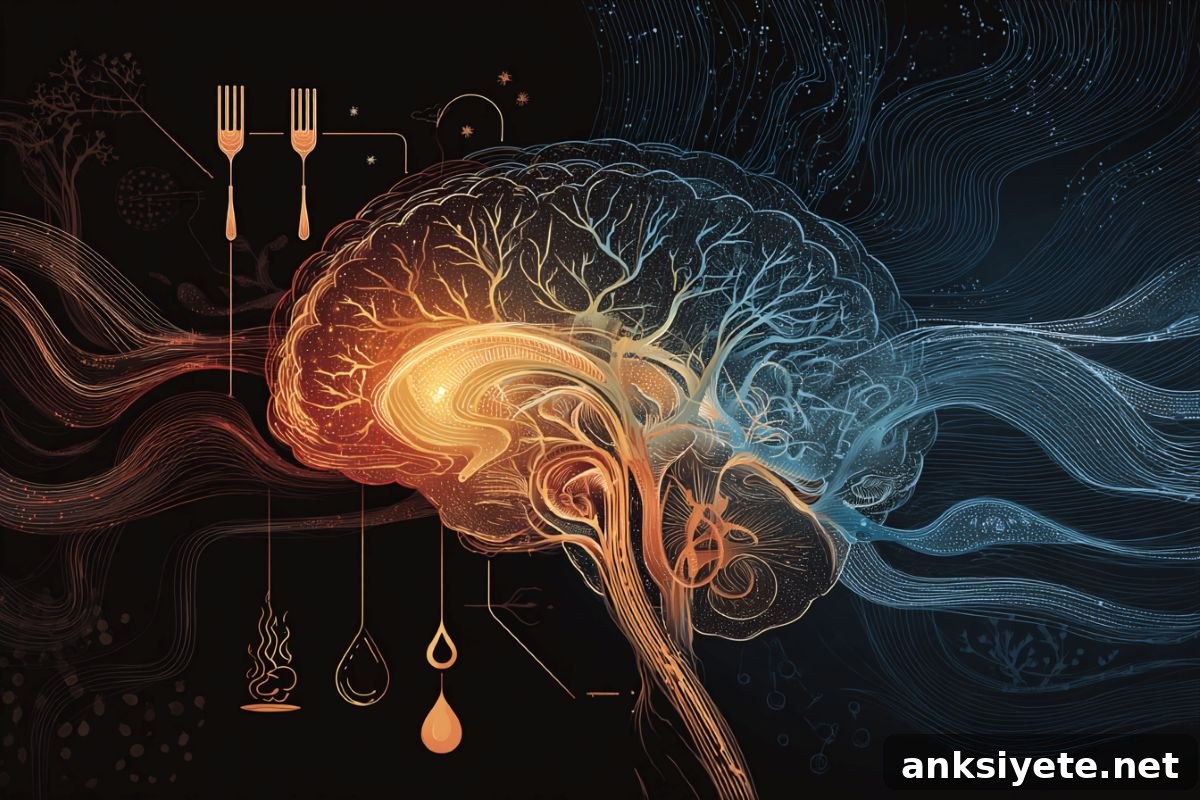
Summary: Chronic pain affects nearly 50 million Americans. New research points to an internal brain mechanism that can reduce long-term pain: a set of brainstem neurons that act like a “pain override” by integrating signals for hunger, fear, and thirst and dialing down ongoing pain.
When immediate survival needs take precedence, these neurons suppress pain through neuropeptide Y signaling. This discovery suggests new avenues for treatments that target brain circuits—through drugs or behavioral approaches—rather than only focusing on the original injury site.
Key Facts:
- Pain override circuit: Y1 receptor (Y1R)–expressing neurons in the lateral parabrachial nucleus reduce chronic pain when other urgent needs, like hunger or fear, are prioritized.
- Neuropeptide Y role: NPY acts as a chemical messenger that quiets pain-signaling neurons during competing survival states.
- Therapeutic potential: Targeting these brain circuits may produce biomarkers and new treatments for chronic pain that do not rely on visible peripheral injury.
Original Research: University of Pennsylvania
Why this matters: Acute pain serves an essential protective role, warning the body of immediate danger. Chronic pain, by contrast, continues after healing and can become a persistent, debilitating condition. Nearly 50 million people in the U.S. live with chronic pain, and effective treatments remain limited.
J. Nicholas Betley, a neuroscientist at the University of Pennsylvania, describes chronic pain as a sensitized, hyperactive brain input rather than simply an unhealed injury. His team, in collaboration with researchers at the University of Pittsburgh and Scripps Research Institute, has located a critical group of neurons that regulate those long-term pain signals.
Published in Nature, their study identifies Y1R-expressing neurons within the lateral parabrachial nucleus (lPBN) as a hub for sustained pain processing. These neurons remain active during enduring pain—showing persistent, or tonic, firing—and also receive signals related to hunger, thirst, and threat cues. When survival demands rise, the circuit suppresses ongoing pain to prioritize the immediate need.
Tracking pain in the brain
Using calcium imaging in preclinical pain models, the team observed real-time neural activity. Unlike neurons that only spike in response to acute noxious stimuli, the Y1R neurons displayed tonic activity that continued long after the initial injury. Betley compares this to an engine idling: the pain signal continues to run even when outward symptoms diminish. That persistent activity may underlie the lasting pain many patients experience after injury or surgery.
The researchers were led to explore this circuit by an early observation: hunger can powerfully reduce long-term pain responses. Graduate researcher Nitsan Goldstein expanded on that observation, showing that thirst and fear similarly suppress enduring pain. Behavioral experiments developed with collaborators at Scripps supported the idea that sensory filtering in the parabrachial nucleus can block persistent pain when other urgent needs arise.
A central mechanism is neuropeptide Y (NPY). When an animal experiences hunger or threat, neurons that respond to those states release NPY, which binds to Y1 receptors in the lPBN and quiets ongoing pain signals. This creates a built-in override that lets the brain reallocate attention and resources to immediate survival priorities.
A scattered signal
Molecular and anatomical mapping showed that Y1R neurons in the lPBN are not a single, uniform cell type. Instead, Y1R expression appears across a mosaic of neuron types scattered throughout the region. Betley compares the distribution to yellow paint splashed across different colored cars in a parking lot—suggesting this diffuse arrangement may allow the brain to dampen many varieties of painful inputs across multiple circuits.
Explorations of pain treatment
Betley and colleagues see practical implications: Y1R neural activity might serve as a biomarker for chronic pain, addressing a major gap clinicians and drug developers face. Many patients report persistent pain without clear peripheral injury; this work suggests the source may reside in brain circuits that sustain pain signals.
If these neurons can be targeted pharmacologically or modulated through behavior, a new class of treatments could emerge. The research indicates the circuit is flexible—its activity can be increased or decreased—so interventions might range from drugs that act on NPY/Y1 pathways to behavioral therapies like exercise, meditation, or cognitive behavioral therapy that alter circuit dynamics.
“The future isn’t just about a pill,” Betley notes. “It’s also about how behavior, training, and lifestyle can change the way these neurons encode pain.”
J. Nicholas Betley is an associate professor in the Department of Biology at the University of Pennsylvania School of Arts & Sciences. Nitsan Goldstein, a graduate student in the Betley Lab during this study, is now a postdoctoral researcher at the Massachusetts Institute of Technology.
Other authors include researchers from Penn Arts & Sciences, Penn’s Perelman School of Medicine, Carleton University, University of Florida College of Medicine, Scripps Research Institute, and the University of Pittsburgh.
Funding: This research received support from the Klingenstein Foundation, University of Pennsylvania School of Arts and Sciences, the National Institutes of Health (multiple grants), the National Science Foundation Graduate Research Fellowship Program, Blavatnik Family Foundation Fellowship, American Neuromuscular Foundation, American Heart Association, Swiss National Science Foundation, Canadian Institutes of Health Research, Simons Foundation, McKnight Foundation Scholar Award, and a Pew Biomedical Scholar Award.
Key Questions Answered:
A: They identified brainstem Y1R neurons that can suppress long-term pain when other survival signals—such as hunger or fear—are active.
A: Neuropeptide Y is released during urgent need states and binds Y1 receptors in the parabrachial nucleus, inhibiting neurons that carry sustained pain signals and allowing other survival priorities to dominate.
A: It shifts attention from treating only peripheral injury to targeting brain circuits that maintain chronic pain, opening new diagnostic and therapeutic possibilities.
About this chronic pain and neurology research news
Author: Nathi Magubane
Source: University of Pennsylvania
Contact: Nathi Magubane – University of Pennsylvania
Image: The image is credited to Neuroscience News
Original Research: Open access. “A parabrachial hub for need-state control of enduring pain” by J. Nicholas Betley et al., Nature.
Abstract
A parabrachial hub for need-state control of enduring pain
Sustained pain that persists after injury is a hallmark of many chronic pain conditions. While many neurons respond transiently to noxious stimuli, the central mechanisms that encode ongoing pain—long after tissue healing—are less understood. Using spatial transcriptomics, targeted neural manipulations, activity recordings, and computational modeling, the authors show that an ensemble of anatomically and molecularly diverse parabrachial neurons expressing the neuropeptide Y receptor Y1 (Y1R neurons) increases activity after injury and predicts coping behavior. Hunger, thirst, or predator cues suppressed sustained pain across injury types by inhibiting parabrachial Y1R neurons via NPY release. These results identify an endogenous analgesic hub at pain-responsive parabrachial Y1R neurons and point to new directions for diagnosing and treating chronic pain.