
Summary: Using functional MRI and representational similarity analysis, researchers at the University of Osaka tracked how the brain updates its representations of people after learning their roles and relationships from a television drama. The study shows that antagonistic relationships—rivalries and conflicts—leave a strong, localized signature in cortical activity, while affiliative ties produce a much weaker representational footprint under the same analysis.
Key Facts
- Naturalistic social learning: To recreate how people learn complex, real-world social networks, 21 participants watched six episodes of the TV drama SUITS featuring eight main characters and their shifting alliances, mentorships, and corporate rivalries.
- Before-and-after brain scans: Participants completed fMRI scans while viewing static face images of the characters both before and after watching the episodes. This design isolated how learning narrative relationships changes neural representations of individuals.
- Antagonism dominates neural maps: When behavioral ratings of each character pair’s relationship valence were compared with brain activity using representational similarity analysis (RSA), antagonistic ties produced robust, reliable similarity patterns; affiliative relationships did not produce comparable RSA effects.
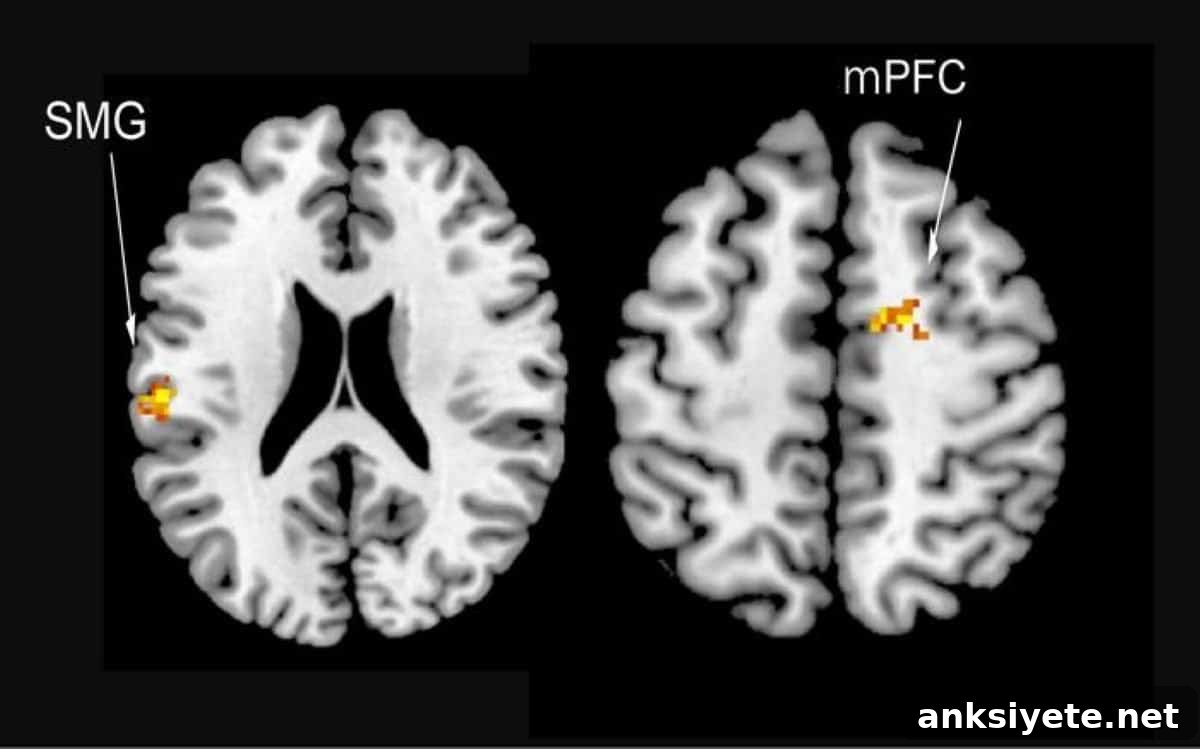
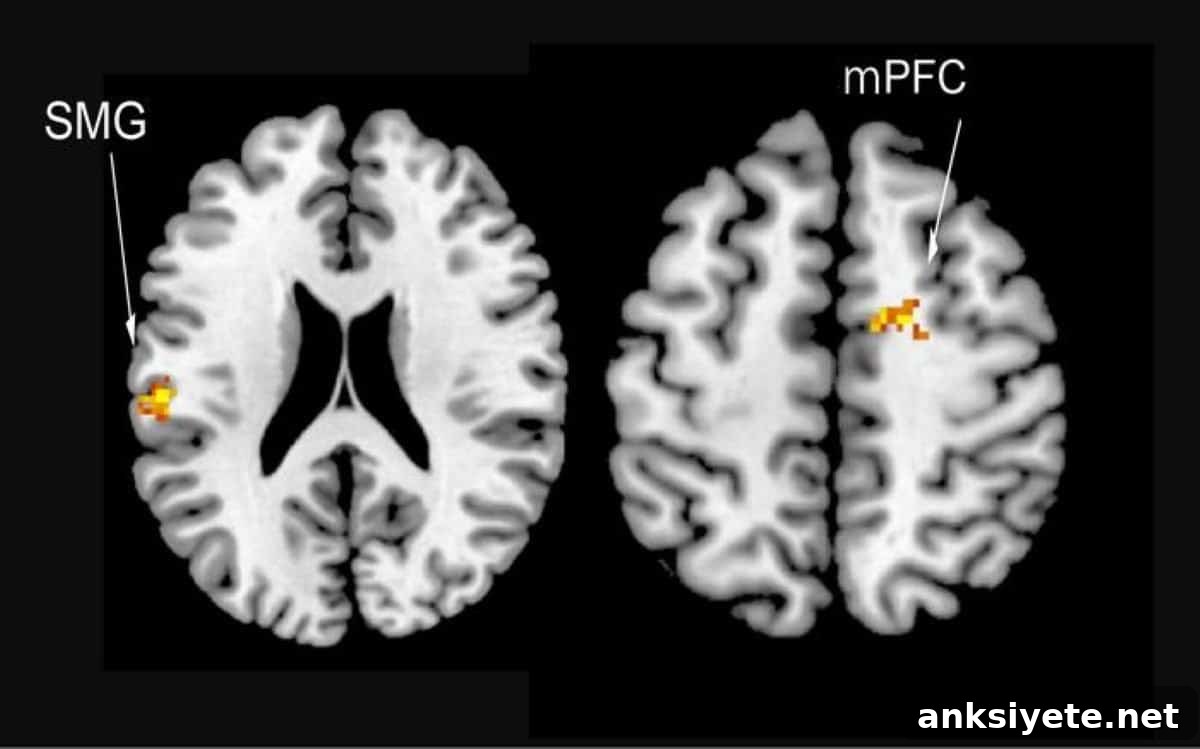
- Localizing rivalry signals: The strongest representational effects for antagonism were detected in the left anterior supramarginal gyrus and the right medial prefrontal cortex—regions implicated in social affect, perspective taking, and mentalizing.
- Implications for narrative cognition and AI: The findings suggest our brains anchor social maps around conflict points. This emphasis on adversarial information may inform models of story comprehension and offer a biological blueprint for AI systems that aim to infer social dynamics more accurately.
Source: University of Osaka
Overview: When we follow a story, we quickly learn who cooperates and who opposes whom. But how does the brain organize that web of alliances and rivalries? Researchers at the University of Osaka used a television drama as a controlled yet realistic social environment to find out. Their results, to be published in Communication Psychology, reveal that antagonistic relationships are especially prominent in the brain’s representational geometry.
Humans must represent both individuals and the affective quality of relationships among them. Prior neuroscience work has typically focused on network metrics—how many connections someone has or their centrality within a group. This study moves beyond connection counts by probing the emotional valence of ties learned from narrative experience: are two people allies, rivals, friends, or foes?
Method: Twenty-one student participants watched six episodes of SUITS. They viewed static images of eight central characters while undergoing fMRI both before any exposure to the show and after completing the episodes. After viewing, participants rated every character pair for relationship strength and whether the relationship felt affiliative or antagonistic. Researchers then applied whole-brain representational similarity analysis to link those behavioral ratings with brain activity patterns.
Findings: Representational similarity for negative, antagonistic ties appeared most strongly in the left anterior supramarginal gyrus and right medial prefrontal cortex—areas associated with social affect, boundary-setting in empathy, perspective-taking, and higher-order social cognition. Univariate analyses also revealed increased precuneus activation after viewing, consistent with greater retrieval of narrative-related person knowledge, although this region did not show RSA effects tied to interpersonal relationship structure.
Interpretation: The data suggest the brain builds a multidimensional social map from narrative experience and uses antagonistic relationships as salient anchors within that map. Conflict may therefore serve as a powerful organizing principle for social cognition, helping the brain prioritize information about who poses a social or competitive threat.
Professor Tamami Nakano commented that when people mentally reconstruct a drama’s character map, attention naturally focuses on points of conflict as much as on close ties. The study provides evidence that this cognitive tendency is reflected at the neural level.
Key Questions Answered
A: From an evolutionary perspective, tracking potential threats and competitors has higher survival value than continuously monitoring predictable allies. The study supports this idea by showing the brain prioritizes antagonistic ties, allocating neural representational resources to encode conflictual relationships more distinctly.
A: Real-life social networks are complex and emotionally nuanced. The drama provided a naturalistic, controlled setting in which participants could learn a rich web of alliances and rivalries without artificial laboratory constraints. Scanning before and after exposure revealed how narrative learning reshapes neural representations of people.
A: Current AI systems often detect connections but struggle to infer emotional valence. The study points to specific neural mechanisms—such as medial prefrontal cortex representations—that prioritize adversarial information. Translating these insights could help design AI that better understands emotional nuance and social tension in human networks.
Editorial Notes
- Edited by a Neuroscience News editor.
- Journal article reviewed in full.
- Additional context added by editorial staff.
About this research
Author: Saori Obayashi
Source: University of Osaka
Contact: Saori Obayashi, University of Osaka
Image credit: Tamami Nakano
Original research (open access): “Antagonism Shapes Social Maps in the Human Brain” by Isato Chikazawa, Ryo Ishibashi & Tamami Nakano. Communication Psychology. DOI: 10.1038/s44271-026-00491-y
Abstract
Antagonism Shapes Social Maps in the Human Brain
Human relationships form a complex web of affiliative and antagonistic ties, yet how the brain represents their affective structure is not fully understood. Using a television drama that portrays intertwined friendships and rivalries, the study examined how narrative learning shapes neural representations of relationship valence. Participants underwent fMRI scanning before and after viewing while assessing faces of central characters. Behavioral ratings of relationship strength and valence were compared with whole-brain representational similarity patterns. Antagonistic relationships produced the most prominent representational effects in the left anterior supramarginal gyrus and right medial prefrontal cortex. Univariate analysis showed increased precuneus activation after viewing, suggesting enhanced retrieval of narrative person knowledge. These results indicate that narrative experience fosters a multidimensional social map in which antagonistic ties play a central organizing role.