
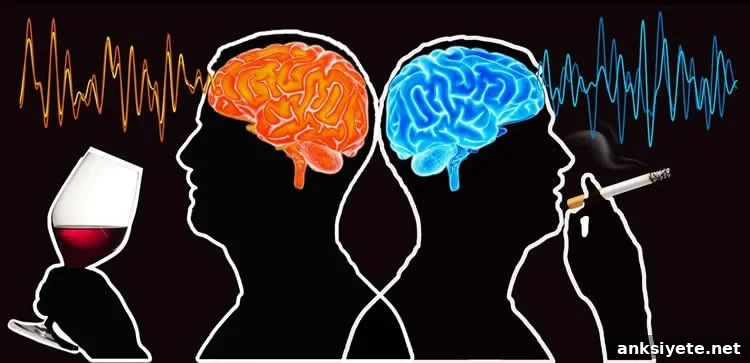
Summary: Researchers have identified distinct brain connectivity patterns linked to regular smoking and alcohol consumption. The study found that people who drink alcohol show higher functional connectivity in the medial orbitofrontal cortex, a brain region associated with reward, while regular smokers exhibit lower connectivity in the lateral orbitofrontal cortex, a region tied to impulsivity. The findings suggest nicotine may elevate overall brain connectivity, potentially reinforcing smoking behavior, whereas stronger reward-related connectivity may draw some individuals toward alcohol.
Source: University of Warwick.
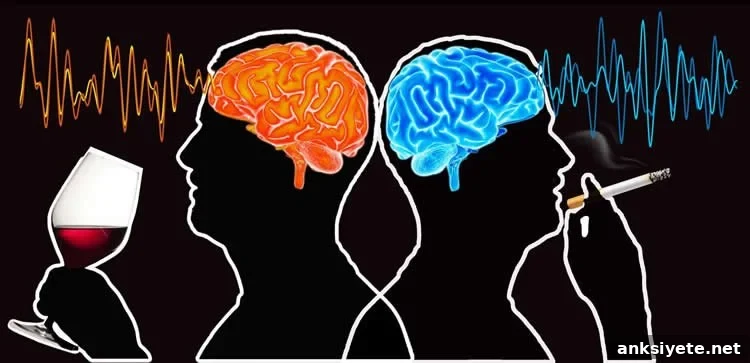
Researchers at the University of Warwick report that different patterns of brain functional connectivity are associated with smoking and drinking. Lower connectivity of the lateral orbitofrontal cortex in smokers is linked to greater impulsiveness and may help explain a predisposition to smoking. In contrast, higher connectivity in the medial orbitofrontal cortex among drinkers may increase the brain’s attraction to alcohol-related reward.
This study was led by Professor Jianfeng Feng and Professor Edmund Rolls from the Department of Computer Science at the University of Warwick, in collaboration with Dr. Wei Cheng from Fudan University, China. The researchers analyzed resting-state functional connectivity to understand neural mechanisms that underlie two common forms of substance use: tobacco smoking and alcohol drinking.
The analysis used two large, independent datasets. The main dataset, drawn from the Human Connectome Project, included 831 participants. These findings were cross-validated in a second longitudinal dataset, IMAGEN, which included 1,176 participants. Together these datasets provided robust evidence for divergent connectivity patterns associated with smoking and drinking behaviors.
In the Human Connectome Project sample, regular smokers exhibited broadly reduced functional connectivity across the brain, with especially low connectivity in the lateral orbitofrontal cortex. This region is implicated in non-reward processing and in controlling impulsive actions. The reduced connectivity in smokers correlated with greater impulsivity, suggesting a link between weaker lateral orbitofrontal connectivity and a tendency toward impulsive behavior that can contribute to smoking initiation and maintenance.
By contrast, participants who drank higher amounts of alcohol showed increased overall resting-state functional connectivity, with pronounced increases in reward-related regions such as the medial orbitofrontal cortex and parts of the cingulate cortex. The stronger connectivity of this reward network was associated with higher reported alcohol consumption, indicating that heightened sensitivity in reward circuits may encourage drinking behavior in some individuals.
Importantly, the strength of these connectivity differences scaled with consumption. The study reported that altered connectivity patterns were detectable even in people who smoked only a few cigarettes per day or consumed a single unit of alcohol daily. This dose-related relationship supports the idea that brain network changes are associated with patterns of substance use across a broad spectrum of exposure.
One notable result is the predictive association between early connectivity patterns and later behavior. Functional connectivity measured at age 14 was related to who would go on to smoke or drink by age 19 in the longitudinal dataset, highlighting a possible causal pathway where pre-existing differences in brain connectivity contribute to later substance use. While causality cannot be definitively proven from these observations alone, the longitudinal link strengthens the argument that neural connectivity plays a role in the development of addictive behaviors alongside environmental and psychological factors.
Professor Edmund Rolls commented that these discoveries reveal different neural bases for different types of addiction, and that the orbitofrontal cortex—central to emotion and decision-making—plays a key role in both smoking and drinking, but in different subregions and in opposite directions of connectivity change.
Professor Jianfeng Feng noted the potential public health relevance of the findings. Tobacco and alcohol use affect large portions of the global population and are major causes of preventable illness and death. By revealing neural patterns associated with different substance use behaviors, the research offers new insights that could inform prevention strategies and treatment approaches tailored to the neural mechanisms underlying smoking and drinking.
Source: Alice Scott – University of Warwick
Publisher: NeuroscienceNews.com (organized coverage)
Image source: Image credited to University of Warwick.
Original research: The study is reported as “Decreased brain connectivity in smoking contrasts with increased connectivity in drinking” by Wei Cheng, Edmund T. Rolls, Trevor W. Robbins, Weikang Gong, Zhaowen Liu, Wujun Lv, Jingnan Du, Hongkai Wen, Liang Ma, Erin Burke Quinlan, Hugh Garavan, Eric Artiges, Dimitri Papadopoulos Orfanos, Michael N. Smolka, Gunter Schumann, Keith Kendrick, and Jianfeng Feng, published in eLife (January 8, 2019). DOI: 10.7554/eLife.40765.
Decreased brain connectivity in smoking contrasts with increased connectivity in drinking
In a cohort of 831 participants from the Human Connectome Project, smokers showed reduced overall functional connectivity, notably in the lateral orbitofrontal cortex, the adjacent inferior frontal gyrus, and the precuneus. In contrast, high-level alcohol consumers showed increased resting-state functional connectivity overall, including heightened connectivity in reward-related regions such as the medial orbitofrontal cortex and the cingulate cortex. Increased impulsivity in smokers was associated with lower connectivity of the lateral orbitofrontal cortex, while increased impulsivity in heavy drinkers was linked to higher connectivity in the medial orbitofrontal cortex. These core findings were validated in an independent longitudinal dataset of 1,176 participants (IMAGEN). Functional connectivity patterns measured at age 14 related to who would smoke or drink by age 19, suggesting that connectivity differences may contribute to the development of smoking and drinking behaviors alongside other risk factors.
Feel free to share this neuroscience news summary for educational and informational purposes.