
New research from the University of Maryland School of Public Health finds that regular exercise can improve cognitive function in older adults at risk for Alzheimer’s disease by increasing the brain’s efficiency during memory tasks.
Researchers led by Dr. J. Carson Smith in the Department of Kinesiology report that a structured exercise program produced measurable benefits in both memory performance and brain activity in older adults diagnosed with mild cognitive impairment (MCI). This study is among the first to demonstrate that a relatively brief, supervised aerobic program can reduce the neural effort required to correctly retrieve memories, with results captured using functional magnetic resonance imaging (fMRI). The findings appear in the Journal of Alzheimer’s Disease.
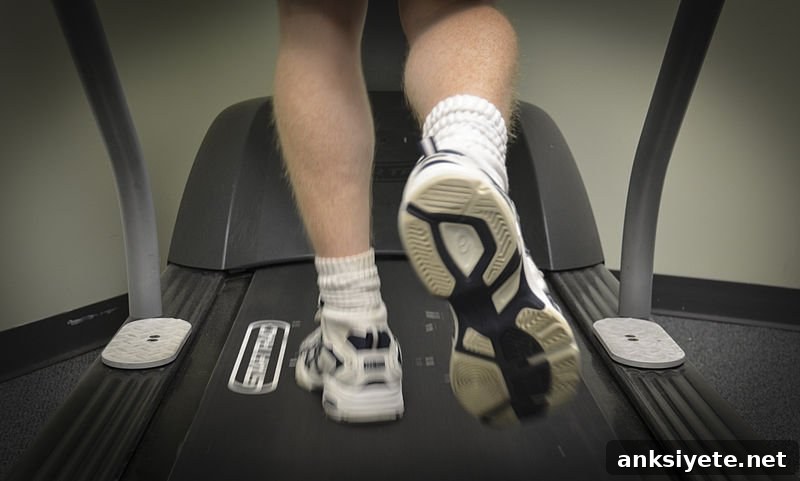
Dr. Smith and his team enrolled physically inactive older adults, including participants diagnosed with MCI and a comparison group with healthy cognitive function. The average age in the study was 78. Over 12 weeks, participants followed a moderate-intensity treadmill walking program supervised by a personal trainer. By the end of the intervention both groups showed roughly a 10 percent improvement in cardiovascular fitness and better performance on memory tests.
Recommended Daily Activity: Good for the Body, Good for the Brain
The exercise dose used in this study aligns with current public health guidelines for older adults: moderate-intensity aerobic activity totaling about 150 minutes per week. Moderate intensity raises heart rate and produces light sweating while still allowing conversation. Achieving this level of activity most days of the week is practical and was sufficient in the study to yield measurable cognitive and brain-function benefits.
How the Study Measured Brain Health and Memory
To evaluate memory-related brain function, researchers used a familiar-name recognition task designed to reveal neural patterns associated with successful semantic memory. Participants identified well-known names (for example, widely recognized entertainers and public figures familiar to people born in the 1930s and 1940s) while undergoing fMRI scans. Comparing scans from before and after the 12-week exercise program, the team observed a significant decrease in activation intensity in eleven brain regions during correct name recognition. Reduced activation in these areas indicates improved neural efficiency—the brain required fewer resources to achieve the same correct memory response.
Regions showing reduced activation included areas commonly implicated in Alzheimer’s pathology, such as the precuneus, sections of the temporal lobe, and the parahippocampal gyrus. In addition to fMRI results, participants completed a list-learning task in which they attempted to remember and recall a list of 15 words across several trials and after interference. Performance on this verbal recall task improved after the exercise program, including for those diagnosed with MCI.
“People with MCI are on a very sharp decline in their memory function, so being able to improve their recall is a very big step in the right direction,” says Dr. Smith. The study suggests that regular aerobic exercise may reduce the brain’s need to over-activate to retrieve memories, a potentially protective effect for people at elevated risk for Alzheimer’s disease.
These results provide encouraging, practical guidance: achievable aerobic exercise, delivered in a supervised and progressive program, can improve both physical fitness and aspects of cognitive function that matter for daily life. For those seeking ways to support memory and brain health, this research highlights exercise as a low-cost, low-risk strategy with measurable benefits.
Dr. Smith plans to expand this line of research through a larger trial that will include more participants and longer follow-up. Future studies aim to include healthy adults who carry genetic risk factors for Alzheimer’s disease and to compare exercise with other intervention strategies. The goal is to better understand whether sustained exercise can delay the onset or slow the progression of Alzheimer’s-related decline.
Notes about this Alzheimer’s disease research
Contact: Kelly Blake – University of Maryland
Source: University of Maryland press release
Image Source: The treadmill image is credited to Staff Sgt. Anthony Hyatt and is in the public domain.
Original Research: J. Carson Smith et al., “Semantic Memory Functional MRI and Cognitive Function After Exercise Intervention in Mild Cognitive Impairment,” Journal of Alzheimer’s Disease. Published online June 26, 2013. DOI: 10.3233/JAD-130467