Our bodies contain countless microscopic defenders and repair systems—antibodies, regenerative cells, and structural components that keep organs functioning. Among these is myelin, the insulating sheath that wraps around nerve cell axons to speed electrical signaling. In demyelinating diseases such as multiple sclerosis (MS), myelin and the specialized myelin-producing cells called oligodendrocytes become damaged or lost. Without this insulation, neurons fail to transmit signals efficiently and are vulnerable to further injury. Researchers at the California Institute of Technology (Caltech) report a promising gene therapy approach that encourages the brain to replace damaged oligodendrocytes and restore myelin.
Described in a paper published February 8 in The Journal of Neuroscience, the experimental therapy successfully promoted remyelination in a mouse model of MS.
“We developed a gene therapy that stimulates the production of new oligodendrocytes from resident neural stem and progenitor cells in the adult central nervous system,” says Benjamin Deverman, a postdoctoral fellow in biology at Caltech and lead author. “In short, we harness the brain’s own progenitor cells to enhance repair.”
The therapy centers on leukemia inhibitory factor (LIF), a naturally occurring cytokine. Earlier studies showed LIF supports neural stem cell self-renewal and can reduce immune-mediated attacks on myelin in other MS mouse models. The Caltech team’s work tests a novel application: delivering LIF directly into the brain with a viral vector to stimulate remyelination.
“Prior to our study, researchers had not used in-brain gene therapy to drive resident progenitor cells to remyelinate damaged tissue,” explains Paul Patterson, the Biaggini Professor of Biological Sciences at Caltech and senior author of the study.
According to the research team, LIF promotes remyelination by stimulating oligodendrocyte progenitor cells (OPCs) to proliferate and differentiate into mature oligodendrocytes that form new myelin. While the adult brain retains the capacity to produce oligodendrocytes, it often fails to mount a robust repair response following demyelination.
“There was skepticism that a single factor could both expand the progenitor population and direct those cells to become mature myelin-producing cells,” says Deverman. “In our mouse model, the LIF gene therapy achieved both: it increased progenitor proliferation and allowed those progenitors to differentiate into functional oligodendrocytes.”
In effect, once the treatment triggered proliferation of progenitor cells, those cells proceeded through their maturation program without the researchers needing to guide each developmental step. The LIF-driven response was strong enough that treated animals recovered levels of myelin-producing oligodendrocytes comparable to healthy controls.
Targeting LIF delivery directly to the brain also reduces the risk of systemic side effects that can occur when therapeutic proteins are administered through the bloodstream. Localized expression allows a focused regenerative effect where it is needed and minimizes peripheral exposure.
Deverman notes that this new use of LIF could have implications beyond MS. “Because demyelination of spared neurons contributes to disability after spinal cord injury, LIF-based strategies might also benefit spinal cord repair,” he says.
To translate these findings toward human trials, the Caltech team is refining the viral vectors used to deliver LIF. “Our gene therapy uses a virus to carry the LIF gene into cells,” Patterson explains. “Although viral delivery has been used in human therapies, challenges remain: precise targeting, control over which cell types express the gene, and the ability to regulate how much protein is produced.”
To address these concerns, the researchers are engineering vectors that restrict LIF expression to specific cell populations and that allow external control over expression—switches that can turn LIF production on or off. They also plan to test the approach in additional MS animal models to verify efficacy and safety across varied disease contexts.
“Existing MS treatments primarily modulate or suppress the immune system, reducing relapse rates by limiting inflammation,” Deverman says. “However, these therapies have had limited impact on long-term progression. What is needed are strategies that actively promote repair. Our goal is to develop a therapy that can restore lost myelin and improve long-term outcomes for patients.”
Notes about this brain research article
Written by Katie Neith
Funding: The study titled “Exogenous Leukemia Inhibitory Factor Stimulates Oligodendrocyte Progenitor Cell Proliferation and Enhances Hippocampal Remyelination” received funding from the California Institute for Regenerative Medicine, the National Institutes of Neurological Disorders and Stroke, and the McGrath Foundation.
Contact: Deborah Williams-Hedges – Caltech
Source: California Institute of Technology press release
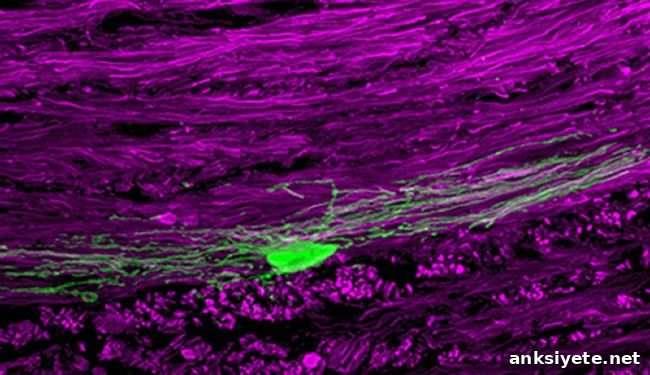
Image Source: Neuroscience image adapted from Caltech press release image credited to Benjamin Deverman/Caltech.
Original Research: Abstract for “Exogenous Leukemia Inhibitory Factor Stimulates Oligodendrocyte Progenitor Cell Proliferation and Enhances Hippocampal Remyelination” by Benjamin E. Deverman and Paul H. Patterson in The Journal of Neuroscience