
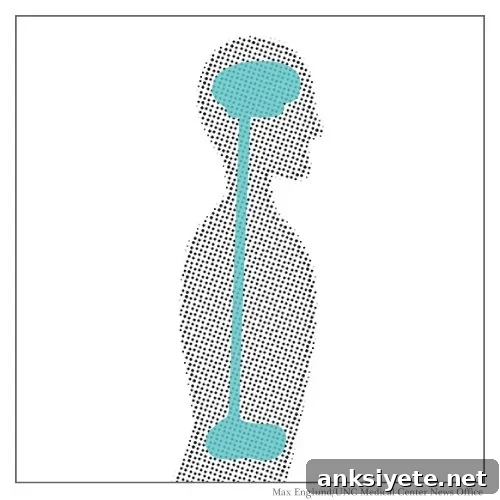
Certain synapses in the brain may play a crucial role in anorexia, bulimia, binge eating disorder, and obesity.
More than six decades after researchers discovered that electrical stimulation of a particular brain region could trigger eating in mice regardless of hunger, scientists at the UNC School of Medicine have identified the specific cellular connections responsible for that effect. Published September 27 in Science, the study reveals how a precise inhibitory pathway influences feeding behavior and provides new clues about the neural basis of obesity and eating disorders such as anorexia nervosa, bulimia nervosa, and binge eating disorder.
“This work highlights that obesity and other eating disorders have a neurological foundation,” said Garret Stuber, PhD, the study’s senior author and an assistant professor in the departments of psychiatry and cell biology and physiology at UNC. “By understanding how activity in a defined brain circuit controls feeding, we can begin to consider strategies for modulating that activity for therapeutic benefit.”

The team focused on a group of inhibitory (GABAergic) neurons in the bed nucleus of the stria terminalis (BNST), a structure that is anatomically and functionally connected to the amygdala and to the lateral hypothalamus. The lateral hypothalamus has long been known to drive fundamental behaviors including eating, mating, and aggression. Earlier electrical stimulation studies activated many cell types at once, but Stuber’s group sought to isolate the effect of a single cell population and its synapses projecting to the lateral hypothalamus.
To do this, the researchers used optogenetics, a technique that allows specific neurons to be activated or silenced with light. The mice were engineered to express light-sensitive microbial proteins selectively in BNST GABA neurons and their axonal terminals. Fiber optic implants delivered light directly to the BNST-to-lateral hypothalamus synapses, enabling precise, millisecond-scale control over that connection.
When those BNST synapses were activated with light, mice that had already eaten began consuming large amounts of food. The feeding response was rapid: some animals consumed roughly half of their daily caloric intake within about 20 minutes. In addition to increasing total intake, stimulation biased food choice toward higher‑fat options. Conversely, inhibiting the BNST pathway reduced feeding interest even in food‑deprived animals.
Behavioral assays also indicated that activating the BNST-to-hypothalamus projection produced reward-related responses, suggesting that this circuit enhances the hedonic or motivational aspects of eating. These observations connect the BNST pathway not only to physiological hunger and satiety signals but also to the rewarding qualities of food—a combination that is particularly relevant for binge eating and other pathological feeding behaviors.
“We were able to pinpoint the exact circuit that produces a phenomenon observed in experiments for more than 50 years,” Stuber said. The study leverages advanced methods promoted by the NIH Brain Initiative, demonstrating how targeted manipulation of neural circuits can expose mechanisms underlying complex behaviors such as feeding.
Understanding the normal activity patterns and molecular profiles of BNST GABA neurons is a next step. Stuber and colleagues plan to record how these cells fire during hunger, satiety, and binge episodes and to profile gene expression in neurons activated during pathological feeding. Identifying genes or molecular markers that distinguish these neurons could reveal druggable targets to correct aberrant circuit function in people with eating disorders or obesity.
Notes about this neurology and overeating research
Joshua H. Jennings, a neurobiology graduate student at UNC, is the paper’s first author. Coauthors include Alice M. Stamatakis, Randall L. Ung, Giorgio Rizzo (University Medical Center Utrecht), and Garret D. Stuber. Funding for the work came from the National Institute on Drug Abuse and the Klarman Foundation, which supports basic research related to eating disorders.
Contact: Mark Derewicz – University of North Carolina Health Care
Source: University of North Carolina Health Care press release
Image Source: Max Englund, UNC Medical Center News Office; image adapted from the institution’s press materials.
Original Research: Jennings JH, Rizzo G, Stamatakis AM, Ung RL, Stuber GD. “The Inhibitory Circuit Architecture of the Lateral Hypothalamus Orchestrates Feeding.” Science. Published online September 27, 2013. DOI: 10.1126/science.1241812.