

 Conversations about change take place every day.
They can concern anything — from daily habits to major life decisions — and may happen with friends, family, or during a routine visit with a health professional.
In these conversations, people often express mixed feelings about change. They may give reasons for and against changing, reflecting a normal state of ambivalence that is part of the process of change (DiClemente, 2003; Engle & Arkowitz, 2006).
What if we could guide those conversations so they help others move toward change in a respectful, non-coercive way? Motivational Interviewing offers a method to do exactly that — to encourage and empower people while honoring their autonomy.
Below we outline the theory behind Motivational Interviewing, its core elements, and practical techniques you can use to support change.
Before you continue, you may be interested in downloading a short set of evidence-based tools to support goal-setting and behavior change.
This Article Contains:
- What Is Motivational Interviewing? A Scientific Theory
- The Basics of MI: A Model
- Eliciting Change Talk: 5 Goals of MI
- A Look at the Change Cycle
- PositivePsychology.com MI Resources
- A Take-Home Message
- References
What Is Motivational Interviewing? A Scientific Theory
Motivational Interviewing (MI) is an evidence-based counseling approach used worldwide to explore ambivalence, strengthen motivation, and support commitment to change. It respects the client’s autonomy and helps people discover their own reasons for change in ways that align with their values.
MI is often described as “a collaborative conversation style for strengthening a person’s own motivation and commitment to change” (Miller & Rollnick, 2013). It rests on a spirit of partnership, acceptance, compassion, and evocation — ideas rooted in Carl Rogers’s client-centered therapy.
For change to be possible, unconditional positive regard is key. Rogers described this as “an acceptance of the other individual as a separate person, a respect for the other as having worth in his or her own right. It is a basic trust — a belief that this other person is somehow fundamentally trustworthy.” (Rogers, 1980)
MI combines the spirit above with four interrelated processes and a set of core communication skills. Originally developed in the 1980s to help people with addiction, MI now supports a wide range of behavioral changes, including chronic disease management, oral health, school retention, and reducing screen time for children.
The approach draws on three theoretical sources: Client-Centered Therapy, Self-Determination Theory, and the Transtheoretical Model of behavior change.
Client-Centered Therapy
Carl Rogers’ client-centered approach emphasizes unconditional positive regard, empathy, and respect for the client’s autonomy — principles that map directly onto MI’s spirit of Absolute Worth and Acceptance. When people feel accepted and not judged, they are more likely to explore and enact changes that fit their values.
Self-Determination Theory
Self-Determination Theory distinguishes between intrinsic and extrinsic motivation and highlights the importance of autonomy, competence, and supportive social environments (Ryan & Deci, 2000). When people feel they have choice, skill, and support, they are more likely to commit effort and persist with change.
How change is presented matters. Inviting clients to explore reasons for change and to identify their own strategies supports autonomy and competence. In contrast, telling someone what to do can undermine motivation and increase resistance.
Transtheoretical Model
The Transtheoretical Model (Prochaska & DiClemente, 1984) describes stages of readiness to change. MI techniques are chosen to match the client’s stage — for example, evocation strategies for those in contemplation and planning strategies for those ready to act.
Understanding readiness helps the practitioner adapt language and interventions so the conversation advances in ways that are respectful and effective.
The Basics of MI: A Model
To grasp MI, it helps to review its spirit, the four processes, and the core skills used during conversations.
The four aspects of the MI spirit
The MI spirit comprises partnership, acceptance, compassion, and evocation.
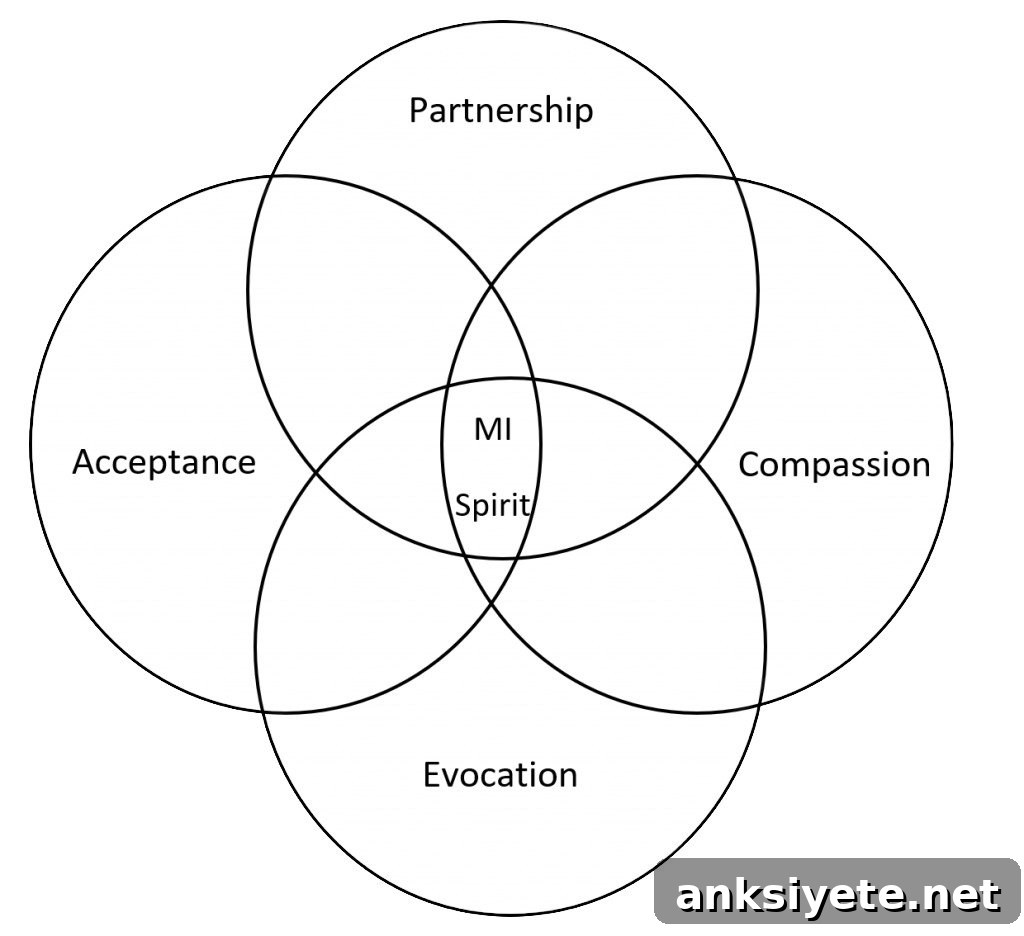
Figure 1. The spirit of MI
Partnership frames MI as a collaborative exchange between two experts: the client, who knows their life and goals, and the practitioner, who brings skills to support change. The goal is not to persuade or coerce but to guide, listen, and help the client clarify what change would look like.
The four aspects of acceptance
Acceptance emphasizes respect for the client’s perspective and contributions. It includes four interrelated qualities:
- Absolute Worth
- Accurate Empathy
- Autonomy Support
- Affirmation
These client-centered conditions create a foundation for change: honoring a person’s inherent worth, understanding their experience without judgment, supporting their freedom to choose, and affirming their strengths and efforts.
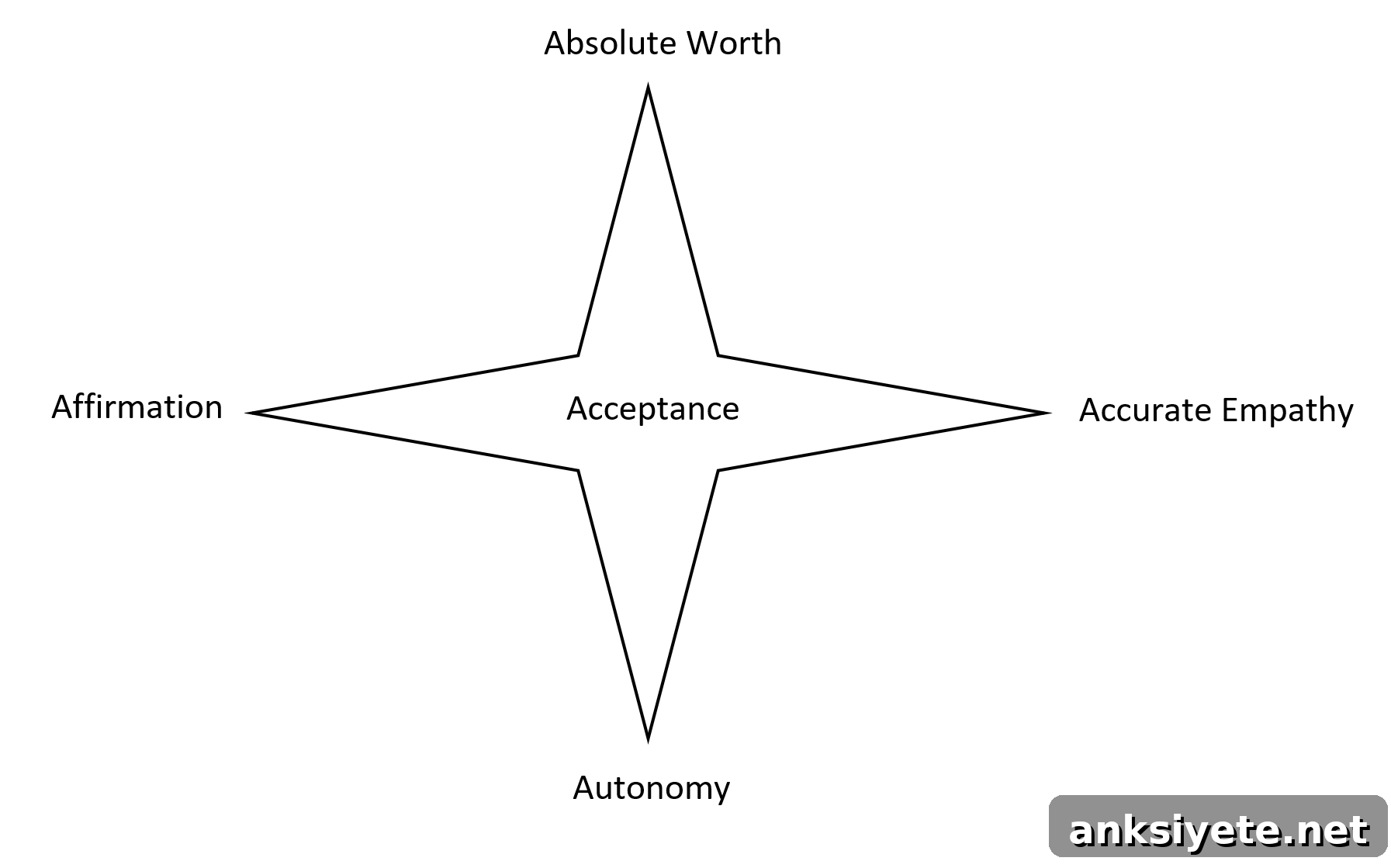
Figure 2. The four aspects of acceptance
Compassion was later emphasized to ensure MI is used to promote the well-being of others rather than to manipulate. Evocation reflects the belief that clients already have knowledge and resources for change; the practitioner’s role is to draw these out.

World’s Largest Positive Psychology Resource
The Positive Psychology Toolkit© is a comprehensive practitioner resource of evidence-based exercises, activities, and assessments designed to support behavior change and wellbeing.
Updated regularly and grounded in research.
The four processes of MI
MI unfolds through four overlapping processes: engaging, focusing, evoking, and planning. These processes build on one another but may be revisited as the conversation develops.
“Each later process builds upon those that were laid down before and continue to run beneath it as a foundation. In the course of a conversation or case, one may also dance up and down the staircase, returning to a prior step that requires renewed attention.”
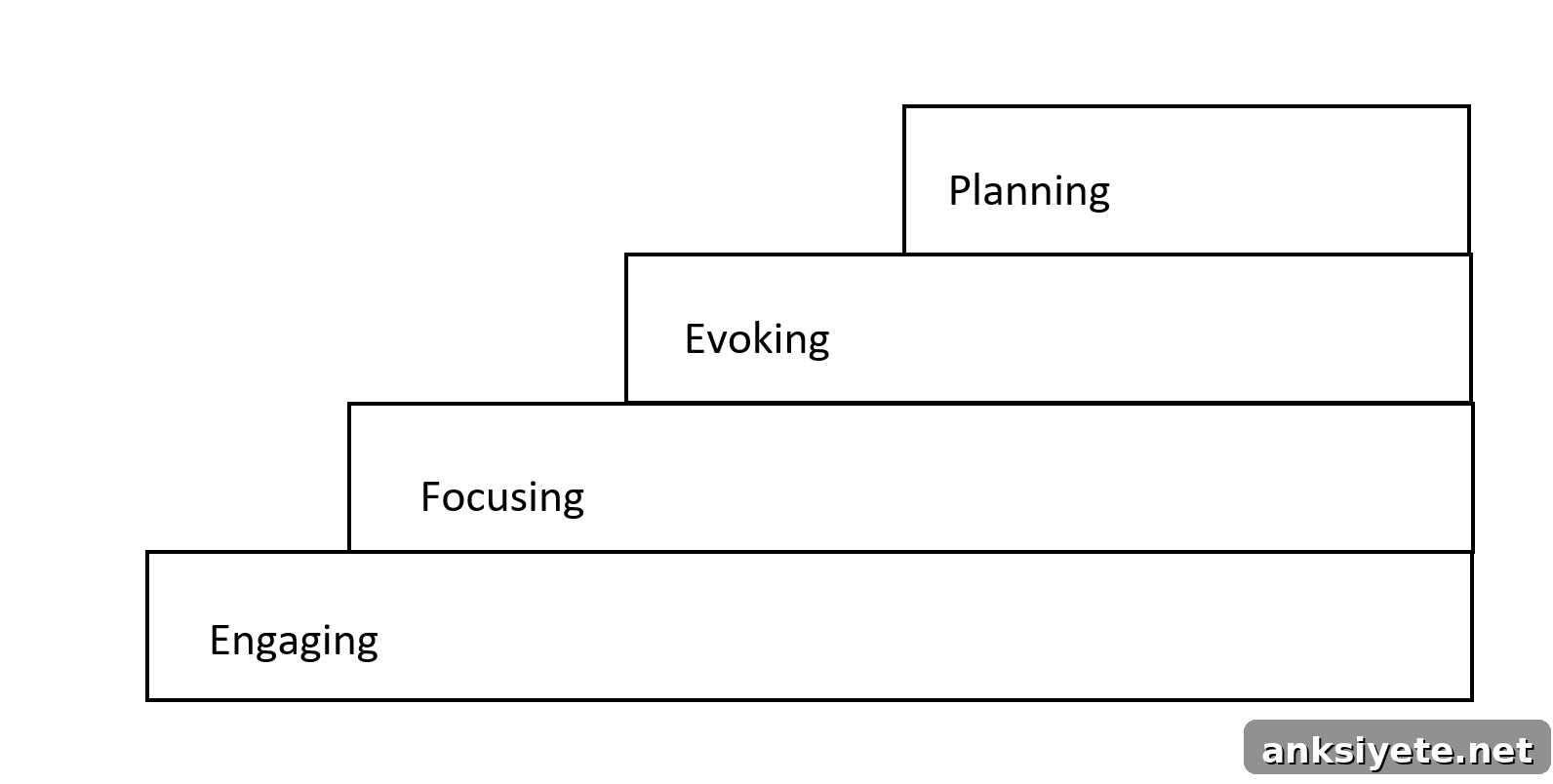
Figure 3. The four MI processes
Engaging establishes a trusting, collaborative relationship. It goes beyond politeness: it creates safety and rapport so the client feels heard and respected.
Focusing narrows the conversation to one or more agreed-upon targets for change. Both client and practitioner may bring priorities; focusing aligns those into a shared direction.
Evoking elicits the client’s own motivations — asking evocative questions, drawing out change talk, and exploring discrepancies between values and current behavior.
Planning follows when the client shows readiness. It turns motivation into concrete steps: identifying when, where, and how change will happen while maintaining MI’s collaborative spirit.
The core communication skills in MI are:
| Core skills: | |
|---|---|
| Asking open questions | Invites elaboration and helps elicit change talk |
| Affirming | Highlights the client’s strengths and efforts |
| Reflective listening | Demonstrates understanding and guides clients through ambivalence |
| Summarizing | Recaps key points to show interest and clarify direction |
| Informing and advising (with permission) | Provides information or suggestions only after asking permission |
Eliciting Change Talk: 5 Goals of MI
 Change talk includes any client statements that indicate movement toward change and are connected to a specific goal. It can be preparatory (expressing desire, ability, reasons, need) or mobilizing (commitment, readiness, and concrete steps).
Below are five practical ways to elicit change talk.
1. Ask evocative questions
Use questions that explore desire, ability, reasons, and need (DARN).
What would you like to achieve from our work together?
How much would you like to improve this area of your life?
What do you think you could do to move toward that goal?
Why is this change important to you?
How urgently do you feel you need to make this change?
2. Use the importance ruler
Ask the client to rate importance on a 0–10 scale and then follow up to explore why they chose that number rather than a lower one. This encourages the client to voice reasons that support change.
“On a scale from 0 (not at all important) to 10 (extremely important), how important is it for you to…?”
“Why did you choose that number and not a lower one?”
3. Query extremes
Ask the client to consider worst- and best-case scenarios to highlight potential consequences and benefits.
“What could happen in the long run if things stay the same?”
“What might be possible if you succeed in making this change?”
4. Look back and look forward
Invite reflection on life before the problematic behavior and on a preferred future to create contrast and clarity.
“What was life like before this became a problem?”
“How would you like things to be in five years?”
5. Explore goals and values
Help clients identify discrepancies between their current actions and their values. When people see that behavior conflicts with what matters to them, their motivation to change often grows.

Download 3 Free Goals Exercises (PDF)
Three concise, evidence-based exercises to help you or your clients create actionable goals and establish the steps needed for lasting behavior change.
A Look at the Change Cycle
Ambivalence is normal: people often have competing reasons to change and to stay the same. MI is designed to explore that ambivalence and, through respectful dialogue, help people resolve it in ways that fit their values and circumstances.
As clients express more readiness and commitment, the practitioner and client can move into planning and set achievable steps that translate motivation into action.
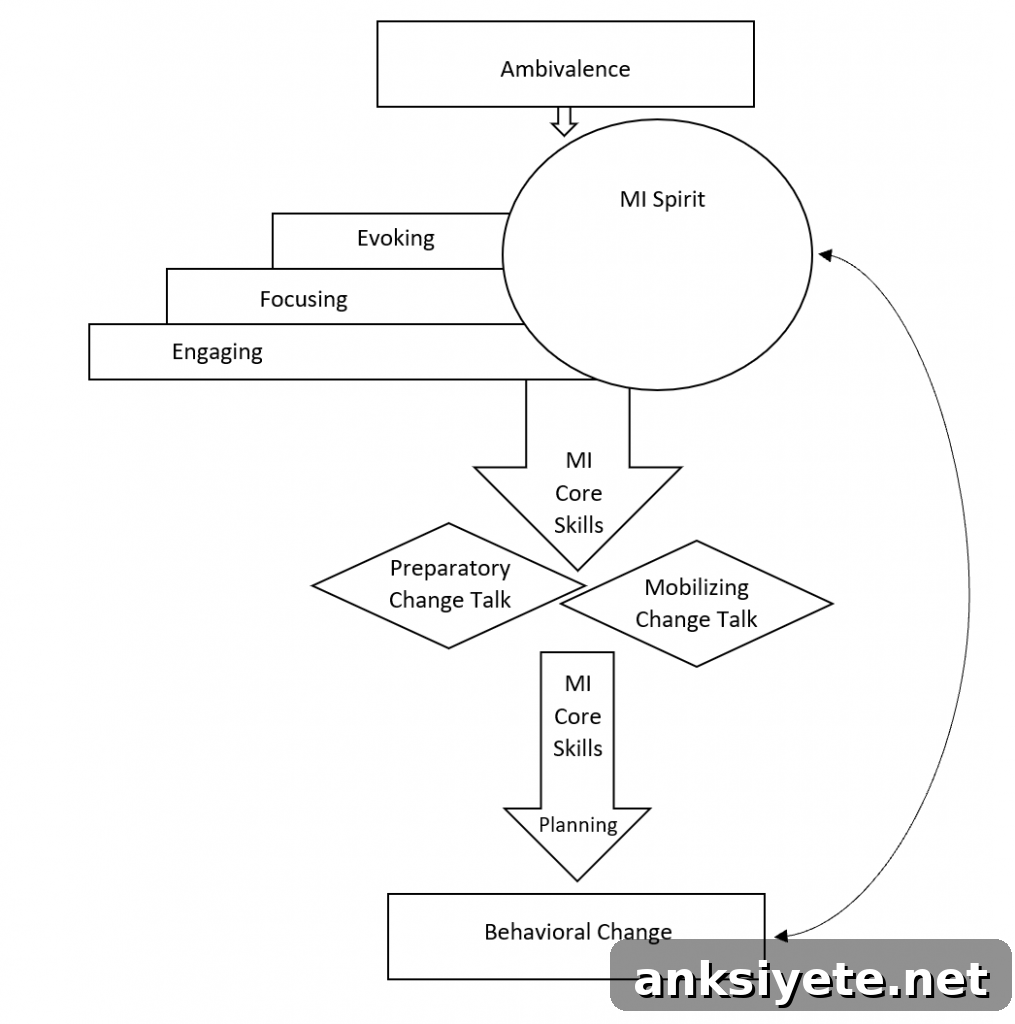
Figure 4. MI framework
PositivePsychology.com MI Resources
This site offers many MI resources, including specific questions, skill-building guidance, and worksheets to help clients move through the stages of change.
Some especially useful materials include articles and downloadable worksheets on MI questions and techniques, stages of change, and motivation in educational settings.
There are also practical worksheets for goal-setting and assessing needs satisfaction that can support conversations and planning.

17 Tools To Increase Motivation and Goal Achievement
Seventeen evidence-based exercises designed to help others set meaningful goals, increase motivation, and achieve greater satisfaction.
Created by practitioners and grounded in research.
A Take-Home Message
Conversations about change are everywhere. People generally want to improve their lives, habits, and outlook, but they often feel stuck.
Motivational Interviewing provides a respectful, client-centered communication style that uses empathic listening, draws out the client’s reasons for change, and focuses on a clear, agreed target. It helps people move from ambivalence to commitment while preserving their autonomy.
Whether someone ultimately decides to change is their choice. As practitioners, our role is to understand their perspective, help them explore the pros and cons, and support them in discovering personally meaningful reasons to change. MI is a powerful, ethical method for doing just that.
We hope this overview is helpful. Consider exploring the practical worksheets and tools that accompany these concepts to build your MI skills.
- DiClemente, C. C. (2003). Addiction and change: How addictions develop and addicted people recover. New York: Guilford Press.
- Engle, D. E., & Arkowitz, H. (2006). Ambivalence in psychotherapy: Facilitating readiness to change. New York: Guilford Press.
- Miller, W. R., & Rollnick, S. (2013). Motivational Interviewing: Helping People Change (3rd ed.). New York: Guilford Press.
- Prochaska, J. O., & DiClemente, C. C. (1984). The transtheoretical approach: Crossing traditional boundaries of therapy. Homewood, IL: Dow/Jones Irwin.
- Rogers, C. R. (1965). Client-centered therapy. New York: Houghton Mifflin.
- Rogers, C. R. (Ed.). (1980). A Way of Being. Boston: Houghton Mifflin.
- Ryan, R. M., & Deci, E. L. (2000). Self-determination theory and the facilitation of intrinsic motivation, social development, and well-being. American Psychologist, 55, 68–78.