
Scientists create a new light-sensitive plant‑human hybrid protein to precisely control calcium channels
Researchers in South Korea have developed a novel optogenetic tool, OptoSTIM1, that combines a plant photoreceptor with an animal calcium regulator to control cellular calcium (Ca2+) channels with high precision. The project was led by Won Do Heo, associate professor at the Korea Advanced Institute of Science and Technology (KAIST) and group leader at the IBS Center for Cognition and Sociality, together with Professors Yong‑Mahn Han and Daesoon Kim.
Calcium ions are central to many cellular processes, including muscle contraction, neural excitation, cell growth, differentiation and programmed cell death. Disruptions in Ca2+ regulation are implicated in conditions such as cardiac arrhythmia, cognitive decline and motor coordination disorders, making precise tools to manipulate calcium signaling valuable for both basic research and potential therapeutic development.
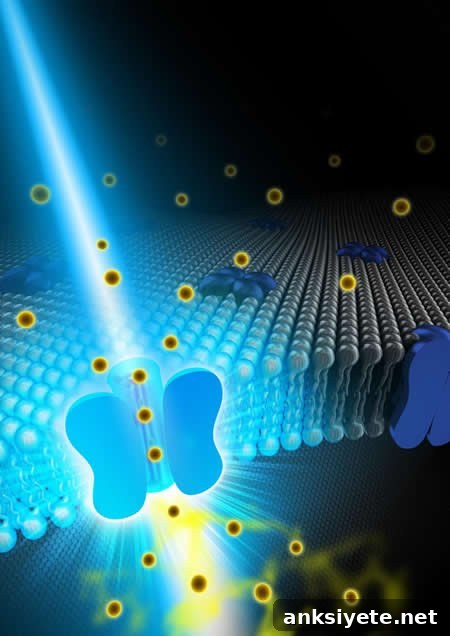
Optogenetics uses light‑sensitive proteins from plants and pairs them with animal proteins that influence ion channels in cell membranes. When exposed to light of a specific wavelength, these engineered molecules change conformation, cluster or interact with partner proteins to open or close particular ion channels. Previous approaches to modulate Ca2+ used drugs or electrical stimulation, but they lacked the spatial and temporal precision needed to dissect complex calcium‑dependent processes. Optogenetics overcomes many of those limitations by enabling rapid, reversible and cell‑type specific control.
OptoSTIM1 was engineered by fusing cryptochrome 2 (Cry2), a blue‑light photoreceptor derived from the plant Arabidopsis thaliana, with STromal Interaction Molecule 1 (STIM1), a conserved regulator of calcium release‑activated calcium (CRAC) channels in animals. Cry2 naturally clusters in response to blue light; by coupling Cry2 to STIM1, the team achieved efficient, light‑induced activation of endogenous CRAC channels, producing robust calcium influx into cells expressing the hybrid molecule.
Compared with earlier optogenetic constructs, OptoSTIM1 produced substantially greater calcium responses. The researchers report that Cry2’s strong light‑driven clustering ability likely underlies the improvement: when illuminated with blue light, cells expressing OptoSTIM1 displayed 5–10 times more detectable Ca2+ signal than in previous studies using less efficient photoreceptors.
Demonstrations in multiple biological systems
To validate OptoSTIM1 in living systems, the team tested the tool across several models. In zebrafish embryos, cells engineered to express OptoSTIM1 showed clear Ca2+ uptake upon blue light exposure, while non‑expressing cells did not. In human embryonic stem cell colonies, illuminating a single OptoSTIM1‑expressing cell triggered a delayed Ca2+ response in distant, non‑illuminated neighbors, indicating that optically induced calcium entry can propagate through intercellular signaling networks.
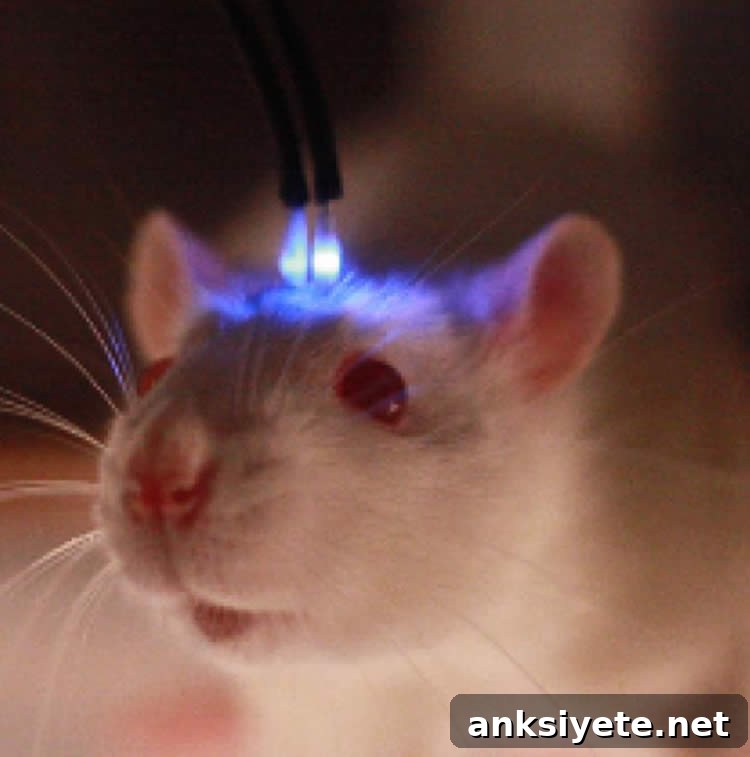
Because calcium signaling is essential in neurons and memory formation, the authors examined OptoSTIM1 function in the hippocampus. Cultured hippocampal neurons expressing OptoSTIM1 responded to blue light with a rapid Ca2+ influx. Building on these in vitro results, the team delivered OptoSTIM1 to the CA1 region of the mouse hippocampus in vivo and used brief blue light stimulation to activate the construct during a contextual fear conditioning paradigm.
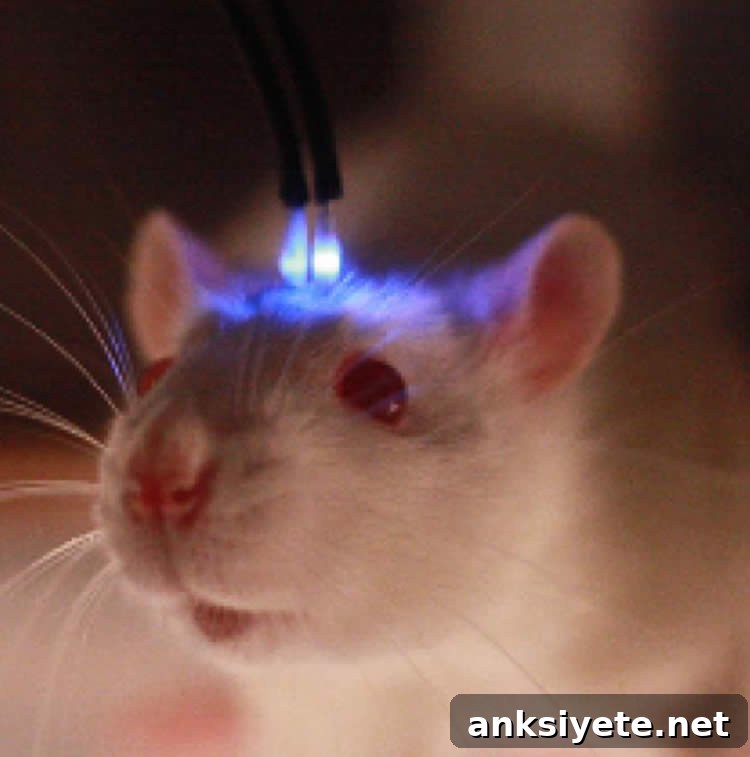
Mice with optically stimulated OptoSTIM1 expression in hippocampal neurons showed a significantly stronger contextual memory compared with non‑stimulated controls. When reintroduced to the testing environment without the conditioning cue, light‑stimulated mice displayed nearly a twofold increase in fear‑related behavior, indicating that optogenetic elevation of intracellular calcium via OptoSTIM1 reinforced memory formation in this model.
Implications for neuroscience and therapeutics
OptoSTIM1 provides a versatile, non‑invasive method to manipulate endogenous calcium channels with high temporal and spatial precision. By enabling selective activation of CRAC channels in specific cells or brain regions, this tool can help researchers map how calcium dynamics contribute to processes such as synaptic plasticity, learning and intercellular communication. Because dysregulated cellular Ca2+ signaling is implicated in neurodegenerative diseases and other disorders, OptoSTIM1 may also become a valuable platform for screening drug candidates that target calcium pathways or for developing new therapeutic strategies that modulate calcium signaling without systemic drugs.
The authors emphasize that OptoSTIM1 is a research tool for experimental modulation of Ca2+ signaling. While the results point toward potential clinical relevance, further research will be required to explore safety, delivery methods and translational applications before any therapeutic use.
Funding: Research supported by the Institute for Basic Science.
Source: Sunny Kim – Institute for Basic Science
Image credit: Institute for Basic Science
Original research: “Optogenetic control of endogenous Ca2+ channels in vivo” by Taeyoon Kyung, Sangkyu Lee, Jung Eun Kim, Taesup Cho, Hyerim Park, Yun‑Mi Jeong, Dongkyu Kim, Anna Shin, Sungsoo Kim, Jinhee Baek, Jihoon Kim, Na Yeon Kim, Doyeon Woo, Sujin Chae, Cheol‑Hee Kim, Hee‑Sup Shin, Yong‑Mahn Han, Daesoo Kim and Won Do Heo, published in Nature Biotechnology. DOI: 10.1038/nbt.3350.
Abstract (summary): OptoSTIM1 is an optogenetic construct that fuses a plant photoreceptor (Cry2) with STIM1 to control endogenous CRAC channels and intracellular Ca2+ levels in living systems. The tool enables quantitative and qualitative manipulation of calcium signaling in models ranging from zebrafish embryos and human embryonic stem cells to mouse hippocampus, where optical activation enhanced contextual memory formation. OptoSTIM1 promises to broaden mechanistic studies of calcium‑dependent processes and aid in drug screening targeting Ca2+ signaling.