
Summary: A new study reveals that glioblastoma tumors reprogram microglia, the brain’s resident immune cells, causing them to support tumor growth rather than attack it.
Source: Karolinska Institute.
Glioblastomas influence microglia—the brain’s immune cells—so that these cells promote cancer growth instead of fighting it. An international research team led by investigators at Sweden’s Karolinska Institutet has identified the molecular mechanism responsible for this shift, as reported in Nature Immunology.
Glioblastoma is one of the most aggressive types of brain cancer. Its cells invade healthy brain tissue, making complete surgical removal extremely difficult. In addition to their invasive behavior, glioblastoma cells manipulate the surrounding immune environment. Rather than being eliminated by microglia, the tumor co-opts these immune cells and converts them into allies that stimulate tumor expansion and invasion.
The research team had previously shown that pro-inflammatory activation of microglia is controlled by a family of enzymes known as caspases. In the current study, the investigators asked whether glioblastoma-driven changes in microglia involve the same caspase-dependent mechanisms. Using co-culture systems that grew microglia together with glioblastoma cells, the researchers demonstrated that glioma cells reduce caspase-3 activity within microglia.
“We found that inhibition of caspase-3 is the key change that transforms microglia into tumor-supportive cells,” explains Bertrand Joseph, Principal Investigator in the Department of Oncology-Pathology at Karolinska Institutet. “When we removed caspase-3 from microglia in a mouse model of glioblastoma, tumor growth accelerated.”
The authors reveal that glioma cells employ a nitric oxide–dependent process to alter caspase-3 in microglia. This modification converts caspase-3 into a form that supports tumor-promoting behavior. Specifically, glioma-derived nitric oxide leads to increased S-nitrosylation of caspase-3 associated with mitochondria, interfering with normal caspase-3 function and thereby shifting microglial activity toward tumor support.
“Two aspects surprised us,” says Bertrand Joseph. “First, that interfering with this signaling pathway between glioma cells and microglia has such a large impact on tumor growth. Second, that basal caspase-3 activity—a level of activity sometimes considered negligible—actually plays a vital role in regulating microglial behavior.”
Funding: Lead authors of the study are Xianli Shen and Miguel Burguillos. Collaborators included researchers from Universidad de Sevilla (Spain), Stockholm University (Sweden), Yale University (USA), and other institutions. The work received financial support from the Swedish Research Council, the Swedish Childhood Cancer Foundation, the Swedish Cancer Society, the Swedish Brain Fund, StratCan, StratNeuro, and the ALF agreement with Stockholm County Council.
Source: Karolinska Institute
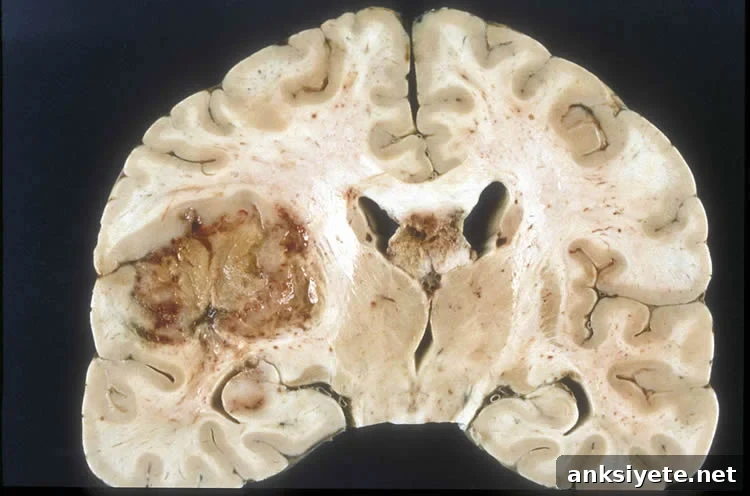
Image Source: This NeuroscienceNews.com image is described as public domain in the original report.
Original Research: Abstract for “Glioma-induced inhibition of caspase-3 in microglia promotes a tumor-supportive phenotype,” Nature Immunology. Published online September 12, 2016. DOI: 10.1038/ni.3545
MLA: Karolinska Institute. “Mechanism Behind Glioblastoma’s Influence on Immune System Explained.” NeuroscienceNews. 12 September 2016.
APA: Karolinska Institute. (2016, September 12). Mechanism Behind Glioblastoma’s Influence on Immune System Explained. NeuroscienceNews.
Chicago: Karolinska Institute. “Mechanism Behind Glioblastoma’s Influence on Immune System Explained.” (accessed September 12, 2016).
Abstract
Glioma-induced inhibition of caspase-3 in microglia promotes a tumor-supportive phenotype
Glioma cells recruit and exploit microglia, the resident immune cells of the brain, to enhance their proliferation and invasive capacity. The molecular mechanism by which glioma cells convert microglia into a tumor-supporting phenotype was previously unclear. The researchers found that glioma-induced microglial conversion correlated with reduced basal activity of microglial caspase-3 and increased S-nitrosylation of mitochondria-associated caspase-3 due to inhibited activity of the redox protein thioredoxin-2 (Trx2). Inhibition of caspase-3 altered microglial function toward tumor support. The study identified nitric oxide synthase 2 (NOS2/iNOS) activity originating from glioma cells as the driving stimulus that controls microglial caspase-3. Repressing glioma NOS2 expression in vivo reduced microglia recruitment and limited tumor expansion, while deletion of the microglial caspase-3 gene promoted tumor growth. These results indicate that impaired denitrosylation of S-nitrosylated procaspase-3 mediated by Trx2 is a component of the pro-tumoral activation pathway initiated by glioma cells.
Authors: Xianli Shen, Miguel A. Burguillos, Ahmed M. Osman, Jeroen Frijhoff, Alejandro Carrillo-Jiménez, Sachie Kanatani, Martin Augsten, Dalel Saidi, Johanna Rodhe, Edel Kavanagh, Anthony Rongvaux, Vilma Rraklli, Ulrika Nyman, Johan Holmberg, Arne Östman, Richard A. Flavell, Antonio Barragan, Jose Luis Venero, Klas Blomgren, and Bertrand Joseph. Published in Nature Immunology, September 12, 2016. DOI: 10.1038/ni.3545