
Summary: Researchers at UT Southwestern report that lower physical fitness is linked to faster deterioration of white matter fibers in the brain, which can contribute to cognitive decline and memory problems as people age.
Source: UT Southwestern
Regular Exercise Supports Brain Health and May Help Prevent Alzheimer’s
New research from the O’Donnell Brain Institute at UT Southwestern strengthens the evidence that physical fitness protects brain health and could play a role in reducing the risk or slowing the progression of Alzheimer’s disease. The study finds that lower cardiorespiratory fitness is associated with weaker white matter integrity—changes that correlate with worse cognitive performance, especially in memory and executive function.
White Matter: Vital Communication Pathways in the Brain
White matter consists of bundles of nerve fibers that enable communication among different brain regions. The O’Donnell Brain Institute study focused on white matter integrity in older adults who are at heightened risk for Alzheimer’s disease, including individuals with mild cognitive impairment (MCI), an early stage of memory decline that often precedes dementia.
Researchers observed that participants with lower measured fitness showed signs of greater deterioration in white matter tracts. Those white matter changes were in turn associated with lower performance on cognitive tests, supporting a link between physical fitness, structural brain health, and cognitive abilities.
Objective Fitness Measurements Strengthen the Findings
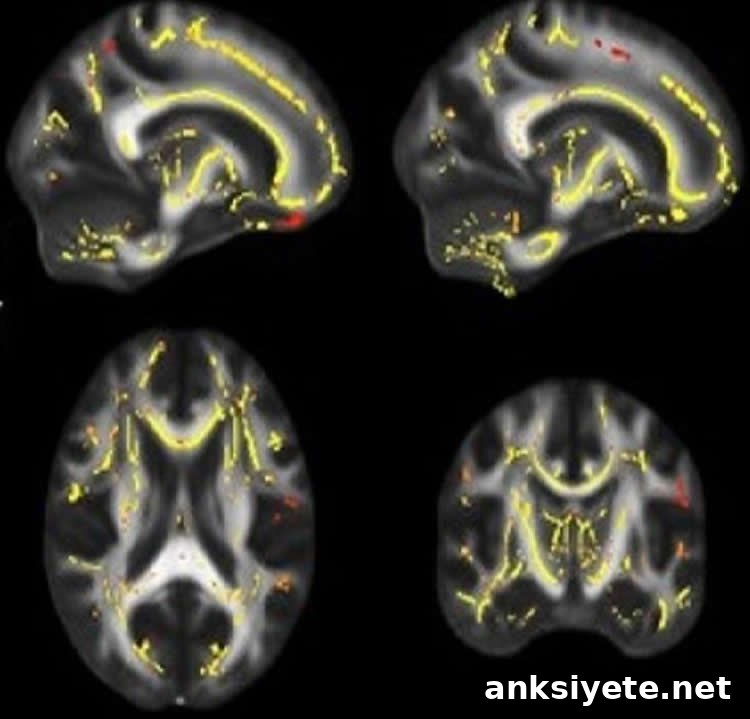
Unlike many earlier studies that relied on self-reported physical activity, this study used an objective physiological measure: maximal oxygen uptake (VO2max), the standard metric for cardiorespiratory fitness. Brain imaging with diffusion tensor imaging (DTI) was used to quantify the integrity and functionality of white matter fibers. Participants also completed standardized memory and cognitive tests.
By combining objective fitness testing, advanced imaging, and neurocognitive assessment, the investigators were able to establish robust correlations between higher cardiorespiratory fitness, stronger white matter integrity, and better cognitive performance—particularly executive function—in people with MCI.
Important Questions Remain
While the results reinforce public-health advice to exercise regularly, they also leave open important questions: what specific level of fitness most effectively reduces dementia risk, and how late in the disease process can lifestyle interventions still make a meaningful difference? These are active areas of research.
To address some of these unknowns, the O’Donnell Brain Institute is leading a five-year national clinical trial across six medical centers. That trial enrolls more than 600 older adults at high risk for Alzheimer’s disease and is testing whether regular aerobic exercise, together with optimized treatment for cardiovascular risk factors such as high blood pressure and high cholesterol, can preserve cognitive function.
“Evidence suggests that what harms the heart also harms the brain,” said Dr. Rong Zhang, who directs the clinical trial and leads the Cerebrovascular Laboratory at the Institute for Exercise and Environmental Medicine. The multicenter trial aims to clarify how cardiovascular health and exercise intersect with brain aging and dementia risk.
Building on Previous Findings
This study expands on earlier research linking an active lifestyle to more efficient neuronal signaling and better cognitive outcomes in older adults. Other teams at the O’Donnell Brain Institute are developing methods for earlier detection of dementia risk and investigating ways to slow or block the spread of toxic proteins such as beta-amyloid and tau, which are implicated in neuronal loss in Alzheimer’s disease.
“There is still much to learn about the mechanisms and treatments for dementia,” said Dr. Kan Ding, the study’s lead author and Assistant Professor of Neurology & Neurotherapeutics. “But these findings add to the growing rationale for encouraging people to increase their physical activity levels to support brain health.”
About This Research
Funding: The study received partial support from the National Institutes of Health and the American Heart Association. It involved collaboration with the Institute for Exercise and Environmental Medicine and UT Southwestern’s Alzheimer’s Disease Center.
Research team: The work was conducted by investigators at the O’Donnell Brain Institute, including Dr. Kan Ding and Dr. Rong Zhang, among others. Dr. Zhang holds appointments in Neurology & Neurotherapeutics and Internal Medicine.
Abstract (Study Highlights)
Title: Cardiorespiratory Fitness and White Matter Neuronal Fiber Integrity in Mild Cognitive Impairment
Background: Prior studies show self-reported physical activity correlates with white matter integrity and cognitive status in normal older adults and those with mild cognitive impairment (MCI). Objective measures of cardiorespiratory fitness had been lacking.
Objective: To examine associations between cardiorespiratory fitness, measured by VO2max, white matter fiber integrity assessed with diffusion tensor imaging (DTI), and neurocognitive performance in older adults with and without MCI.
Methods: Eighty-one participants (mean age 65 ± 7 years; 43 women) were studied: 26 cognitively normal older adults and 55 with amnestic MCI. Each underwent VO2max testing to quantify fitness, DTI to evaluate white matter integrity, and a neurocognitive battery emphasizing memory and executive function. DTI data were analyzed using tract-based spatial statistics and region-of-interest approaches.
Results: Global white matter integrity and VO2max did not differ significantly between cognitively normal and MCI groups. Higher VO2max correlated positively with fractional anisotropy in approximately 54% of white matter tracts, and negatively with mean and radial diffusivities in about 46% and 56% of tracts, respectively. These associations remained significant after adjusting for age, sex, body mass index, white matter lesion burden, and MCI status. DTI metrics in regions linked to VO2max were associated with executive function performance in MCI patients.
Conclusions: Greater cardiorespiratory fitness is associated with better white matter fiber integrity, which in turn correlates with stronger executive function in older adults with mild cognitive impairment.