
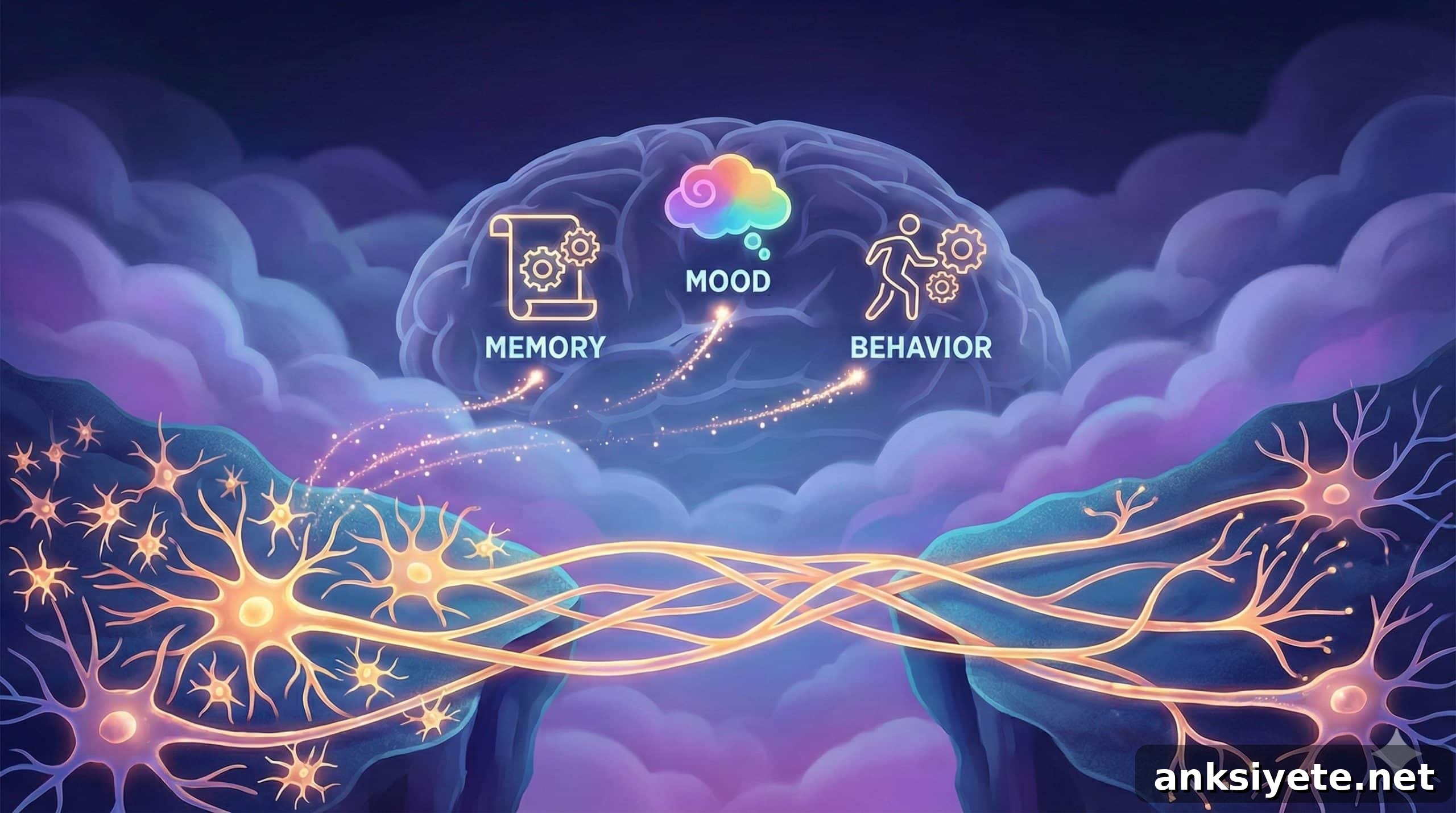
Summary: Researchers have identified a biological “blueprint” that explains how the brain’s microscopic components assemble into the large-scale networks that underlie thought, emotion, and behavior. By integrating brain imaging with genetic, transcriptomic, and molecular measures, the team found that cellular distributions, neurotransmitter systems, and metabolic features directly shape functional brain networks.
The study demonstrates that microscopic elements — specific cell types, chemical signaling systems such as serotonin and dopamine, and energy-producing structures like mitochondria — are not passive background features but active contributors to how brain networks form and operate. These insights have the potential to reshape understanding of cognitive aging, resilience, and psychiatric and neurodegenerative disorders.
Key Facts
- Micro-to-Macro Link: Cellular and molecular patterns are directly associated with large-scale brain networks observed with functional imaging.
- Mental Health Insight: Biological systems tied to cognition and emotion overlap with systems disrupted in conditions such as schizophrenia and depression.
- Precision Medicine Potential: Mapping an individual’s cellular and molecular brain profile could guide personalized treatments targeting vulnerable networks.
Source: Georgia State University
A new study led by researchers at Georgia State University reveals how the brain’s smallest elements give rise to the functional systems that support thinking, feeling, and behaving.
Published in Nature Communications, the research links high-resolution brain imaging with transcriptomic and molecular imaging data to create a detailed biological map that connects micro-level components to macro-level network organization.
Vince Calhoun, Distinguished University Professor at Georgia State and a Georgia Research Alliance Eminent Scholar with appointments at Georgia Tech and Emory University, is a senior author on the study and co-leads the TReNDS Center (Center for Translational Research in Neuroimaging and Data Science). He emphasized that combining datasets across scales was essential to reveal how cellular and molecular gradients shape functional networks visible in fMRI data.
“We found that the brain’s large-scale networks are built on a hidden biological blueprint,” Calhoun said. “Aligning cellular, molecular, and imaging data shows that the architecture revealed by functional imaging is rooted in cellular and molecular organization.”
The team analyzed dynamic connectivity patterns — how brain regions communicate and reconfigure over time — alongside maps of cell-type distributions, neurotransmitter systems, and mitochondrial phenotypes. Using mediation analysis, they demonstrated that these microscale features do more than correlate with behavior and imaging results: specific network patterns mediate how cellular and molecular characteristics influence cognitive functions.
Guozheng Feng, the study’s lead author and a postdoctoral research associate at the TReNDS Center, described the findings as a major step toward answering a central neuroscience question: how do microscopic cellular and molecular foundations give rise to the brain networks that support complex cognition, emotion, and behavior?
“Our results show that some functional networks act as intermediaries — linking cell-type and molecular architecture to domain-specific cognitive processes,” Feng said. “This provides a mechanistic view of how biology scales up to support behavior.”
Calhoun added that many psychiatric and neurodegenerative disorders involve both molecular imbalances and network disturbances. By revealing that these features are linked, the work points to specific systems that may be especially vulnerable in conditions like schizophrenia, depression, or Alzheimer’s disease, and suggests routes for targeted interventions.
Jiayu Chen, a research assistant professor at the TReNDS Center who contributed to the study, noted that advanced imaging and genetic analysis allow researchers to better understand how genes shape brain structure and function. The team aims to develop a comprehensive map that connects each person’s molecular and cellular brain profile to the organization of their functional networks.
Such a map could help clinicians tailor treatments to patients by identifying which biological systems most strongly influence an individual’s brain networks and cognitive strengths or vulnerabilities.
The TReNDS Center, a collaboration among Georgia State, Georgia Tech, and Emory University, focuses on building computational tools to convert brain imaging and molecular data into actionable biomarkers to improve diagnosis and treatment of brain disorders.
Funding: This research was supported by the National Science Foundation (NSF) under Grant #2112455 and by the National Institutes of Health (NIH) through Grants #R01MH123610 and #R01MH136665.
Key Questions Answered:
A: Large-scale brain networks emerge directly from microscopic cellular and molecular organization, linking cell types and signaling systems to functional network architecture.
A: The study integrates genes, molecules, and brain activity into a continuous biological framework that connects micro-scale features with brain network function.
A: The findings explain how molecular imbalances can disrupt network organization, providing insights into the biological basis of disorders such as depression and schizophrenia.
Editorial Notes:
- This article was edited by a Neuroscience News editor.
- The journal paper was reviewed in full.
- Additional context was added by staff to clarify implications and methods.
About this neuroscience, mood, memory, and behavior research news
Author: Noelle Reetz
Source: Georgia State University
Contact: Noelle Reetz – Georgia State University
Image: The image is credited to Neuroscience News
Original Research: Open access. “Cellular and molecular associations with intrinsic brain organization” by Vince Calhoun et al. Nature Communications
Abstract
Cellular and molecular associations with intrinsic brain organization
Understanding how cellular and molecular architecture underpins the large-scale organization of human brain function is a central challenge in neuroscience. By integrating transcriptomic datasets (microarray and single-nucleus RNA-sequencing), molecular imaging, and neuroimaging, the study reports spatial correspondences showing that distributions of diverse cell types, neurotransmitter systems, and mitochondrial phenotypes align with intrinsic connectivity networks (ICNs).
These correspondences extend beyond local overlap to reflect network-level structure. Inter-ICN similarity networks based on cellular and molecular profiles recapitulate both static and dynamic patterns of functional network connectivity (FNC), echoing canonical functional domains. Mediation analyses indicate that specific ICNs mediate relationships between microscale cell-type architecture and domain-specific cognitive processes, while FNCs capture pathways linking cell-type and neurotransmitter similarity networks to cognitive organization.
Together, the findings indicate that functional brain architecture systematically aligns with cellular and molecular organization, suggesting these microscale features may constrain how large-scale networks form and contribute to the neural basis of cognition.