
New research reveals how adolescents’ brains balance risk and reward behind the wheel—and how a parent’s presence changes that equation.
Researchers from the University of Illinois used a driving simulation and brain imaging to examine how 14-year-olds evaluate risk when driving alone versus when their mother is watching. The study, led by psychology professor Eva Telzer and reported in Social Cognitive and Affective Neuroscience, tracked blood flow in regions of the brain known to govern reward and cognitive control while teens performed the simulated driving task.
The driving task itself was developed and previously evaluated for peer effects by Laurence Steinberg of Temple University. Steinberg’s earlier work showed that the presence of peers tends to increase adolescent risk-taking. Telzer’s study asked the complementary question: can a parent’s presence reduce risky choices?
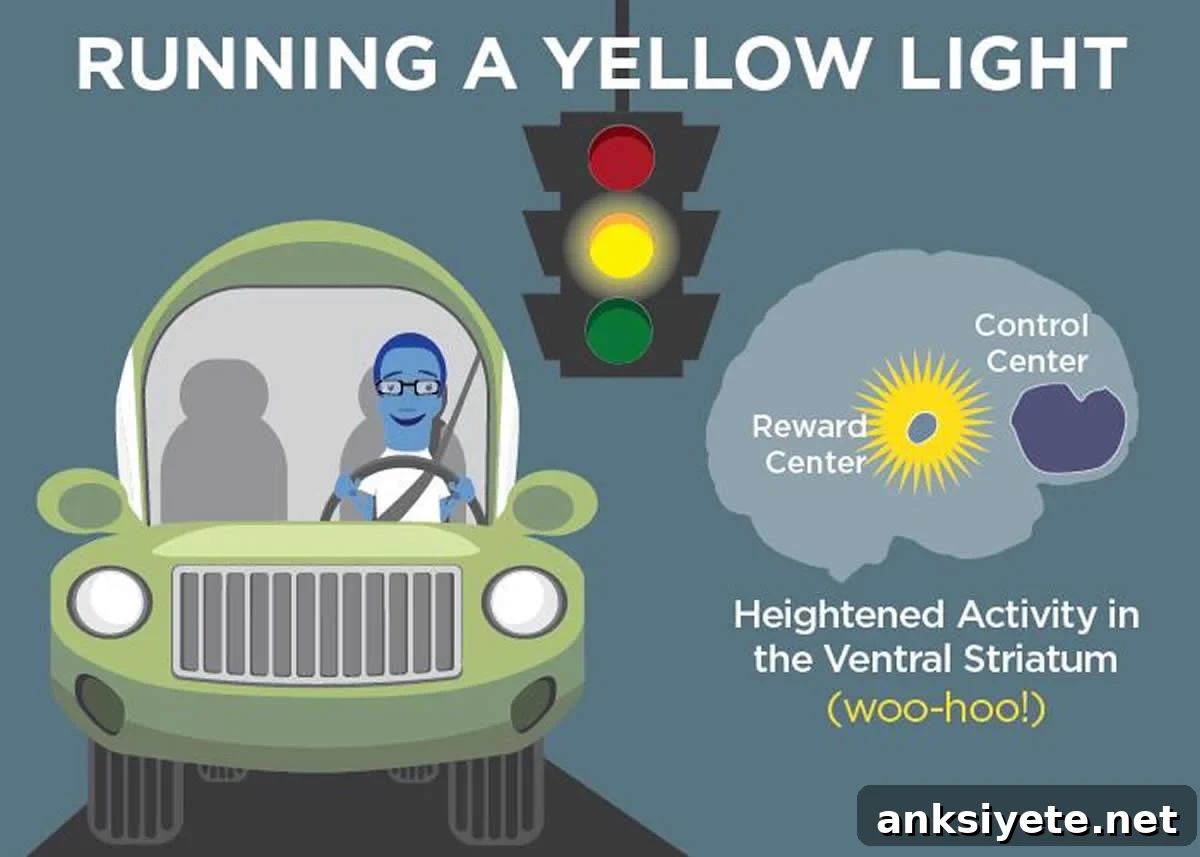
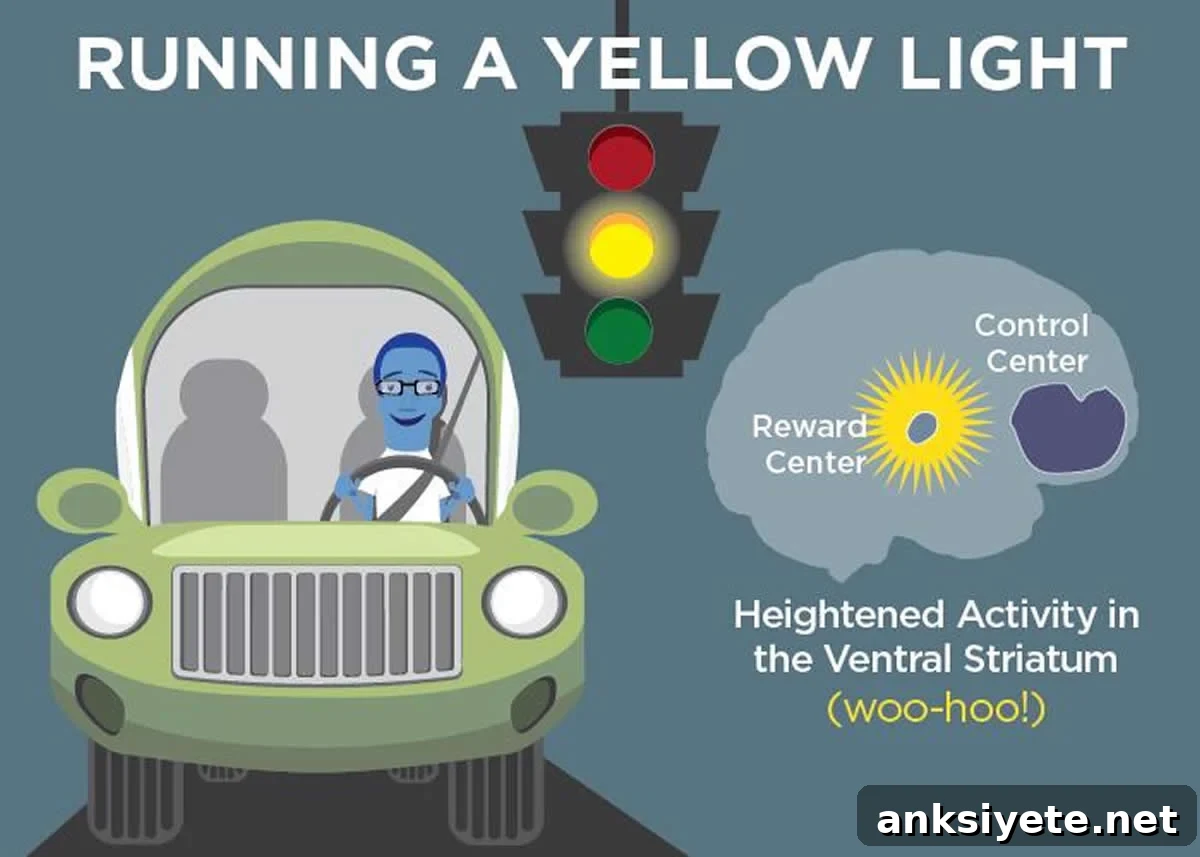
When adolescents drove alone, researchers saw a clear pattern: risky decisions—such as accelerating through a yellow light—activated the ventral striatum, a brain region closely associated with reward processing. Telzer explains that the ventral striatum is especially sensitive during adolescence, which helps explain why risky actions often feel especially appealing at this stage of development.
However, the study found that a mother’s presence significantly altered that neural response. With the mother watching, the heightened ventral striatum activation tied to risky decisions diminished. In other words, running the yellow light no longer produced the same reward signal when a parent was present.
Those neural changes matched behavior. Teens braked at yellow lights more often when their mothers were present, dropping from roughly 55 percent risky choices when alone to about 45 percent when observed by their mother. This change—an approximate 10 percentage point reduction in risky responses—demonstrates a meaningful behavioral effect linked to parental presence.
At the same time, safe choices engaged a different brain system. When teens chose the safer option and stopped at the yellow light with their mother watching, the prefrontal cortex (PFC)—a region critical for behavioral regulation and cognitive control—showed increased activity. That PFC engagement occurred primarily when the mother was present and was not observed to the same degree when the adolescents were alone.
These findings point to two complementary mechanisms by which parents may reduce adolescent risk-taking: lowering the reward value of risky actions (blunting ventral striatum activation) and enhancing cognitive control during safe decisions (increasing PFC recruitment). Together, the reduced reward response and the boosted control response help adolescents to pause and make safer choices in moments of potential danger.
Telzer and colleagues emphasize that adolescence combines heightened reward sensitivity with still-developing cognitive control systems. When cognitive control is immature, adolescents are more prone to be swayed by immediate rewards. The current study shows that a parent’s presence can shift this balance—dampening reward responses to risky behavior while recruiting the neural circuits that support deliberation and self-regulation.
Funding: This research was supported by the National Science Foundation and the Department of Psychology at the University of Illinois.
Source: Diana Yates, University of Illinois at Urbana-Champaign
Image credit: Julie McMahon
Original research: Abstract for “Mothers know best: Redirecting adolescent reward sensitivity towards safe behavior during risk taking” by Eva H. Telzer, Nicholas T. Ichien and Yang Qu in Social Cognitive and Affective Neuroscience. Published online March 9, 2015. DOI: 10.1093/scan/nsv026
Abstract
Mothers know best: redirecting adolescent reward sensitivity toward safe behavior during risk taking
Adolescence is a developmental window with a notable paradox: overall health is high, yet morbidity and mortality from preventable risky behaviors increase. Heightened reward sensitivity combined with still-maturing cognitive control likely contributes to this vulnerability. This study tested whether reward sensitivity can be redirected to promote safer choices. Adolescents completed a risk-taking driving task while undergoing fMRI both alone and in the presence of their mother. When mothers were present, adolescents showed reduced risk-taking behavior, greater recruitment of the ventrolateral prefrontal cortex (VLPFC) during safe decisions, decreased ventral striatum activation following risky choices, and increased functional coupling between the ventral striatum and VLPFC when choosing safety. These results suggest that the same reward circuitry that can drive risky behavior may be redirected to support more deliberative, safer decisions under parental supervision.