
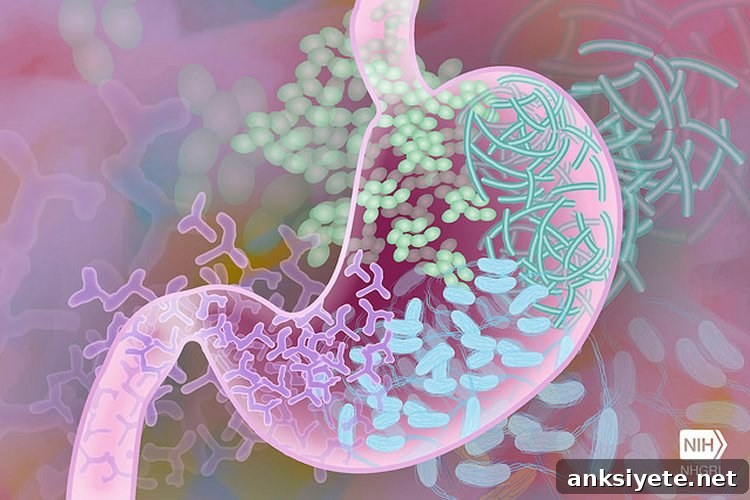
Summary: Researchers at Joslin Diabetes Center report a connection between gut bacteria and the psychological distress that often accompanies obesity. In mice, a high‑fat diet increased behaviors consistent with anxiety, depression and compulsivity; these behaviors were significantly reduced when antibiotics that alter the gut microbiome were given.
Source: Joslin Diabetes Center.
People with obesity and type 2 diabetes face higher rates of depression and anxiety than the general population. New work from Joslin Diabetes Center suggests a contributing factor may be the gut microbiome — the community of microbes that live in the digestive tract.
Using a well‑established mouse model of diet‑induced obesity, the researchers found that mice fed a high‑fat diet displayed more anxiety‑like, depressive‑like and repetitive behaviors than mice fed a regular chow. When mice received antibiotics known to alter gut bacterial communities while on the high‑fat diet, those behavioral changes were largely prevented or reversed, according to C. Ronald Kahn, M.D., co‑head of the Section on Integrative Physiology and Metabolism at Joslin and the Mary K. Iacocca Professor of Medicine at Harvard Medical School.
“Clinically, patients often tell us they feel different after eating certain foods,” Kahn notes. “Our findings indicate that diet affects brain function not only through changes in blood glucose, but also by altering signals produced by gut microbes. These microbe‑derived signals travel to the brain and influence mood and behavior.”
The Joslin team has previously shown that changes in the gut microbiome contribute to metabolic alterations that promote obesity and diabetes in mice on high‑fat diets. In this study, they extended those observations by applying four standard behavioral assays commonly used to screen for anxiety and depression‑related phenotypes. In every test, high‑fat diet mice exhibited more anxiety‑ and depression‑like behaviors than control mice, and co‑treatment with antibiotics normalized these behaviors.
To establish a causal role for the microbiome, the investigators performed fecal microbiota transfer experiments into germ‑free mice, which are raised without any resident microbes. Germ‑free animals receiving gut bacteria from high‑fat diet donors developed increased anxiety‑ and compulsive‑like behaviors. By contrast, germ‑free mice that received microbes from donors fed a high‑fat diet plus antibiotics did not develop those behaviors, even though they themselves were not treated with antibiotics. “This demonstrates that the gut microbiome contributes substantially to the behavioral changes,” Kahn says.
The researchers then examined two brain regions implicated in metabolism and mood — the hypothalamus, which regulates whole‑body energy balance, and the nucleus accumbens, a key center for motivation and reward. They found that mice on a high‑fat diet developed insulin resistance in these brain areas. Antibiotic treatment largely reversed the impaired insulin signaling, and the effect could be transferred to germ‑free mice via the microbiome. These results indicate that gut microbes influence brain insulin sensitivity.
Further analyses linked microbiome changes to altered levels of neurotransmitters and metabolic markers in the brain. The study observed changes in tryptophan metabolism, GABA levels, brain‑derived neurotrophic factor (BDNF), various amino acids and multiple acylcarnitines. Together, these metabolic shifts likely contribute to the observed changes in mood‑related behaviors.
Kahn and colleagues are now working to pinpoint which specific bacterial populations and microbial metabolites are responsible for these effects. “Antibiotics are blunt instruments that reshape many microbial populations at once,” Kahn explains. “Our aim is to identify the particular bacteria or molecules that promote brain insulin resistance and behavioral changes. If we can increase protective microbes or reduce harmful ones through targeted probiotics, prebiotics or small molecules, it may be possible to improve both metabolic health and mood without broad‑spectrum antibiotics.”
The study underscores the value of interdisciplinary research: insights from metabolic disease can illuminate mechanisms underlying psychiatric and behavioral disorders. “Sometimes following one biological question leads to unexpected findings in another field,” Kahn says. “Understanding metabolism has opened new perspectives on brain function and behavior.”
Lead author: Marion Soto. Contributors from Joslin included Clémence Herzog; additional coauthors were Julian Pacheco, Kevin Bullock and Clary Clish (Broad Institute), and Shiho Fujisaka (University of Toyama).
Funding: Supported by the National Institutes of Health.
Source: Jeffrey Bright, Joslin Diabetes Center.
Publisher: Organized by NeuroscienceNews.com.
Image Source: NeuroscienceNews.com image is in the public domain.
Original Research: Open‑access study titled “Gut microbiota modulate neurobehavior through changes in brain insulin sensitivity and metabolism,” published in Molecular Psychiatry.
Joslin Diabetes Center. “Gut Microbes May Contribute to Depression and Anxiety in Obesity.” NeuroscienceNews. June 18, 2018.
Abstract
Gut microbiota modulate neurobehavior through changes in brain insulin sensitivity and metabolism
Obesity and diabetes in humans are linked to higher rates of anxiety and depression. To investigate the roles of the gut microbiome and brain insulin resistance in these conditions, the authors evaluated behavior and brain insulin signaling in mice with diet‑induced obesity (DIO), with and without antibiotic treatment. DIO mice displayed behaviors consistent with increased anxiety and depression, along with reduced insulin signaling and elevated inflammation in the nucleus accumbens and amygdala. Oral treatment with metronidazole or vancomycin reduced inflammation, improved brain insulin signaling and diminished anxiety‑ and depression‑like behaviors. These effects were associated with altered levels of tryptophan, GABA, BDNF, amino acids and multiple acylcarnitines, and were transferable to germ‑free mice by fecal microbiota transplant. Thus, gut microbiota can influence brain insulin signaling and metabolite profiles, leading to changes in neurobehavior.