
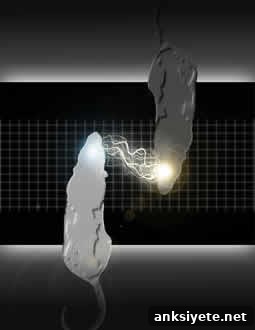
Researchers have for the first time linked the brains of pairs of rats electronically, allowing the animals to communicate directly and solve simple behavioral tasks. In a follow-up test, the team successfully connected two rats located thousands of miles apart—one in Durham, North Carolina, and the other in Natal, Brazil.
The experiments point to the possibility of connecting multiple brains to form an “organic computer” capable of sharing motor and sensory information across a group of animals. The work was published on Feb. 28, 2013, in the journal Scientific Reports.
Led by Miguel Nicolelis, M.D., PhD, professor of neurobiology at Duke University School of Medicine, the team was motivated by earlier brain-machine interface experiments showing that rat brains are highly adaptable. Those prior studies demonstrated rats could incorporate signals from artificial sensors, including invisible infrared cues. The researchers asked whether a rat brain could similarly integrate information coming directly from another animal’s brain.
To test this, the scientists trained pairs of rats on a simple lever-press task: when an indicator light above one of two levers illuminated, pressing that lever produced a small water reward. After training, both animals were implanted with microelectrode arrays in the motor cortex so the team could record and stimulate neural activity.
In each pair, one rat acted as the “encoder.” That rat received the visual cue and pressed the indicated lever to get a drink. When the encoder made its choice, researchers translated a portion of its brain activity—specifically the neural pattern representing the decision—into a corresponding pattern of electrical pulses. Those pulses were delivered directly to the motor cortex of the other animal, the “decoder.”
The decoder had the same two-lever setup but did not see any visual cue. To obtain the reward, the decoder needed to interpret the electrical pattern sent from the encoder’s brain and press the correct lever. Across trials, decoders reached peak success rates around 70 percent—near the researchers’ theoretical maximum of about 78 percent based on stimulation parameters—showing they could reliably use transmitted brain signals to guide behavior.
Importantly, the interface created a two-way functional link: the encoder’s reward depended in part on the decoder’s response. If the decoder made a wrong choice, the encoder received a reduced reward. This contingency fostered an adaptive interaction between the animals. As Nicolelis described, when the decoder erred the encoder adjusted both its neural signals and behavior—producing cleaner decision-related activity and acting more decisively—so the transmitted signal became easier for the decoder to interpret. Those mutual adjustments increased the pair’s overall success and reward.
In a second set of experiments, the team trained rats to discriminate opening width using their whiskers. A narrow opening required a left nose-poke for water, while a wide opening required a right nose-poke. Encoders detected the opening and transmitted their choice via stimulation pulses. Decoders had been conditioned to associate pulses with the left reward port and the absence of pulses with the right port. During linked trials, decoders selected the correct port about 65 percent of the time—well above chance—indicating successful tactile information transfer through the brain-to-brain interface.
To explore transmission limits, the researchers placed an encoder rat in Brazil at the Edmond and Lily Safra International Institute of Neuroscience of Natal and sent its neural signals over the Internet to a decoder rat in Durham. Despite increased noise and communication delays over long distances, the two animals continued to cooperate successfully on the tactile discrimination task. “Even though the animals were on different continents, with the resulting noisy transmission and signal delays, they could still communicate,” said Miguel Pais-Vieira, PhD, a postdoctoral fellow and first author.
Nicolelis summarized the significance: these experiments establish a sophisticated, direct communication link between rat brains, with the decoder acting as a pattern-recognition unit. In effect, the linked animals form a single distributed nervous system that can solve simple puzzles—what the authors describe as an organic computer. The setup transmits a signal representing the encoder’s decision rather than explicit instructions, leaving the decoder’s brain to interpret that signal and act accordingly.
The researchers emphasize that the approach is not limited to two brains. In principle, multiple animals could be networked into a “brain-net” to cooperate on more complex tasks. Early neural recordings already showed intriguing cortical changes: decoder rats developed neural responses not only to their own whiskers but also to the encoder’s whiskers, suggesting that a rat’s brain created a representation of a second body. Such findings hint at new directions for studying social neurophysiology and how brains incorporate information about other individuals.
Technological advances in the lab—currently able to record from nearly 2,000 neurons simultaneously—should enable larger-scale experiments. The team aims to record tens of thousands of cortical neurons within several years, which would improve control of neuroprosthetic systems and advance applications like motor neuroprostheses intended to restore movement in paralyzed patients.
Notes about this brain-to-brain interface research
The Walk Again Project recently received a $20 million grant from FINEP, a Brazilian research funding agency, to develop a brain-controlled whole-body exoskeleton designed to restore mobility in severely paralyzed patients. A demonstration of that technology was planned for the opening game of the 2014 Soccer World Cup in Brazil.
In addition to Nicolelis and Pais-Vieira, co-authors of the Scientific Reports study include Mikhail Lebedev and Jing Wang of Duke, and Carolina Kunicki of the Edmond and Lily Safra International Institute for Neuroscience of Natal. Funding came from the National Institutes of Health (including the National Institute of Mental Health), the Bial Foundation, Brazil’s Program for National Institutes of Science and Technology, the Brazilian National Council for Scientific and Technological Development, and the Brazilian agencies FINEP and FAPERN.
Contact: Duke Medicine News and Communications
Source: Duke Health press release
Image Source: Image is adapted from the Duke Health press release
Original Research: Open access research paper “A Brain-to-Brain Interface for Real-Time Sharing of Sensorimotor Information” by Miguel Pais-Vieira, Mikhail Lebedev, Carolina Kunicki, Jing Wang and Miguel A. L. Nicolelis in Scientific Reports 3, Article number: 1319, published 28 February 2013 (doi: 10.1038/srep01319)