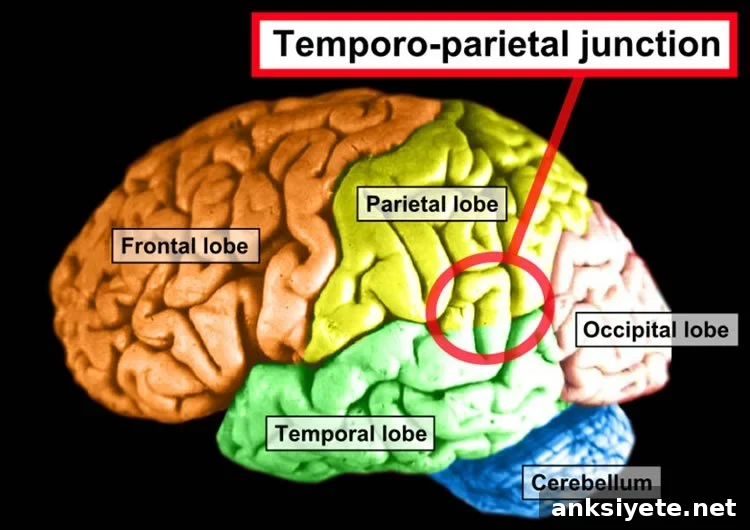
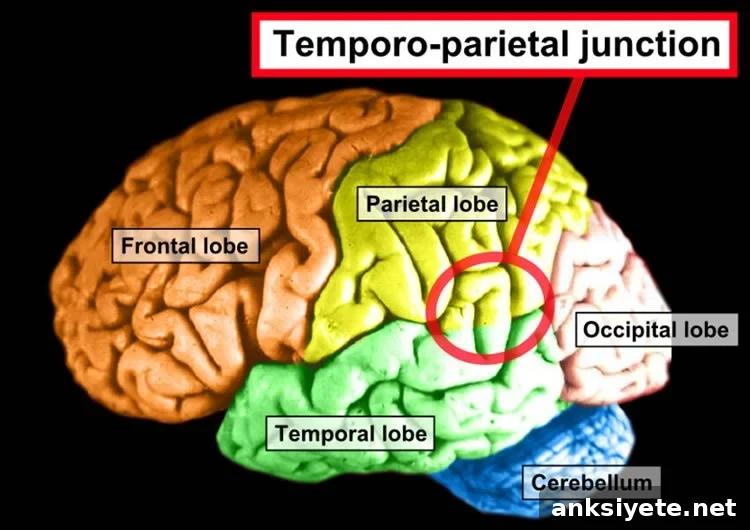
Summary: A new study finds that when people experience threat-induced negative emotions, activity in the temporoparietal junction (TPJ) and its connectivity with the amygdala are suppressed, and trust toward others declines.
Source: University of Zurich
Bad moods and incidental negative emotions can change how we treat others — and they can make us less trusting. Researchers from the University of Zurich and the University of Amsterdam report that negative emotions, even when triggered by events unrelated to the social interaction at hand, reduce trust and alter the brain networks that support social cognition. The international team used experimental methods from neuroeconomics and functional MRI to test how a prolonged, anticipatory negative state affects economic trust decisions.
Negative emotions suppress trust
Everyday life produces many incidental emotions: annoyance after a traffic delay, stress from a parking fine, or anxiety from an unrelated event. These feelings are unrelated to the person we are interacting with but can nonetheless carry over into social decisions. To study this, the research team induced a sustained state of anticipatory anxiety using a validated threat-of-shock procedure, where participants were warned they might receive an unpleasant electrical shock and sometimes did. This reliably generated prolonged negative affect without being directly tied to the trust decision.
While under threat or in safe conditions, participants played a trust game in which they decided how much money to invest with a stranger who could reciprocate or keep the money. The study found that participants invested significantly less under threat than when they felt safe. In other words, incidental negative affect reduced trust even though the source of the emotion was unrelated to the partner or the decision.
Disrupted brain activity and connectivity
Functional MRI recorded brain activity while participants made these investment choices. The researchers identified the left temporoparietal junction (TPJ) — a region important for understanding others’ intentions and beliefs — as particularly sensitive to the emotional context. During trust decisions made under threat, TPJ activity was significantly suppressed compared with decisions made in safe conditions. At the same time, functional connectivity between the TPJ and the amygdala, a center for emotional processing, was reduced when negative affect was present.
Under safe conditions, stronger connectivity between the TPJ and other social cognition regions, such as the posterior superior temporal sulcus (pSTS) and the dorsomedial prefrontal cortex (dmPFC), predicted higher levels of trust. That predictive relationship disappeared under threat: the emotional state disrupted the normal linkage between social-cognitive brain networks and trust behavior. The findings indicate that negative affect not only lowers trust but also interferes with the neural machinery that helps us understand and predict other people’s behavior.
“These results show that negative emotions can significantly influence our social interactions, specifically how much we trust others,” say Jan Engelmann and Christian Ruff, co-authors of the study. The work highlights how incidental negative affect suppresses social-cognitive neural circuits that are important for anticipating and interpreting others’ behavior. The researchers also note broader implications: incidental emotional states could distort important social judgments, including political choices, by weakening the neural processes that support reliable social decision-making.
Source:
University of Zurich
Media contacts:
Christian C. Ruff – University of Zurich
Image source:
Image credited to John A. Beal, CC BY 2.5 (for illustrative purposes).
Original research (open access):
J.B. Engelmann, F. Meyer, C.C. Ruff, C.C., E. Fehr. “The Neural Circuitry of Emotion-Induced Distortions of Trust.” Science Advances. 13 March 2019. doi: 10.1126/sciadv.aau3413
Abstract
The neural circuitry of affect-induced distortions of trust
Aversive affect is a likely source of irrational decision-making, yet the neural pathways that mediate emotion–cognition interactions in social behavior are not fully understood. In this study, researchers induced incidental aversive affect through prolonged threat-of-shock while 41 healthy participants made investment decisions about another person or a lottery. Negative affect reduced trust, suppressed trust-specific activity in the left TPJ, and decreased functional connectivity between the TPJ and emotion-related regions such as the amygdala. The posterior superior temporal sulcus (pSTS) appeared to play a key role: pSTS connectivity with left TPJ was associated with trust in safe conditions, but aversive affect disrupted this relationship. These results inform our understanding of how affective states distort social decision-making in both healthy and clinical populations.