
Summary: New research points to peptide compounds that may correct mitochondrial dysfunction underlying Charcot-Marie-Tooth disease and related conditions.
Source: WUSTL.
Research leads to development of compounds to correct mitochondrial dysfunction
Charcot-Marie-Tooth disease (CMT) is an inherited neurodegenerative disorder that progressively damages motor neurons and often leads to loss of mobility. The condition arises from genetic mutations that disrupt mitochondria, the cell’s energy-producing organelles. There are currently no approved drugs that halt or reverse CMT’s progression, a disorder that affects millions worldwide.
Researchers at Washington University School of Medicine in St. Louis and Stanford University have designed small peptide compounds that can manipulate the structure and activity of a key mitochondrial protein, offering a potential route to restore normal mitochondrial function. Their findings, based on new structural insights into that protein, are being published in Nature.
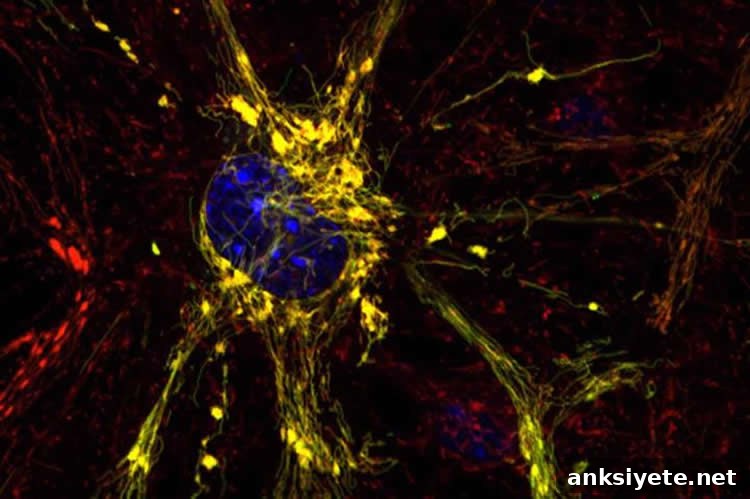
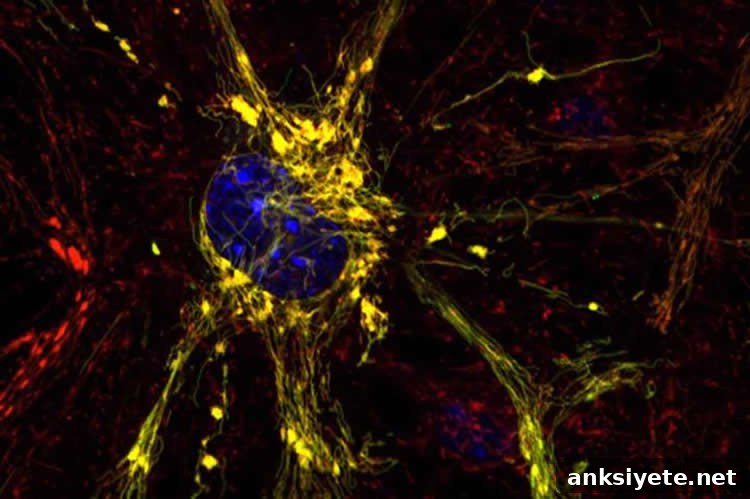
The protein at the center of the study is mitofusin 2 (Mfn2), which regulates whether mitochondria tether and fuse with one another. Mitochondrial fusion allows exchange of proteins and genetic material, which helps maintain mitochondrial health and, by extension, cellular and tissue function. Mutations in Mfn2 are known to interrupt fusion and are linked to Charcot-Marie-Tooth disease type 2A (CMT2A).
Contrary to prior assumptions that mitofusin 2 is constitutively active, the team discovered that Mfn2 adopts distinct three-dimensional conformations: a fusion-permissive form that favors tethering and fusion, and a fusion-constrained form that inhibits these processes. By mapping these conformational changes, the researchers were able to design short, cell-permeable peptides that bias Mfn2 toward one state or the other.
One peptide, named GoFuse, stabilizes the fusion-permissive conformation of mitofusin 2, promoting mitochondrial tethering and fusion. The other peptide, called TetherX, stabilizes the fusion-constrained conformation and suppresses tethering and fusion. Both molecules were engineered from knowledge of Mfn2’s folding and intramolecular interactions, an approach led in part by expertise in peptide design.
In cultured cells, including fibroblasts and neurons carrying CMT2A mutations, peptides that promoted the fusion-permissive state restored more normal mitochondrial shape and dynamics. These laboratory results suggest a pathway to correct mitochondrial defects directly by manipulating mitofusin conformations rather than by indirect approaches previously attempted.
The investigators stress that these peptides are research tools and starting points for drug development rather than ready-made treatments. Additional work is required to test safety, dosing and efficacy in animal models. The research team is currently testing the compounds in mouse models that carry mitochondrial defects to evaluate whether encouraging mitochondrial tethering and fusion can prevent or delay motor neuron loss.
Beyond CMT, the researchers foresee broader therapeutic applications. In conditions such as heart attack or stroke, sudden restoration of blood and oxygen can cause oxidative stress and a damaging influx of calcium into mitochondria. When tethered mitochondria take up excessive calcium, they can swell and rupture, triggering cell death. Temporarily suppressing mitochondrial tethering with an inhibitor like TetherX might reduce this acute injury, while activating tethering with a molecule like GoFuse could benefit chronic mitochondrial insufficiencies.
“These two peptides are two sides of the same coin,” said the study’s senior author. “When tethering is impaired by mutation, we would like to restore it. When tethering is harmful during acute injury, we would like to interrupt it temporarily. Our lab studies show we can influence mitochondrial tethering in cultured cells, and the next step is to assess therapeutic potential in vivo.”
Funding: This work was supported by the National Institutes of Health, the American Cancer Society and Società Italiana Ipertensione Arteriosa (SIIA).
Source: Judy Martin-Finch, Washington University School of Medicine in St. Louis.
Image credit: G. Dorn and A. Franco.
Summary of the research findings
Mitofusins are dynamic proteins that switch between conformations that either permit or constrain mitochondrial fusion. By identifying the intramolecular interactions that define these conformations, the researchers created a minipeptide that destabilizes the fusion-constrained conformation and favors the fusion-permissive state. This intervention corrected mitochondrial abnormalities in cultured fibroblasts and neurons with CMT2A gene defects. The findings reveal a central mechanism that regulates mitochondrial fusion and demonstrate that targeted manipulation of mitofusin conformation can reverse fusion defects caused by genetic mutations or imbalanced mitochondrial dynamics.
The study offers a conceptual and chemical framework for developing therapies that directly modulate mitochondrial fusion, with possible implications for hereditary neurodegeneration and for limiting tissue damage after ischemic injury.