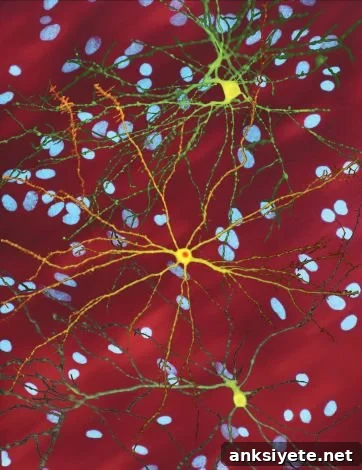
Researchers at McMaster University have solved a long-standing puzzle in Huntington’s disease (HD).
Huntington’s disease is a progressive neurological disorder that typically appears in mid-life and affects roughly one person in every 7,000. It is characterized by the gradual loss of neurons, especially in deep brain regions that control movement and cognition. Although the precise DNA mutation responsible for HD has been known since 1993, scientists have long been frustrated because the protein changes seen in patients did not reliably reproduce disease in animal models. That gap has made it difficult to identify effective drugs.
In a report published this week in the Proceedings of the National Academy of Sciences, Professor Ray Truant’s laboratory in McMaster University’s Department of Biochemistry and Biomedical Sciences describes a new method that lets researchers measure the three-dimensional shape of the huntingtin protein inside living cells. Using this live-cell approach, the team discovered that the mutant huntingtin protein associated with HD adopts a distinct, disease-related conformation. This study provides the first clear demonstration of structural differences between normal and disease-associated huntingtin when the DNA abnormalities reflect those typically found in HD patients.
Importantly, the team validated their measurements in human cells. They showed the same disease-related change in huntingtin’s structure in cells derived from the skin of living Huntington’s disease patients. This confirms that the conformational change is not an artifact of model systems but is present in patient-derived material.
“With mouse models, we know that some compounds can halt or even reverse Huntington’s disease, but until now we didn’t fully understand why,” said Truant. “Huntingtin needs to fold into a precise shape to perform its normal cellular functions. In HD, key parts of the protein fail to align correctly—like trying to use a paperclip that has been bent out of shape.”
The study also demonstrates that small molecules currently under development for HD can restore a normal shape to the mutant huntingtin protein. In Truant’s analogy, these molecules can “refold the paperclip.” That ability to reverse the misfolding is central to the therapeutic potential of these compounds.
The live-cell measurement tools have now been adapted for high-throughput, robotic drug screening. The research team is working with a pharmaceutical partner to screen large compound libraries for molecules that both enter the brain effectively and correct huntingtin’s shape. Because the new assay directly reports on the protein’s conformation in patient-derived cells, it can show whether an experimental therapy is acting on the intended molecular target without waiting years for clinical outcomes.
This discovery was made possible by coordinated support from multiple funders and by contributions from the Huntington’s disease community. Resources that enabled the work included funding for advanced microscopy infrastructure at McMaster, ongoing support from national research agencies, and grants from foundations dedicated to neurological research. Critically, patients and their families donated skin samples that allowed the team to test the method in real human disease tissue.
The Truant laboratory is also applying the same live-cell folding assays to other neurodegenerative disorders that involve similar DNA sequence defects, to determine whether comparable protein shape changes occur across multiple diseases. These efforts aim to expand the utility of the method beyond Huntington’s disease and to identify new therapeutic targets.
Notes about this neurodegeneration and Huntington’s disease research
Contact: Thana Dharmarajah – McMaster University
Source: McMaster University press release
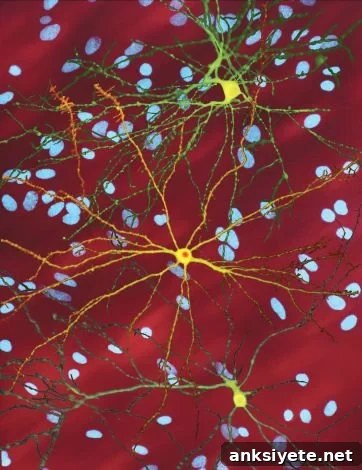
Image Source: The striatal neuron image is credited to Dr. Steven Finkbeiner, Gladstone Institute of Neurological Disease, The Taube-Koret Center for Huntington’s Disease Research, and the University of California San Francisco. The image was adapted from a NINDS press release.
Original Research: “Polyglutamine domain flexibility mediates the proximity between flanking sequences in huntingtin” by Nicholas Stephane Caron, Carly Robyn Desmond, Jianrun Xia, and Ray Truant, published in PNAS. Published online July 29, 2013 (doi:10.1073/pnas.1301342110)