Summary: Researchers have identified a genetic pathway that may increase risk for anxiety and panic disorders.
Source: University of Wurzburg.
New genetic risk factors for anxiety and panic disorders
Mental, social and hereditary influences contribute to anxiety disorders. A research team at Julius-Maximilians-Universität Würzburg (JMU) in Bavaria reports a previously unrecognized genetic pathway that appears to raise the risk of developing anxiety and panic disorders. Their work, published in Molecular Psychiatry, points to multiple variants of the GLRB gene (glycine receptor B) as risk factors linked to heightened startle responses, agoraphobic thoughts and activation of the brain’s fear network. The study included more than 5,000 volunteers and around 500 patients diagnosed with panic disorder.
Why this matters
Anxiety disorders affect a substantial portion of the population: in Germany, for example, roughly 15 percent of adults experience clinically relevant anxiety or panic disorders. Symptoms vary widely. Some people have extreme specific fears, like phobias of spiders, while others experience panic attacks in crowded or confined spaces, with symptoms such as shortness of breath and rapid heartbeat. In many cases attacks occur with no clear external trigger. These disorders often impair daily functioning, reduce work performance and lead to social withdrawal.
Investigating fear, anxiety and genetics
Researchers from Münster, Hamburg and Würzburg collaborated within the German Research Foundation–funded Collaborative Research Center (CRC) TR 58, which focuses on fear, anxiety and anxiety disorders. Their goal is to identify biological pathways and individual risk factors that could inform better, more personalized treatments—ranging from pharmacological approaches to behavioral therapy.
GLRB: a gene with prior neurological links
The GLRB gene was already known to researchers because rare coding mutations in GLRB cause hyperekplexia, a neurological disorder characterized by excessive muscle tone and pronounced startle reactions. Patients with hyperekplexia can develop avoidance behaviors similar to those seen in anxiety disorders. However, the GLRB variants identified by the Würzburg team are non-coding, more common in the population, and likely exert subtler effects than the rare mutations linked to hyperekplexia.
How GLRB variants affect fear processing
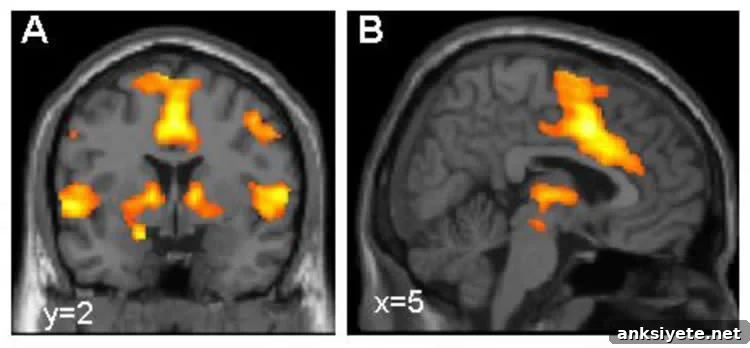
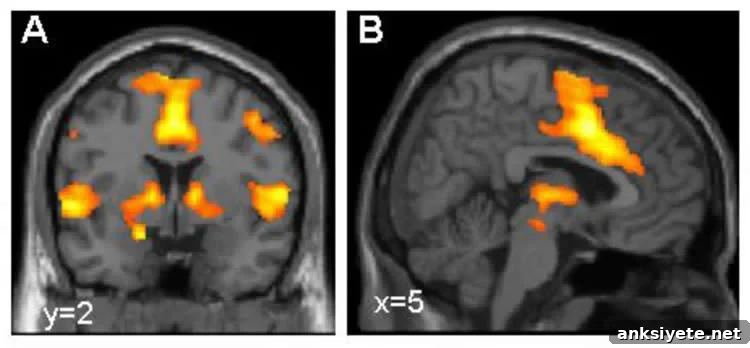
Unlike the rare mutations that cause hyperekplexia, the GLRB variants associated with anxiety disorders appear to modulate gene expression and neural responsiveness in ways that increase startle reactions and sensitize the brain’s fear circuitry. High-resolution brain imaging from study participants showed greater activation of the so-called fear network in carriers of these GLRB risk variants. Behavioural testing indicated elevated startle reflexes and stronger agoraphobic cognitions linked to the same genetic variants.
Evidence from genetics, imaging and animal models
The investigators combined several lines of evidence. A genome-wide association analysis using an anxiety-related dimension based on the Agoraphobia Cognitions Questionnaire (ACQ) identified highly significant associations between ACQ scores and specific non-coding variants in GLRB. Follow-up analyses in larger and independent cohorts, including case-control samples for panic disorder with or without agoraphobia, reinforced these associations. Functional experiments showed that at least one risk variant influences GLRB expression in brain tissue and cell models. Complementary animal data from partial Glrb knockout mice revealed behaviors reminiscent of agoraphobia, supporting a biological link between Glrb function and anxiety-related phenotypes.
Implications for treatment and future research
These findings point to a previously unrecognized neurogenetic pathway to panic disorder and agoraphobia that involves non-coding, functional variation in GLRB. By increasing startle responsiveness and enhancing activity within the brain’s fear network, these genetic variants may predispose certain individuals to heightened anxiety and panic. The results suggest new directions for targeted research, including whether pharmacological or behavioral interventions can normalize the misregulated fear network in carriers of GLRB risk alleles. Further studies will be needed to determine how these variants interact with environmental and developmental factors and to explore potential personalized treatment strategies.
Study funding and collaborators
The results were produced by members of the Collaborative Research Center “Fear, Anxiety and Anxiety Disorders” in cooperation with researchers from the national panic research network. The Würzburg team participated within a network supported by public research funding. Image credit: Dr. Tina Lonsdorf, Systems Neuroscience UKE Hamburg.
Summary of the published research
The published study, “GLRB allelic variation associated with agoraphobic cognitions, increased startle response and fear network activation: a potential neurogenetic pathway to panic disorder,” reports genome-wide significant associations between anxiety-related cognitive measures and several non-coding GLRB variants. Associations were replicated across larger samples and in independent cohorts. Functional analyses indicate modulation of GLRB expression by risk variants and link those variants to heightened startle response and fear network activation. Animal model results are consistent with an anxiety-related role for reduced Glrb function. Together, the data provide converging evidence that common, functional variation in GLRB may increase vulnerability to panic disorder and agoraphobia by enhancing sensory and defensive reactivity.
Further research will clarify how GLRB-mediated mechanisms interact with other genetic and environmental factors and whether targeting this pathway can improve prevention or treatment of anxiety and panic disorders.