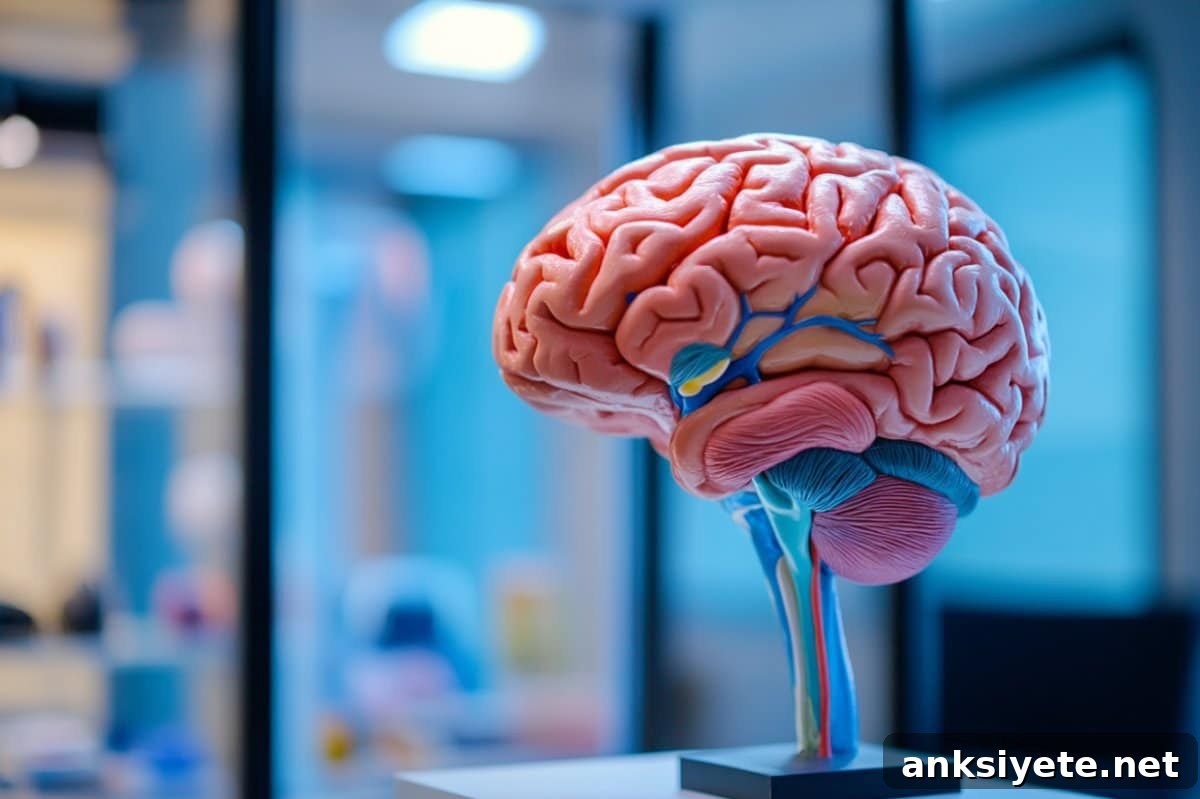
Summary: A large-scale fMRI analysis shows that when people sharply focus their attention, sensory signals from vision, hearing, taste, and touch converge on the same deep brain regions linked to arousal and conscious awareness. Using brain scans from more than 1,500 healthy adults, researchers identified consistent engagement of the midbrain reticular formation and the central thalamus across different sensory tasks.
These subcortical structures play a central role in regulating alertness, attention, and the level of consciousness. The finding reveals a shared subcortical attention network and offers new insights into how sensory input is integrated to support conscious perception.
Key Facts:
- Shared Brain Activation: Visual, auditory, gustatory, and tactile tasks all recruited the same deep subcortical regions when participants focused attention.
- Focus-Dependent Activity: Responses in the midbrain reticular formation and central thalamus were strongest during tasks requiring sudden shifts or sustained sharp focus.
- Therapeutic Potential: Mapping these shared subcortical arousal systems could guide neuromodulation and drug strategies for attention disorders and disorders of consciousness.
Source: Yale
Humans navigate the environment through multiple senses—sight, hearing, touch, taste, and smell—each of which has distinct cortical pathways.
However, a new study led by researchers at Yale shows that, during moments of concentrated attention, different sensory modalities activate a common subcortical circuit that helps govern arousal and awareness. This discovery refines our understanding of the neural foundations of attention, perception, and consciousness.
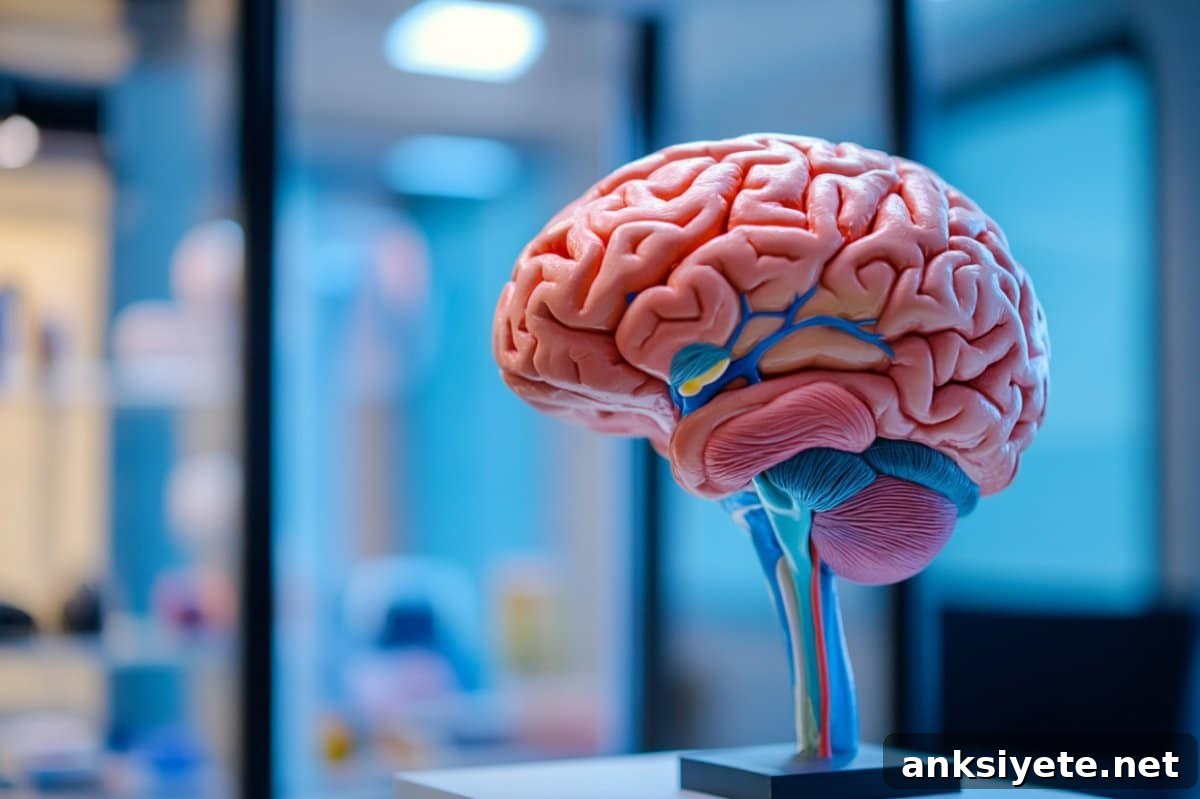
Published May 15 in the journal NeuroImage, the study uses large-scale functional MRI data to reveal how transient changes in attention recruit subcortical arousal centers. The results may inform new treatments for conditions that affect attention, arousal, and levels of consciousness, including attention deficit hyperactivity disorder (ADHD) and disorders of consciousness.
The research team, led by Aya Khalaf of Yale School of Medicine, explored how subcortical arousal systems—networks beneath the cerebral cortex that help regulate sleep–wake states and alertness—respond across sensory modalities. Prior work has shown these systems influence consciousness in patients with severe brain injury, but most previous studies examined only single senses at a time.
To determine whether a shared subcortical network supports sensory attention, the investigators analyzed publicly available fMRI datasets from 1,561 healthy adult participants. Subjects completed 11 tasks that engaged four sensory modalities: vision, audition, taste, and touch. The researchers applied both block and event-related analysis techniques to capture transient shifts in neural activity tied to brief changes in attention.
Two main findings emerged. First, sensory input does indeed recruit overlapping subcortical systems rather than wholly separate pathways for each modality. Second, and most strikingly, when participants were required to focus sharply—particularly during sudden attentional shifts—activity rose consistently in the midbrain reticular formation and the central thalamus regardless of whether the stimulus was visual, auditory, gustatory, or tactile.
According to Khalaf, a postdoctoral associate in neurology and the study’s lead author, the team anticipated some shared network activity but was surprised by the uniform activation of these central brain structures across all tested senses during focused attention.
Senior author Hal Blumenfeld, professor of neurology, neuroscience, and neurosurgery and director of the Yale Clinical Neuroscience Imaging Center, emphasized that the results advance how we think about awareness and the neural architecture that supports it. The consistent involvement of the midbrain reticular formation and central thalamus suggests these nodes are crucial for the dynamic modulation of attention and conscious perception.
Beyond basic science, the study points to potential clinical applications. By pinpointing subcortical targets involved in attentional modulation, the work could guide development of more focused pharmacological interventions and brain stimulation approaches for ADHD, disorders of consciousness, and other attention-related conditions.
Coauthors include Erick Lopez, a former undergraduate researcher in Blumenfeld’s laboratory, along with collaborators from Harvard Medical School. The research received partial support from the National Institutes of Health.
About this neuroscience research news
Author: Bess Connolly
Source: Yale
Contact: Bess Connolly – Yale
Image: The image is credited to Neuroscience News
Original Research: Open access.
“Shared subcortical arousal systems across sensory modalities during transient modulation of attention” by Aya Khalaf et al., NeuroImage
Abstract
Shared subcortical arousal systems across sensory modalities during transient modulation of attention
Subcortical arousal systems are central to controlling sustained and transient changes in attention and conscious awareness. While prior work has demonstrated their influence on visual attention, their role across multiple sensory modalities remained unclear. This study used block and event-related fMRI paradigms to analyze large public datasets collected while 1,561 participants performed visual, auditory, tactile, and taste perception tasks.
The analyses uncovered a shared subcortical circuit characterized by early, transient increases in activity in the midbrain reticular formation and central thalamus across sensory modalities. Additional, less consistent activations were observed in the pons, hypothalamus, basal forebrain, and basal ganglia. Identifying this shared network helps clarify mechanisms of normal attention and consciousness and may inform subcortical targeting strategies for therapeutic neuromodulation.