
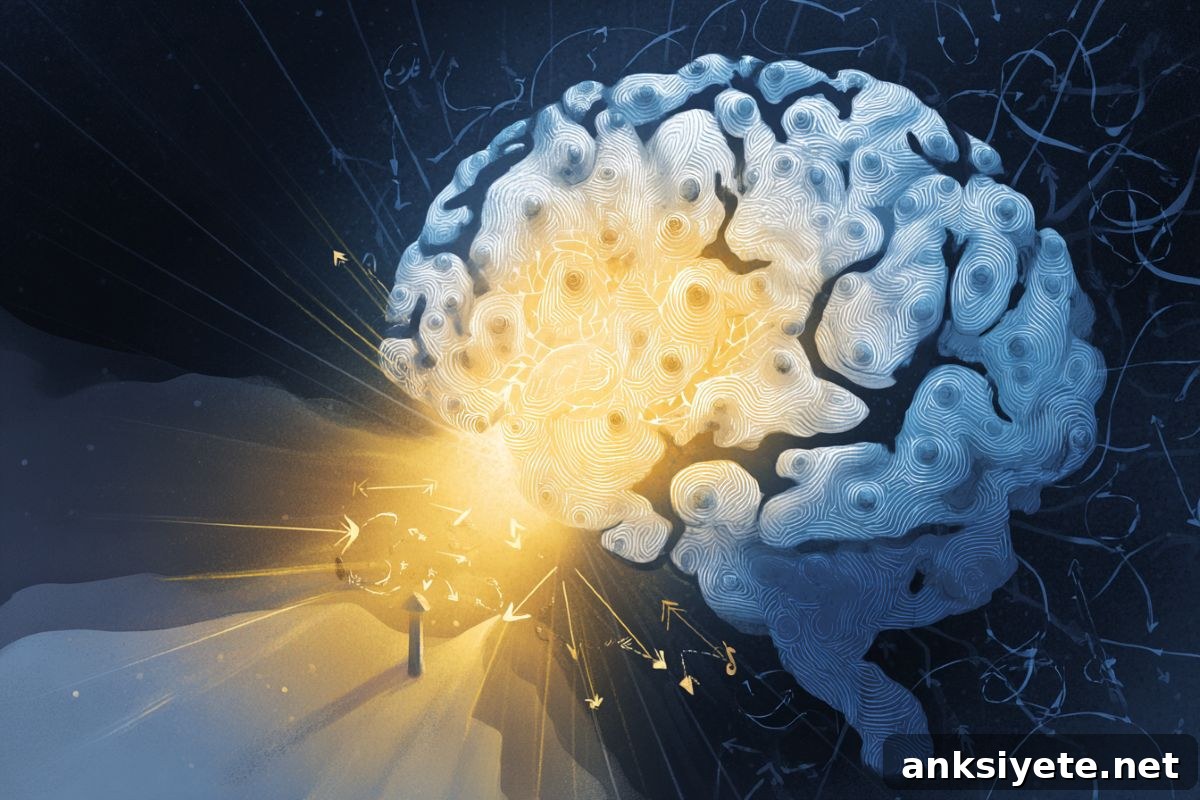
Summary: Researchers have uncovered how the brain uses visible objects as anchors to stabilize our sense of direction, clarifying a key element of spatial navigation. Experiments in mice revealed that neurons in the postsubiculum become more active when the animal faces an object, while neurons tuned to other directions are suppressed. This sharpening of directional signals helps the brain orient itself relative to landmarks.
The study indicates that object recognition is closely integrated with the brain’s navigation circuitry. These findings may help explain why people with Alzheimer’s disease and related dementias often experience disorientation and lose their sense of place.
Key Facts
- Object Anchors: Neurons in the postsubiculum respond selectively to visual objects, reinforcing directional coding.
- Dual Systems: Visual processing and spatial-navigation systems interact to refine orientation in space.
- Disease Link: Early Alzheimer’s-related pathology targets regions involved in orientation, which may underlie problems with navigation and wayfinding.
Source: McGill University
We often take our ability to know where we are for granted—until it’s gone. When we feel lost in an unfamiliar city or in nature, our eyes and brains search for familiar objects and landmarks to re-establish orientation. How the brain separates meaningful objects from background clutter to support that sense of direction has been largely unknown. A new study from researchers at The Neuro (Montreal Neurological Institute-Hospital), McGill University, and the University Medical Center Göttingen provides important new insight into this process.
Using functional ultrasound imaging and electrophysiology in mice, the team presented visual stimuli that either depicted a distinct object or a scrambled image with no identifiable object. They then recorded brain activity across regions known to contribute to spatial navigation and vision.
Instead of finding strong object responses in primary visual cortex, the screen highlighted a small set of areas tied to spatial navigation. The strongest object-related activity appeared in the postsubiculum, a key node of the head-direction (HD) system—the brain’s internal compass that tracks which way the animal is facing. In the postsubiculum, individual neurons are tuned to specific headings: each neuron fires preferentially when the animal faces a particular direction.
When an object appeared within the mouse’s field of view, neurons coding the direction toward that object increased their firing, while neurons coding other directions were suppressed. This pattern—excitation of object-aligned HD cells together with inhibition of non-aligned HD cells—produced a clearer, more reliable population code for heading relative to the object. The same modulation was observed both in restrained, head-fixed conditions and in freely moving animals exploring an environment that contained the object.
These results show that visual landmarks do more than simply provide additional sensory input: they actively refine the neural representation of heading in the postsubiculum, effectively anchoring the brain’s sense of direction to salient objects in the environment. Other brain regions examined did not show the same object-selective modulation, underscoring a specialized role for navigation circuits in integrating landmark information.
This mechanism offers a plausible explanation for spatial disorientation seen in neurodegenerative disease. Prior work has shown that tau protein accumulation, a hallmark of Alzheimer’s disease, often appears early in regions responsible for spatial orientation. Disruption in the circuits that normally use landmarks to stabilize heading could therefore contribute to the wayfinding deficits and loss of place recognition experienced by people with dementia.
“A useful outcome of our study is that it provides a high-level view of how visual and spatial recognition systems interact,” says Stuart Trenholm, co-senior author and researcher at The Neuro. “We now have a clearer picture of how these systems modulate one another. Many neurodegenerative disorders involve disconnections between brain states, so understanding these interactions will be important for future work.”
“Our results were surprising,” adds Adrien Peyrache, co-senior author at The Neuro. “It was unexpected to find object processing occurring within the navigation system rather than confined to the visual cortex. For the first time, we can look inside the brain to see what constitutes an object for navigational purposes and how that object helps orient us in the world.”
About this neuroscience and navigation research news
Author: Shawn Hayward
Source: McGill University
Contact: Shawn Hayward – McGill University
Image: The image is credited to Neuroscience News
Original Research: Closed access. “Visual objects refine head direction coding” by Adrien Peyrache et al., published in Science.
Abstract
Visual objects refine head direction coding
INTRODUCTION
In daily life we rely on visual landmarks—a clock tower, a distinctive building, or a tree—to orient ourselves as we move through towns or natural landscapes. The brain invests substantial processing power to parse visual scenes into discrete objects, and spatial location is encoded by specialized neural populations such as place cells, grid cells, and head direction (HD) cells. Despite extensive study of navigation signals in rodents, how visual objects influence the tuning of neurons that encode spatial variables remains incompletely understood.
RATIONALE
To close this gap, the researchers conducted a brainwide activity screen in mice to identify regions that prefer visual objects. Following that, they used targeted electrophysiological recordings to characterize how neurons in those object-responsive areas relate to spatial variables during free behavior.
RESULTS
Functional ultrasound imaging revealed that areas linked to spatial navigation—rather than primary visual cortex—showed the strongest responses to visual objects. The postsubiculum, a central hub of the HD system, exhibited the highest object preference. In both head-fixed and freely moving conditions, HD cells showed direction-dependent modulation by visual stimuli: cells tuned toward the visual object were excited, while cells tuned away were inhibited. This modulation sharpened the population encoding of heading when an object was present.
CONCLUSION
Visual objects enhance the population code for head direction in the postsubiculum by selectively boosting neurons that represent the heading toward the object and suppressing those that represent other headings. An everyday analogy is looking at a landmark with a compass: when you orient to the landmark, the compass needle becomes steadier and more accurate. These findings illuminate how the brain leverages visual landmarks to dynamically improve its internal representation of spatial orientation.