TAU researchers find chemicals in marijuana could help treat MS.
Multiple sclerosis (MS) is an inflammatory autoimmune disease in which the immune system mistakenly attacks the central nervous system, damaging nerve fibers and their insulating myelin sheaths. The condition can cause a wide range of disabling motor, sensory and cognitive symptoms. The causes of MS remain unclear and effective cures are not yet available, making new therapeutic directions an urgent priority.
In a study published in the Journal of Neuroimmune Pharmacology, researchers from Tel Aviv University’s Dr. Miriam and Sheldon G. Adelson Center for the Biology of Addictive Diseases and the Sackler Faculty of Medicine report that certain chemical compounds found in cannabis have the potential to limit the inflammatory processes that drive MS-like disease in mice. The lead investigators on the study are Drs. Ewa Kozela, Ana Juknat, Neta Rimmerman and Zvi Vogel, with co-authors from the Weizmann Institute of Science.
Background and scientific context
Israel has a long-standing history in cannabis science. In 1964, Israeli chemists Raphael Mechoulam and Yechiel Gaoni identified tetrahydrocannabinol (THC), the primary psychoactive component of cannabis, which opened the door to decades of research into the plant’s chemical constituents. Since then, scientists have isolated roughly 70 unique plant cannabinoids, each with distinct biological actions. In the 1990s, Professor Zvi Vogel was among the early researchers describing endocannabinoids — naturally occurring compounds in the body that interact with the same cellular systems as THC.
Of the cannabis-derived cannabinoids, cannabidiol (CBD) is especially notable for its therapeutic promise because it appears to provide anti-inflammatory and neuroprotective benefits without the pronounced psychoactive effects linked to THC. This profile makes CBD an attractive candidate for further study in MS and other neuroinflammatory disorders.
Study approach and key findings
Building on earlier work showing that CBD can reduce MS-like symptoms in rodents, the TAU team examined how CBD and THC affect immune cells that drive autoimmune neuroinflammation. The researchers isolated immune cells from mice that had been induced to develop an MS-like paralytic condition and exposed these cells in vitro to either CBD or THC. Both cannabinoids reduced the immune cells’ production of inflammatory signaling molecules, with a pronounced effect on interleukin 17 (IL-17). IL-17 is a pro-inflammatory cytokine strongly implicated in the pathogenesis of MS and in the destruction of myelin and neuronal tissue.
These experimental results suggest that CBD and THC can directly modulate immune activity relevant to MS: they appear to restrain autoreactive immune cells from generating high levels of inflammatory mediators and reduce the capacity of those mediators to reach and damage the brain and spinal cord. In earlier in vivo experiments, TAU researchers reported that mice treated with CBD after induction of an MS-like disease showed improved motor function and reduced spinal cord inflammation compared with untreated animals.
Clinical implications and caution
While these findings raise hope that cannabinoids could be part of future therapies for multiple sclerosis, the research remains preclinical and was conducted in animal models and isolated immune cells. Additional studies are required to determine safety, optimal dosing, mechanisms of action and efficacy in humans. Nevertheless, cannabinoids including CBD and THC are already used in many countries to manage MS symptoms such as neuropathic pain, muscle spasticity and sleep disturbances, and ongoing clinical research is exploring their broader therapeutic potential.
“Inflammation is part of the body’s natural immune response, but in autoimmune conditions like MS it becomes excessive,” says Dr. Ewa Kozela. “Our work examines how specific cannabis-derived compounds can help regulate immune-driven inflammation and protect nervous tissue and its function. There is still much to learn, but the results point to an important avenue for future research.”
Notes about this multiple sclerosis research
Contact: George Hunka – American Friends of Tel Aviv University
Source: American Friends of Tel Aviv University press release
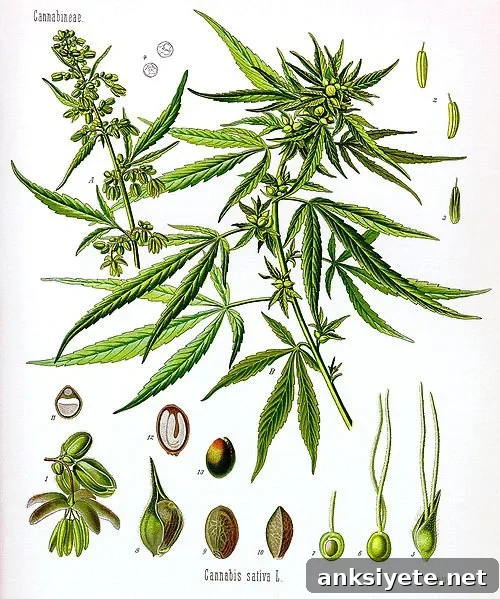
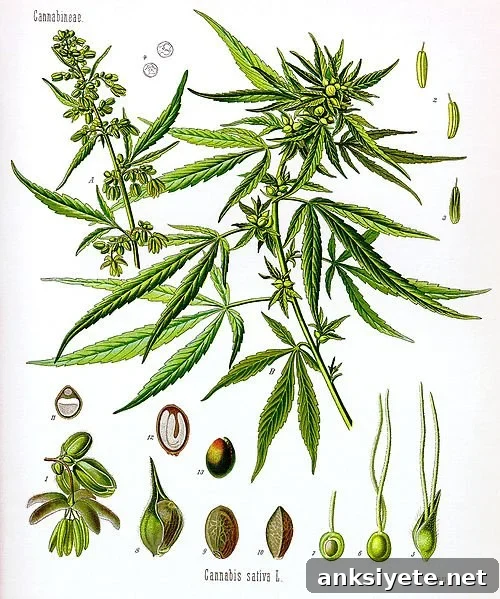
Image Source: The image is credited to W. Müller from Franz Eugen Köhler’s Medizinal-Pflantzen, 1887. The image is in the public domain.
Original Research: Abstract for “Cannabinoids Decrease the Th17 Inflammatory Autoimmune Phenotype” by Ewa Kozela, Ana Juknat, Nathali Kaushansky, Neta Rimmerman, Avraham Ben-Nun, and Zvi Vogel; Journal of Neuroimmune Pharmacology. Published online July 2013, doi:10.1007/s11481-013-9493-1