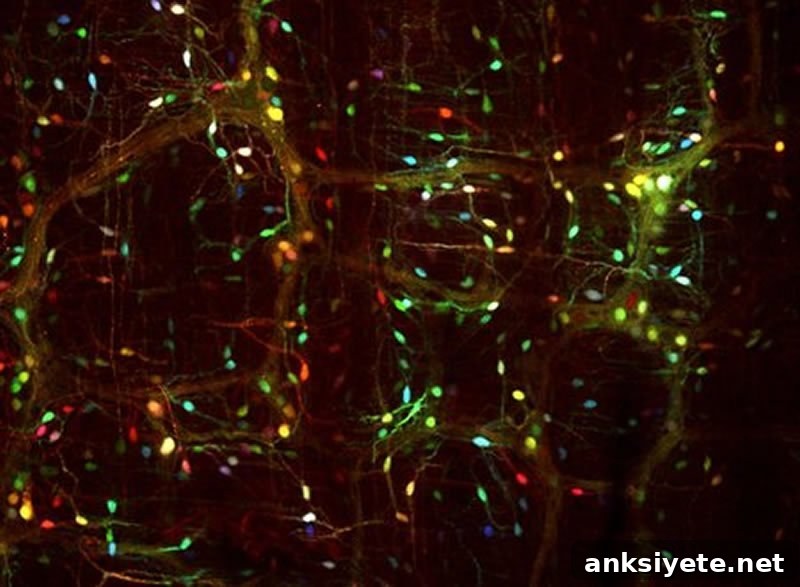
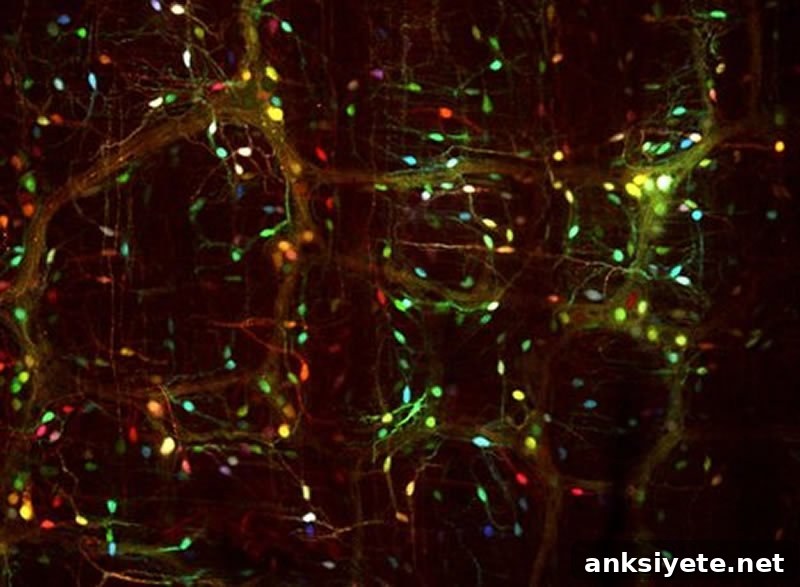
Summary: Using mouse models, researchers induced alpha-synuclein aggregates in gut neurons and found these clumps can travel to brain neurons, with spread and symptoms strongly influenced by age.
Source: CalTech
Parkinson’s disease (PD) is a progressive neurodegenerative disorder that impairs motor control in millions of people worldwide. Non-motor symptoms—including chronic constipation and other gastrointestinal disturbances—often precede motor signs by years, suggesting that disease processes may begin outside the brain.
Postmortem studies of people with PD consistently show aggregates of the protein alpha-synuclein (α-Syn) in neurons, and α-Syn deposits have also been observed in the enteric nervous system of the gut. Researchers at Caltech used mouse models to test whether α-Syn aggregates seeded in gut neurons can travel along neural pathways to the brain, and whether the animals’ age affects this progression.
In the study, the team injected preformed α-Syn fibrils into the duodenal wall to create localized aggregates in gut neurons and then tracked whether the pathology advanced toward the brainstem. In adult mice, α-Syn clusters did move toward the brainstem, but these animals did not develop visible motor impairments. In contrast, aged mice (about 16 months old) not only showed progression of α-Syn pathology into the central nervous system but also developed gastrointestinal dysfunction—impaired gastric motility and altered fecal water content—as well as motor symptoms consistent with PD-like deficits.
The researchers focused on a potential mechanism that could explain the age dependence. An enzyme called glucocerebrosidase (GCase) is known to help break down α-Syn aggregates. Both mice and humans produce forms of this lysosomal enzyme, and loss or dysfunction of GCase is associated with increased α-Syn accumulation. The Caltech team asked whether increasing GCase expression in peripheral neurons could reduce α-Syn pathology and rescue gut function.
To boost GCase levels in the gut, they packaged the gene for GCase into a specially engineered adeno-associated virus (AAV) capsid variant developed by the Gradinaru laboratory. Delivered systemically, this viral vector targets cells of the gastrointestinal nervous system and drives expression of the therapeutic enzyme. In genetically modified mice that overproduce α-Syn, AAV-mediated GCase expression reduced α-Syn aggregation in enteric neurons and partially restored normal gastric function.
These findings support the hypothesis that peripheral α-Syn aggregation can seed pathology that spreads along autonomic fibers—most notably the vagus nerve, which provides a direct anatomical link between the gut and the brain. The observation that aged animals are more susceptible to gut-to-brain propagation of α-Syn suggests that declining capacity to clear misfolded proteins and other age-related cellular changes may be critical in converting peripheral pathology into central nervous system disease.
“The vagus nerve connects gut neurons to brain neurons. If harmful α-synuclein clusters originate in the gut, diagnosing PD earlier and using targeted gene delivery to restore cellular clearance mechanisms could prevent or slow progression,” said Collin Challis, the study’s first author.
The paper, published in Nature Neuroscience, is titled “Gut-seeded α-synuclein fibrils promote gut dysfunction and brain pathology specifically in aged mice.” The authors include Collin Challis and Viviana Gradinaru, along with Acacia Hori, Timothy Sampson, Bryan Yoo, Rosemary Challis, Adam Hamilton, Sarkis Mazmanian, and Laura Volpicelli-Daley.
Key implications: targeting peripheral neurons and boosting lysosomal clearance mechanisms such as GCase may offer a promising route for early intervention in PD. Peripheral gene delivery using AAV capsids that efficiently transduce the enteric nervous system could become a complementary strategy to brain-directed therapies, particularly for prodromal or early-stage disease.
Funding and affiliations: The research received support from the National Institutes of Health, the Department of Defense, the Heritage Medical Research Institute, the Pew Charitable Trusts, the Rogers Fellowship for Parkinson’s Research, and the CZI Neurodegeneration Challenge Network. Mazmanian and Gradinaru are affiliated faculty with the Tianqiao and Chrissy Chen Institute for Neuroscience at Caltech.
Source:
CalTech
Media Contact:
Lori Dajose – CalTech
Image credit:
Gradinaru laboratory / Caltech
Original research: “Gut-seeded α-synuclein fibrils promote gut dysfunction and brain pathology specifically in aged mice.” Collin Challis et al., Nature Neuroscience. The study characterizes peripheral synucleinopathy, shows age-dependent gut-to-brain progression, and demonstrates that AAV-mediated delivery of glucocerebrosidase can reduce pathology and improve gut function in mouse models.