
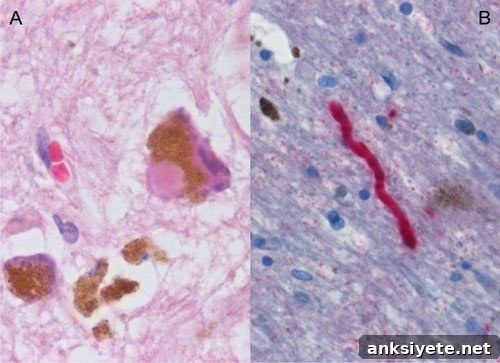
LMU researchers identify a novel signal transduction pathway that activates the parkin gene and prevents stress-induced neuronal cell death.
Parkinson’s disease is the most common movement disorder and the second most common neurodegenerative disease after Alzheimer’s. It is defined by the progressive loss of dopamine-producing neurons in the substantia nigra, a midbrain region essential for motor control. Clinically, patients typically experience resting tremor, muscle rigidity, slowed movements (bradykinesia), and problems with balance and posture. About 10% of Parkinson’s disease cases are attributable to inherited mutations in specific genes; one of the genes known to be involved is parkin.
“Parkinson-associated genes are particularly informative for researchers because studying their normal functions and what goes wrong when they malfunction helps reveal the disease’s underlying mechanisms,” explains Dr. Konstanze Winklhofer of the Adolf Butenandt Institute at Ludwig Maximilians University (LMU) Munich, who is also affiliated with the German Center for Neurodegenerative Diseases (DZNE). Winklhofer and her team have previously shown that parkin plays a protective role in neurons under various stress conditions. Their work further revealed that loss of parkin compromises mitochondrial activity and integrity—the mitochondria being the cell’s energy-producing organelles. In their latest study, the group has uncovered the molecular mechanism by which parkin mediates this neuroprotective effect.
Winklhofer and colleagues identified a previously unknown signaling cascade centered on the protein NEMO. In this pathway, NEMO becomes activated when it is modified by the addition of a linear chain of ubiquitin molecules. Parkin promotes this specific ubiquitination reaction, thereby enabling NEMO to trigger a downstream signaling cascade that culminates in the activation of a defined set of genes. Among the genes regulated by this pathway, the researchers highlighted one key target that encodes the mitochondrial protein OPA1. OPA1 is involved in maintaining mitochondrial structure and fusion dynamics, and its expression helps preserve mitochondrial integrity and prevent neuronal cell death under stress.
According to Winklhofer, “These findings indicate that stimulating this signaling pathway or increasing OPA1 production in stressed cells may offer a therapeutic avenue.” The discovery links parkin’s enzymatic activity to the regulation of a protective gene program and provides a mechanistic explanation for how parkin preserves mitochondrial health in vulnerable neurons.
The implications of this pathway may extend beyond Parkinson’s disease. Many neurological disorders are characterized by the selective vulnerability and loss of particular neuron populations, and pathways that uphold mitochondrial integrity are broadly relevant to neuronal survival. Winklhofer’s group is pursuing follow-up projects to determine whether additional molecules regulated through this parkin–NEMO–OPA1 axis might serve as viable targets for therapeutic intervention.
By mapping how parkin influences linear ubiquitination of NEMO and identifying OPA1 as a crucial downstream effector, this work strengthens the conceptual link between genetic risk factors for Parkinson’s disease and the cellular processes that protect neurons from stress-induced degeneration. It also highlights mitochondrial maintenance as a central node in neuroprotection and as a rational focus for developing treatments that aim to slow or prevent neuronal loss.
Notes about this Parkinson’s disease and genetics research
Contact: Luise Dirscherl – Ludwig Maximilians University München
Source: Ludwig Maximilians University press release
Image Source: The image is credited to Werner CJ., Heyny-von Haussen R., Mall G., Wolf S and licensed under Attribution 2.0 Generic.
Original Research: “The E3 Ligase Parkin Maintains Mitochondrial Integrity by Increasing Linear Ubiquitination of NEMO” by Anne Kathrin Müller-Rischart et al., published in Molecular Cell; doi: 10.1016/j.molcel.2013.01.036. The study describes how parkin-mediated linear ubiquitination of NEMO leads to upregulation of OPA1 and enhanced mitochondrial resilience.