
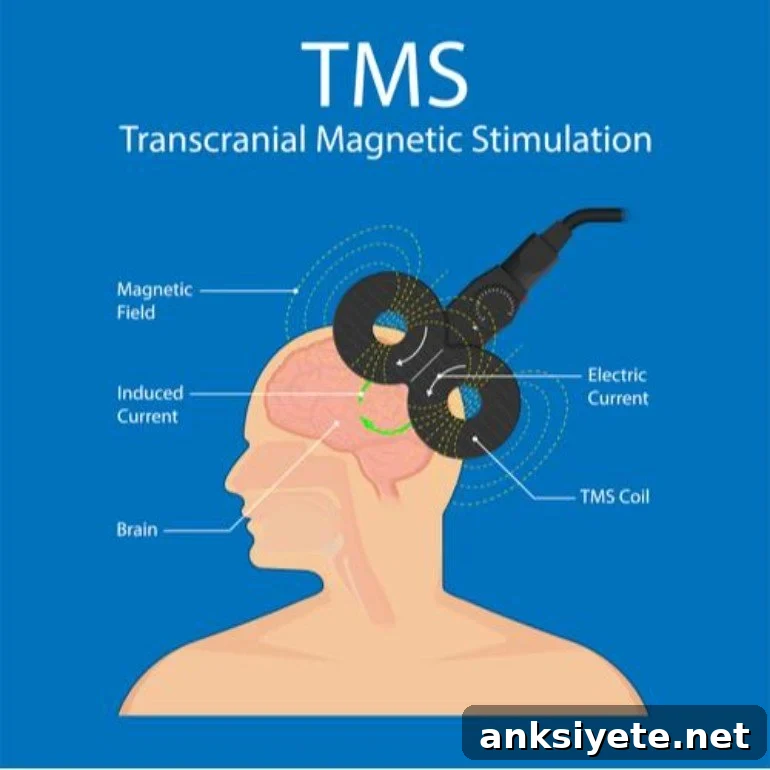
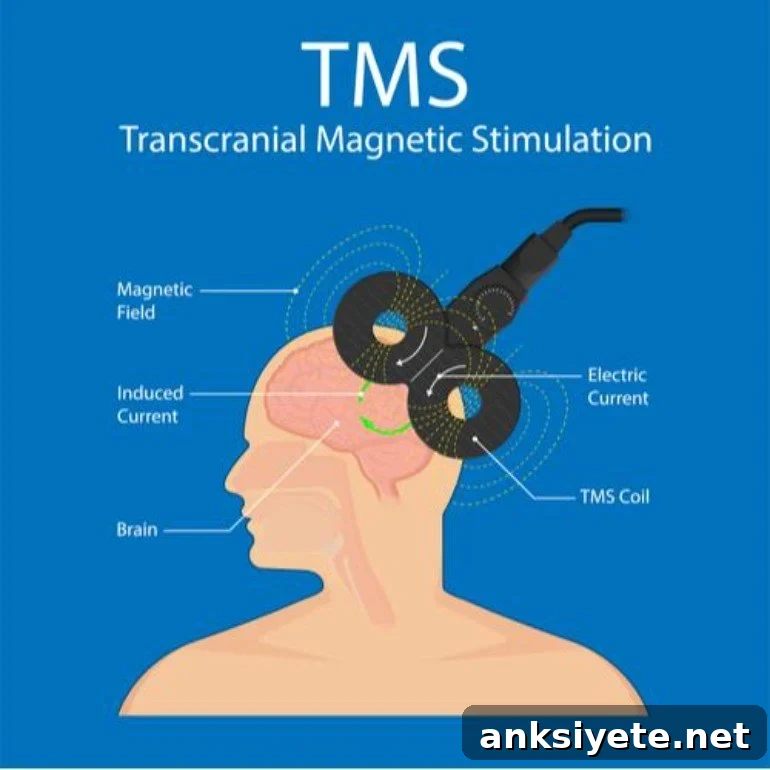
Summary: High‑dose repetitive transcranial magnetic stimulation (rTMS) reduces post‑stroke depression by increasing brain network activity.
Source: University of South Australia
Researchers at the University of South Australia have reported a significant advance in treating depression after stroke, showing that intensive high‑frequency brain stimulation can lift low mood and alter brain function.
A clinical trial led by UniSA stroke researcher Dr Brenton Hordacre found that large doses of repetitive transcranial magnetic stimulation (rTMS) produced measurable and sustained improvements in post‑stroke depression by enhancing functional brain connectivity.
Previous work has explored rTMS for post‑stroke mood disorders, but this trial is the first to test a substantially larger dose—30,000 electromagnetic pulses delivered across 10 sessions over two weeks—and to link clinical improvement with neurophysiological changes.
Published in the Journal of Neurology, the results point to rTMS as a non‑invasive alternative or complement to pharmacological treatment for post‑stroke depression, which can cause unwanted side effects for many patients.
South Australian patients will have local access to the treatment: the brain stimulation device is now available at UniSA’s City West campus, offering a new therapeutic option for stroke survivors with depressive symptoms.
The $40,000 stimulator—partly supported by the Honda Foundation—may also have broader benefits for recovery after stroke, with the potential to support motor rehabilitation by encouraging new neural connections in damaged areas of the brain.
“The advantage of using TMS to treat depression is that it has relatively few side effects compared to pharmacological treatments,” Dr Hordacre says. “It can also be delivered over several sessions but the improvements in depression last well beyond that period.”
Stroke is common and often life‑changing. In Australia an estimated 500,000 people are living with the effects of stroke, with about 56,000 new strokes each year. Around one in three people experience depression within five years after a stroke, most commonly during the first year but potentially at any time.
“A stroke is a life‑changing event in itself, bringing about personality, mood and emotional changes, so there is a very strong link between stroke, depression and anxiety,” Dr Hordacre adds, underlining the importance of effective mood treatments in post‑stroke care.
Standard care often includes antidepressants and psychotherapy, but rTMS provides an additional option, especially for patients who experience drug side effects or insufficient response to medication.
One participant in the trial, Adelaide resident Saran Chamberlain, was among 11 chronic stroke survivors who received 10 sessions of high‑frequency rTMS for depression. Saran suffered a stroke in 2013 at age 38 and was initially left with paralysis on her left side. She was prescribed medication for depression but chose to try the rTMS trial.
“When I heard about this trial using repetitive brain stimulation I was keen to try it to see if it made any difference,” Saran said. “It did, and the effects lasted several months. I am still on antidepressants but I have reduced the dosage quite markedly. This really has made a difference to my life!”
Dr Hordacre says the device’s benefits will extend into clinical training, with UniSA allied health students being taught to deliver the treatment under appropriate supervision, expanding local capacity to provide rTMS for stroke survivors.
The treatment service is scheduled to be officially launched in the new year.
About this stroke and depression research news
Source: University of South Australia
Contact: Candy Gibson – University of South Australia
Image: The image is credited to UniSA
Original Research: Closed access. “Repetitive transcranial magnetic stimulation for post‑stroke depression: a randomised trial with neurophysiological insight” by Brenton Hordacre, Kristina Comacchio, Lindy Williams & Susan Hillier. Journal of Neurology.
Abstract
Repetitive transcranial magnetic stimulation for post‑stroke depression: a randomised trial with neurophysiological insight
Objective
Depression after stroke is common, yet few randomized trials have tested the therapeutic efficacy of rTMS in this population. This study evaluated whether delivering a higher dose of high‑frequency rTMS produces clinical benefit compared with sham treatment. Secondary aims included documenting adverse events and exploring functional connectivity as a potential mechanism underlying clinical response to rTMS.
Methods
Eleven chronic stroke survivors participated in a double‑blind, sham‑controlled randomized trial investigating 10 sessions of high‑frequency rTMS for depression. Clinical assessments were completed at baseline, immediately after treatment and at a one‑month follow‑up. Adverse events were recorded at the end of treatment. Resting electroencephalography (EEG) was recorded before and after the intervention to estimate changes in functional connectivity.
Results
Baseline characteristics did not differ between groups. Beck Depression Inventory (BDI) scores fell significantly in the active rTMS group from baseline to one‑month follow‑up (p = 0.04), while the sham group showed no significant change. Stronger baseline theta‑frequency functional connectivity between the left frontal cortex and right parietal cortex was associated with lower baseline depression (r = −0.71, p = 0.05). After active rTMS the strength of this network increased, and the change in connectivity correlated closely with improvement in BDI scores (r = 0.98, p = 0.001). Adverse events were transient, minor, and not significantly different between groups.
Conclusions
High‑dose rTMS produced significant improvement in post‑stroke depression and was well tolerated. The observed modulation of theta‑frequency functional connectivity suggests a neurophysiological mechanism that merits further investigation in larger trials.
The trial was registered on the Australian and New Zealand Clinical Trials Registry (ACTRN12619001303134) on 23 September 2019.