Summary: Researchers identify genes activated in the brain just before the onset of severe repetitive behaviors—stereotypies—linked to addiction, autism spectrum disorder, and schizophrenia.
Source: MIT
Severe repetitive behaviors—such as hand‑flapping, body‑rocking, skin‑picking, and persistent sniffing—occur across multiple brain disorders including autism, schizophrenia, Huntington’s disease, and in some cases of drug addiction. These manifestations, known as stereotypies, are also observed in animal models that researchers use to study these conditions.
A new study published in the European Journal of Neuroscience by investigators at the McGovern Institute for Brain Research reports a set of genes that become active in the brain shortly before animals begin displaying prolonged stereotypic behaviors.
“Our lab identified a focused group of genes whose regulation is linked to the emergence of stereotypic behavior in an animal model of drug addiction,” says MIT Institute Professor Ann Graybiel, senior author of the paper.
“One notable result was that one of these genes is a known susceptibility gene for schizophrenia. This overlap may help explain biological mechanisms that produce repetitive behaviors across different neurologic and psychiatric conditions, and even in otherwise typical individuals under stress.”
A shared molecular pathway
Led by research scientist Jill Crittenden, the team exposed mice to amphetamine, a psychomotor stimulant that induces hyperactivity and focused, confined stereotypies in both humans and laboratory animals. Amphetamine exposure is also commonly used to model aspects of schizophrenia in experimental settings.
The researchers observed that the exposure schedule producing the most sustained repetitive behaviors triggered activation of genes controlled by Neuregulin 1 (Nrg1). Nrg1 is a signaling molecule involved in neuronal development and plasticity; mutations in the Nrg1 gene are recognized risk factors for schizophrenia.
These results point to a shared molecular and circuit-level pathway linking drug‑induced stereotypies and repetitive behaviors seen in several brain disorders. They may also shed light on why stimulant intoxication can increase risk for the onset of psychotic disorders like schizophrenia.
Drug exposure linked to repetitive behaviors
While many studies have surveyed gene expression in animal models of addiction, this work is the first to identify genome‑wide changes specifically associated with restricted repetitive actions. Stereotypies are often subtle and idiosyncratic, so measuring them reliably requires careful observation.
In this study the authors administered amphetamine or saline to mice and tracked locomotion using photobeam breaks. Intervals when mice were not actively running were flagged as candidate periods for confined stereotypies. The researchers then videotaped those intervals and scored the behaviors—sniffing, licking, and other repetitive actions—by observation.
Mice received amphetamine once daily for 21 days. On average, animals showed almost no stereotypy on the first exposure, yet by the seventh day every mouse displayed a prolonged, focused stereotypic period. Over the following two weeks the duration of these episodes diminished.
“We expected repetitive behaviors to escalate with repeated drug exposure, so it was surprising to observe decline after the first week. That unexpected pattern allowed us to probe which gene changes were unique to the day of maximum stereotypy,” says first author Jill Crittenden.
The team compared gene expression after one, seven, or 21 days of amphetamine treatment. They reasoned that genes whose expression peaked on day seven—when stereotypy was most pronounced—are the strongest candidates to be associated with extreme repetitive behaviors and might identify risk genes relevant to disease.
A shared anatomical pathway
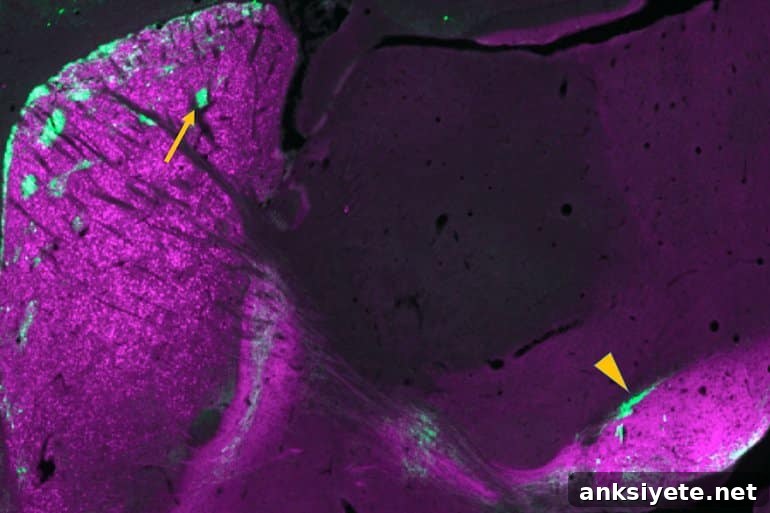
Earlier work from the Graybiel laboratory has mapped stereotypy to localized gene activation in the striatum, a forebrain region central to habit formation. In animals with the strongest stereotypies, much of the striatum does not show activity changes, but clusters of neurons known as striosomes retain high induction of immediate early genes.
Striosomes exert potent influence over dopamine‑releasing cells, and dopamine signaling is profoundly altered in both drug addiction and schizophrenia. The researchers found that striosomes contain elevated levels of Neuregulin 1, linking the molecular findings to a specific circuit component known to affect action selection.
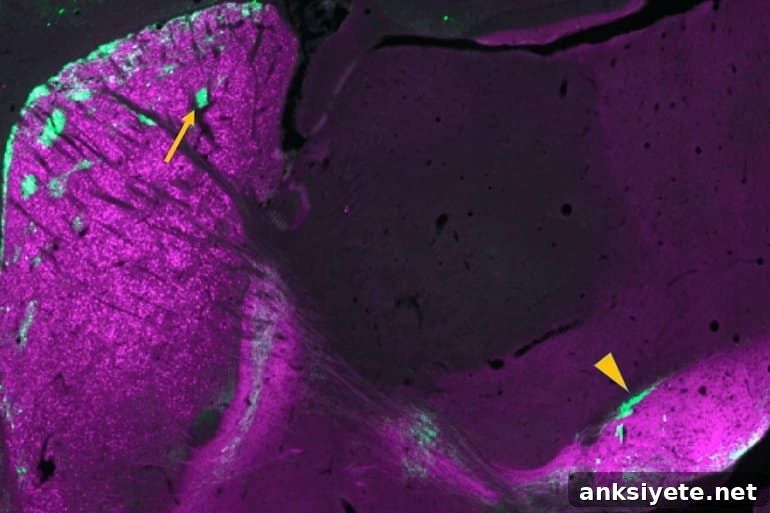
“Our data indicate that the upregulation of Nrg1‑responsive genes in animals with severe stereotypies likely reflects transcriptional changes in striosomal neurons that modulate dopamine release,” Crittenden explains. “Because dopamine influences whether an animal repeats an action or explores new actions, this work implicates a striosome‑based circuit in regulating action selection in health and disease.”
Patterns of behavior and gene expression
The researchers measured striatal gene expression by sequencing messenger RNAs (mRNAs) extracted from dissected brain tissue. mRNAs are the readouts of active genes and indicate which proteins the cell is preparing to produce; their abundance reflects how strongly a gene is being transcribed at the time of tissue collection.
To capture gene changes that preceded prolonged stereotypies, the team collected tissue 20 minutes after amphetamine injection—about 30 minutes before peak stereotypic behavior—and compared mRNA levels between drug‑treated and saline‑treated mice.
After the first amphetamine exposure, many genes showed modest increases in mRNA as the mice displayed hyperactivity and diverse behaviors such as walking, sniffing, and rearing. By the seventh day, when animals were engaged in extended bouts of a single repetitive action, fewer genes were differentially expressed, but those that were showed strong, consistent activation across mice receiving the stereotypy‑inducing treatment.
By day 21 the stereotypic behaviors had lessened and gene activation was reduced: fewer genes were strongly induced and a larger number were repressed compared with earlier time points. “The pattern suggests that the animals developed tolerance to both the behavioral effects of the drug and the associated transcriptional responses,” Crittenden notes.
“Linking behavior to patterns of gene regulation is inherently correlative, and this initial study does not establish causation,” Graybiel cautions. “Nevertheless, the clear parallels between the behavioral time course and selective mRNA responses provide a useful foundation for future work aimed at understanding—and ultimately treating—addiction and related disorders.”
Funding: This work was supported by the National Institute of Child Health and Human Development, the Saks‑Kavanaugh Foundation, the Broderick Fund for Phytocannabinoid Research at MIT, the James and Pat Poitras Research Fund, The Simons Foundation, and The Stanley Center for Psychiatric Research at the Broad Institute.
About this genetics research news
Source: MIT
Contact: Anne Trafton — MIT
Image: Image credited to Jill Crittenden
Original Research: Closed access. “Striatal transcriptome changes linked to drug‑induced repetitive behaviors” by Jill Crittenden et al., European Journal of Neuroscience.
Abstract
Striatal transcriptome changes linked to drug‑induced repetitive behaviors
Disruptive or excessive repetitive motor patterns (stereotypies) are hallmark symptoms across many neuropsychiatric disorders and can also be provoked by psychomotor stimulants such as amphetamine. The development of motor sequences coincides with altered activity patterns in the striatum, and stereotypies have been associated with abnormal plasticity in reinforcement‑related circuits.
In this study, mice were exposed to experimental schedules of amphetamine that produced distinct degrees of stereotypy. The authors used bulk RNA sequencing to compare striatal gene expression across animals categorized as naïve, sensitized, or tolerant to drug‑induced stereotypy, alongside vehicle‑treated controls.
All drug‑treated groups showed expression changes in genes involved in extracellular signal‑regulated kinase (ERK) cascades, which are implicated in responses to psychomotor stimulants. In the sensitized group showing the most prolonged stereotypy, the researchers identified dysregulation of 20 genes not altered in the other groups. Gene set enrichment analysis revealed a significant overlap with genes regulated by Neuregulin 1 (Nrg1), a known susceptibility gene for schizophrenia and autism that encodes a ligand for ErbB receptors involved in neuronal migration, myelination, and survival of dopamine neurons.
These findings raise the possibility that sensitization of the Nrg1 signaling pathway by stimulant exposure could contribute to links between stimulant abuse and vulnerability to psychiatric disorders that share stereotypic phenotypes.