
Summary: New research has found a link between brain stem volume and aggressive behavior in children with autism. Children with smaller brain stems were more likely to show clinically significant aggression.
Source: Brigham Young University
Study Links Brain Stem Size to Aggression in Children with Autism
Researchers at Brigham Young University (BYU) report a possible biological connection between aggression and autism spectrum disorder (ASD). Published in Research in Autism Spectrum Disorders, the study identified an inverse relationship between brain stem volume and aggressive behavior: children with smaller brain stems had higher odds of displaying clinically significant aggression.
The finding is preliminary but important because the brain stem controls basic autonomic functions such as breathing, heart rate and arousal. “The brain stem is really involved in autonomic activities — breathing, heart rate, staying awake — so this is evidence that there’s something core and basic linking aggression and autism,” said Kevin Stephenson, a BYU clinical psychology Ph.D. student and coauthor of the study.
Study Design and Methods
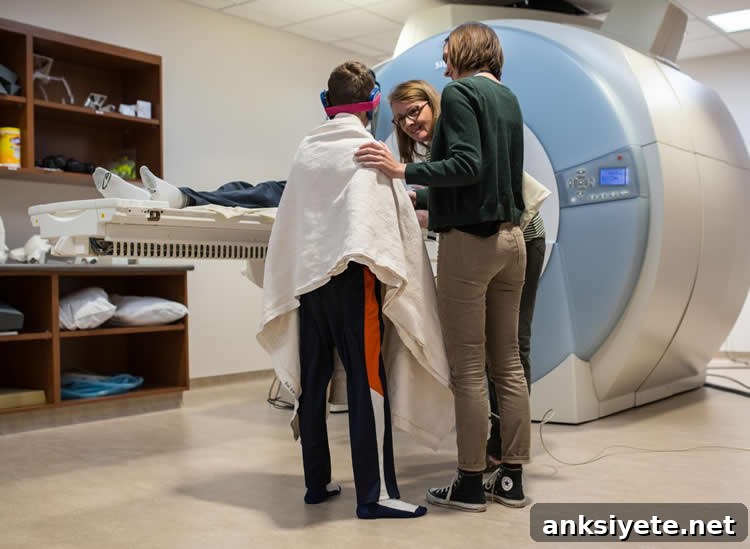
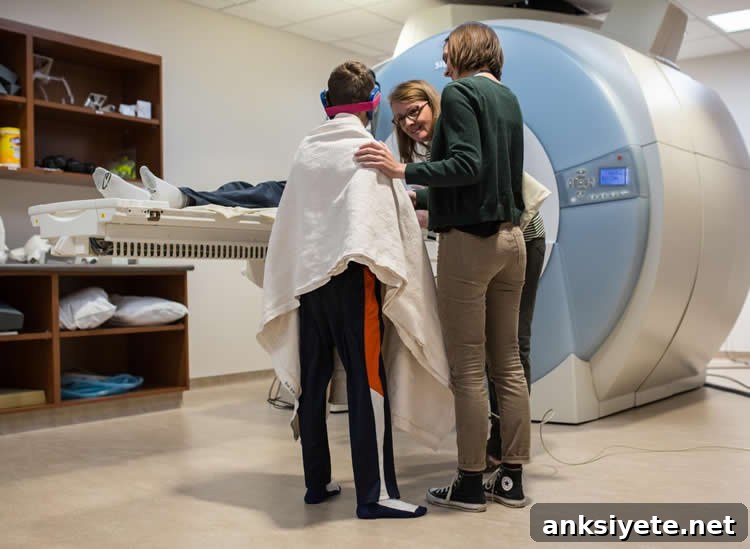
The research team compared MRI scans from two groups of children diagnosed with ASD: one group that exhibited high levels of aggressive behavior and another group without problematic aggression. Aggression status was measured using the Irritability subscale of the Aberrant Behavior Checklist, a standardized behavioral assessment used in autism research.
Investigators focused on brain regions previously associated with emotion and behavioral control, including the brain stem, amygdala, orbitofrontal cortex, anterior cingulate cortex and dorsolateral prefrontal cortex. They applied lasso logistic regression to determine which brain volume measures best predicted membership in the high-aggression group. Among these regions, brain stem volume emerged as the only significant predictor of aggression status.
Key Findings
The central result: smaller brain stem volumes were associated with greater odds of being in the high-aggression group. The authors emphasize that this association points toward basic physiological mechanisms—such as heightened arousal or dysregulated autonomic responses—that may contribute to aggressive behaviors in some children with ASD.
Coauthor Terisa Gabrielsen, BYU assistant professor of school psychology, stressed the clinical relevance: “If we know which part of the brain is different and what function that part controls, it gives clues about potential interventions.” Mikle South, BYU psychology professor and study coauthor, added that once a child’s physiological arousal escalates—rapid heart rate, clenched hands, sweating—behavioral interventions may come too late. Identifying early signs and triggers could allow caregivers and clinicians to intervene before arousal reaches a critical level.
Implications for Intervention and Future Research
Understanding structural differences linked to aggression can guide future research and treatment. The authors recommend further investigation of brain stem structure and function in ASD to identify mechanisms related to arousal and aggression. They also plan to explore how the brain stem interacts with other brain regions, since aggressive behavior likely arises from disruptions across a network of areas rather than a single structure.
Autism Connect, a BYU research group that began in the David O. McKay School of Education three years ago, coordinates these efforts. The project that produced this paper involved researchers from multiple BYU colleges and collaborators at the University of Utah and the University of Wisconsin–Madison. The data used in the analysis were collected as part of a University of Utah autism study funded by the National Institutes of Health (NIH).
Why Studying Aggression Matters
Aggressive behaviors can profoundly affect family life, schooling and care for children with ASD. Gabrielsen explained that aggression is one of the most disruptive long-term challenges families face. Mikle South shared a vivid example from clinical practice: a mother described having much less hair because her child frequently pulled it when stressed. Such behaviors complicate family and educational dynamics and underscore the need for targeted research and practical strategies to reduce harm and improve quality of life.
To learn more about Autism Connect, opportunities to participate in research, or program updates, contact the BYU Autism Connect program directly.
Funding: This research was funded by the National Institutes of Health.
Source: Andrea Christensen, Brigham Young University
Abstract (Rewritten)
Relationship between brain stem volume and aggression in children diagnosed with autism spectrum disorder
Background: Aggressive behaviors are common in individuals with autism spectrum disorder and may reflect distinct subtypes within ASD. In non-ASD populations, aggression has been linked to several brain regions involved in emotion and behavioral control. Few studies have examined brain volume differences specifically in individuals with ASD who exhibit comorbid aggression.
Method: Neuroimaging data from children diagnosed with ASD were compared to typically developing controls. Regions of interest were selected based on prior aggression research and included the brain stem, amygdala, orbitofrontal cortex, anterior cingulate cortex, and dorsolateral prefrontal cortex. Aggression status was determined by scores on the Irritability subscale of the Aberrant Behavior Checklist. Lasso logistic regression identified which brain regions best predicted aggression status.
Results: Of the regions examined, smaller brain stem volumes were associated with increased odds of being in the high-aggression group.
Conclusions: Identifying brain differences between children with ASD who do and do not engage in aggressive behavior may inform treatment strategies. Future studies should investigate brain stem anatomy and function in ASD to clarify mechanisms related to arousal and aggression.
Original research: “Relationship between brain stem volume and aggression in children diagnosed with autism spectrum disorder” by Rebecca A. Lundwall et al., Research in Autism Spectrum Disorders. Published online February 2017. DOI: 10.1016/j.rasd.2016.12.001