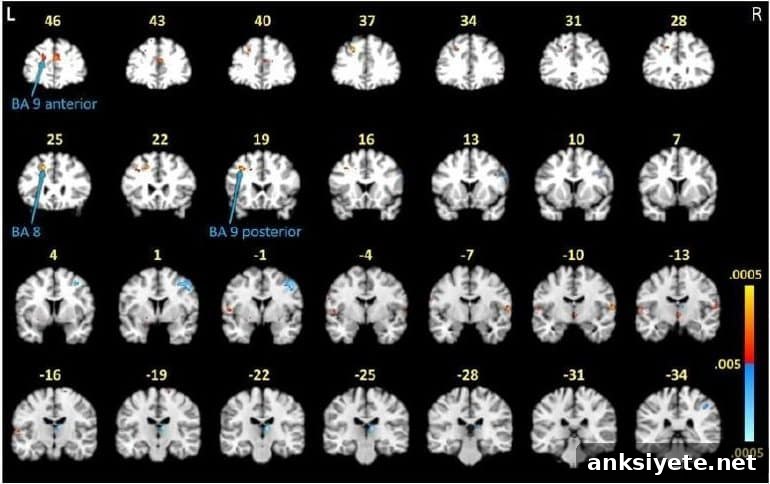
Summary: A neuroimaging study identifies distinct alterations in white matter and other brain tissue physiology in people with post-treatment Lyme disease. The research also found atypical frontal lobe activity—an area tied to memory recall and concentration—in those previously treated for Lyme disease.
Source: Johns Hopkins Medicine
Researchers at Johns Hopkins Medicine used advanced brain imaging to identify distinctive functional and structural changes in the brains of people with post-treatment Lyme disease, a condition affecting an estimated 10% to 20% of the nearly half-million Americans who contract Lyme disease each year.
Published October 26 in the journal PLOS ONE, the study provides objective evidence linking persistent cognitive complaints—such as memory problems and difficulty concentrating—to measurable changes in brain physiology. The findings help explain why some individuals continue to experience symptoms after a standard antibiotic course has cleared active infection.
Lyme disease initially can present with a characteristic rash, flu-like symptoms, fever, joint pain and fatigue. While most people recover following recommended antibiotic treatment, a subset of patients report ongoing symptoms after treatment, a condition commonly called post-treatment Lyme disease. Those long-haul patients often describe chronic fatigue, muscle pain, insomnia, depression and cognitive difficulties despite lacking clear abnormalities on conventional imaging, laboratory tests or routine neurological exams.
To investigate suspected changes in brain function that might underlie these persistent symptoms, the Johns Hopkins research team combined functional MRI (fMRI)—which tracks changes in brain blood flow as a proxy for neural activity—with diffusion tensor imaging (DTI), a technique that maps the movement of water in brain tissue and reveals microstructural integrity of neural pathways.
Led by Cherie Marvel, Ph.D., the study enrolled 12 people with post-treatment Lyme disease and 18 control participants without a history of Lyme. During fMRI scanning, participants performed short-term memory tasks that involved memorizing and recalling capital and lowercase letters and ordering several letters alphabetically. These tasks engage regions of the frontal lobe involved in working memory and concentration.
The imaging revealed unusual activation patterns in the frontal lobes of the post-treatment Lyme group. Specifically, the fMRI detected activity within white matter regions—tissue that normally carries less blood flow than gray matter and rarely appears in functional scans. White matter functions like the brain’s communication network, transmitting information between distant gray matter regions. In the Lyme group, some frontal regions underactivated while others showed increased activation, a pattern not observed in the control group.
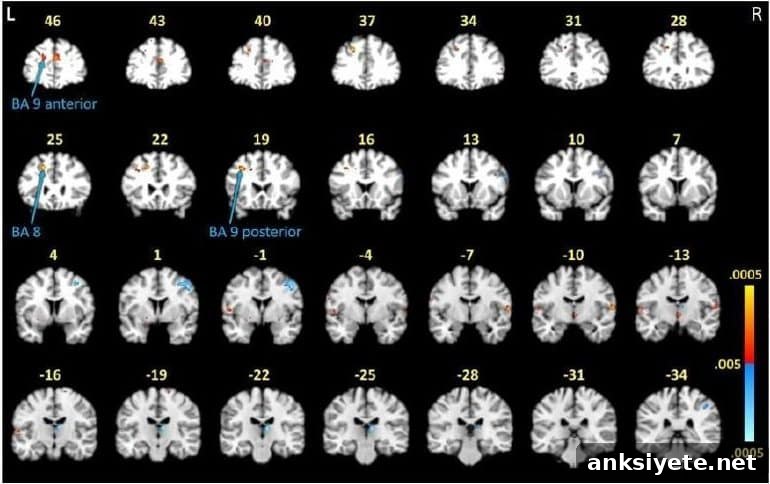
To validate and extend the fMRI observations, the team applied DTI to all 12 patients with post-treatment Lyme and to 12 of the control participants. DTI showed directional water movement—interpreted as diffusion—along axons in the same frontal white matter regions highlighted by fMRI. In other words, water appeared to be diffusing along neuronal extensions in those white matter tracts, a finding the authors describe as axonal leakage or altered microstructural integrity.
Surprisingly, the researchers noted that greater evidence of axonal diffusion in these white matter areas correlated with fewer reported cognitive deficits and overall better clinical outcomes among the post-treatment Lyme participants. At the same time, those same individuals required more time to complete the memory tasks, suggesting a trade-off: the white matter response may represent an adaptive or compensatory process that helps preserve cognitive performance but slows processing speed.
The team proposes that increased white matter activity could reflect a protective or immune-related response in people with lingering symptoms after Lyme treatment. However, the altered physiology and function of white matter could carry costs, such as slower task completion and persistent subjective symptoms. The researchers emphasize that standard clinical evaluations often miss such subtle but meaningful brain changes, underscoring the value of combining functional and microstructural imaging techniques.
“Objective biologic measures of post-treatment Lyme symptoms typically can’t be identified using regular MRIs, CT scans, or blood tests,” said John Aucott, M.D., director of the Johns Hopkins Lyme Disease Clinical Research Center. “Expanding our methods of evaluation allowed us to detect these novel changes in brain activity and structure.”
The investigators believe these results may illuminate mechanisms and potential therapeutic targets for neurologic manifestations of Lyme disease and may also have broader relevance to other infection-related chronic conditions, such as long COVID and chronic fatigue syndrome. Further research will be necessary to clarify the biological drivers of white matter activation and axonal diffusion and to determine whether these imaging findings predict clinical recovery or response to interventions.
The research team includes Cherie Marvel, Ph.D., John Aucott, M.D., Kylie Alm, Deeya Bhattacharya, Alison Rebman, Arnold Bakker, Jason Creighton, Erica Kozero, Arun Venkatesan, Prianca Nadkarni, and others at Johns Hopkins Medicine, with Owen Morgan now at Cornell University.
About this Lyme disease research news
Author: Press Office
Source: Johns Hopkins Medicine
Contact: Press Office – Johns Hopkins Medicine
Image: The image is credited to Cherie Marvel, Ph.D., Johns Hopkins Medicine
Original Research: Findings published in PLOS ONE