
Summary: New study explains how olfactory neurons change their gene activity to adapt to different scent environments.
Source: University of Geneva
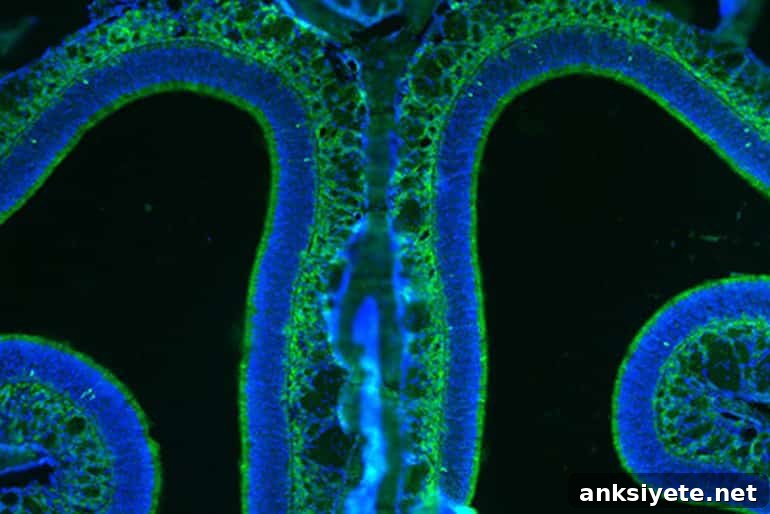
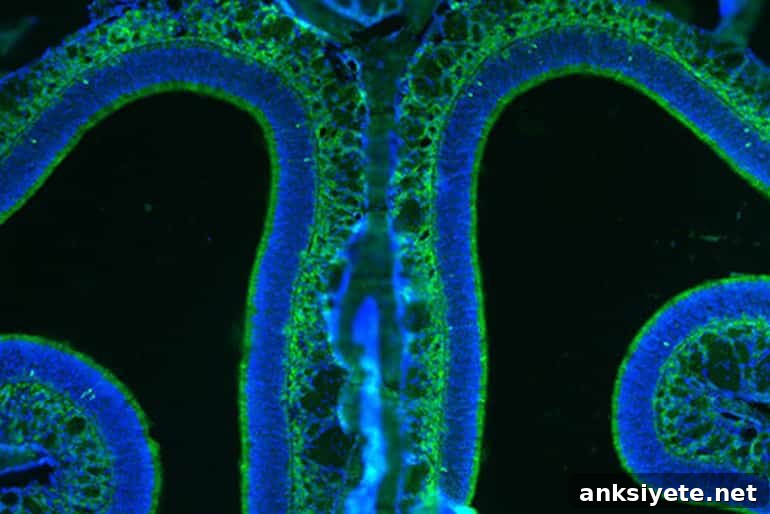
Olfactory receptors, which sit on the surface of sensory neurons inside the nasal cavity, detect odorant molecules and transmit that information to the brain. How do these neurons cope with a wide range of scent signals and adjust to varying intensities of stimulation?
Researchers from the Faculty of Science and the Faculty of Medicine at the University of Geneva (UNIGE) examined how olfactory sensory neurons alter their gene expression when exposed to odorant stimulation or kept in a neutral environment. Their findings reveal an unexpected diversity in neuronal profiles tied to the specific receptor each neuron expresses and to the animal’s prior odor experience.
Published in Nature Communications, this work uncovers a spectrum of olfactory neuron identities and shows how these cells dynamically adapt to their surroundings.
In mammals, millions of olfactory sensory neurons line the nasal mucosa and carry receptors that bind selectively to volatile odorant molecules. Each neuron typically expresses a single olfactory receptor gene, drawn from a repertoire of roughly 450 receptors in humans and about 1,200 in mice.
When a volatile molecule engages its matched receptor, that receptor becomes active and generates an electrical signal sent to the olfactory bulb in the brain. That neural activity is then interpreted by higher brain centers as a specific smell.
The olfactory system must operate across highly variable environments and adapt quickly. For example, continuous exposure to a particular odorant often reduces perceived intensity over time, sometimes to the point of complete desensitization.
The team led by Professor Ivan Rodriguez (Department of Genetics and Evolution) in collaboration with Professor Alan Carleton (Department of Basic Neurosciences) explored the cellular mechanisms that underlie this adaptability in mice. In earlier work, they showed that less than an hour of receptor stimulation can reduce the expression of the corresponding receptor gene, indicating a rapid form of adaptation.
Distinct transcriptional identities in olfactory neurons
Building on that discovery, the researchers asked whether olfactory experience influences not only the receptor gene but also other genes across the neuron. To answer this, they profiled the messenger RNA content of thousands of individual olfactory neurons before and after odorant exposure, using single-cell RNA sequencing to capture the full gene expression landscape.
“We were surprised to find that even in a resting state—without recent stimulation—populations of olfactory sensory neurons already show highly divergent messenger RNA profiles that are specific to the olfactory receptor each neuron expresses,” says Luis Flores Horgue, a doctoral student and co-first author of the study. Neurons expressing the same receptor share that receptor but vary substantially in hundreds of other genes. Those gene-expression patterns appear to be influenced by the identity of the receptor itself, suggesting the receptor has a dual role in sensory detection and in shaping the cell’s transcriptional program.
Activation alters hundreds of genes
After exposing mice to odorant molecules, the scientists observed dramatic changes in gene expression within the activated neurons. Rather than only switching a receptor from an inactive to an active state, odor binding reprogrammed neurons by modifying transcription across hundreds of genes. These changes were rapid, extensive, receptor-dependent, and reversible—revealing a previously unrecognized layer of plasticity in olfactory neurons.
“This is an unexpected, massive, and reversible adaptation mechanism,” explains Ivan Rodriguez, co-corresponding author. “Olfactory neurons do not simply toggle between resting and active states; their molecular identity evolves continually based on the receptor they express and the animal’s odor history.”
These findings expand our understanding of sensory coding by showing that the olfactory system uses a broad, experience-dependent repertoire of neuronal identities. The results highlight the flexibility of olfactory coding and pose new questions about how receptor identity and environmental exposure together determine neuronal function. Identifying the molecular pathways that link receptor activity to transcriptional reprogramming will be a key aim of future research by the Geneva team.
About this olfaction research news
Author: Press Office
Source: University of Geneva
Contact: Press Office – University of Geneva
Image: The image is credited to Madlaina Boillat
Original Research: Open access. “Transcriptional adaptation of olfactory sensory neurons to GPCR identity and activity” by Luis Flores Horgue et al., published in Nature Communications.
Abstract
Transcriptional adaptation of olfactory sensory neurons to GPCR identity and activity
Chemoperception in mammals depends on a diverse set of neuronal sensors that detect environmental chemicals and adapt to varying levels of stimulation. The relative contributions of intrinsic and external factors to neuronal identity remain to be fully defined.
Leveraging the parallel coding architecture of the olfactory system, the researchers compared neuronal identities before and after olfactory experience. They report that at rest, transcriptomic profiles of mouse olfactory sensory neuron populations are already distinct and tied to the olfactory receptor they express, with correlations to receptor sequence. These baseline transcriptomic differences are further reshaped by odorant exposure, which reprograms neurons through transcriptional modulation.
The study highlights a wide range of sensory neuron identities present at rest that can adapt with experience, adding a new layer of complexity and flexibility to sensory coding in the olfactory system.