
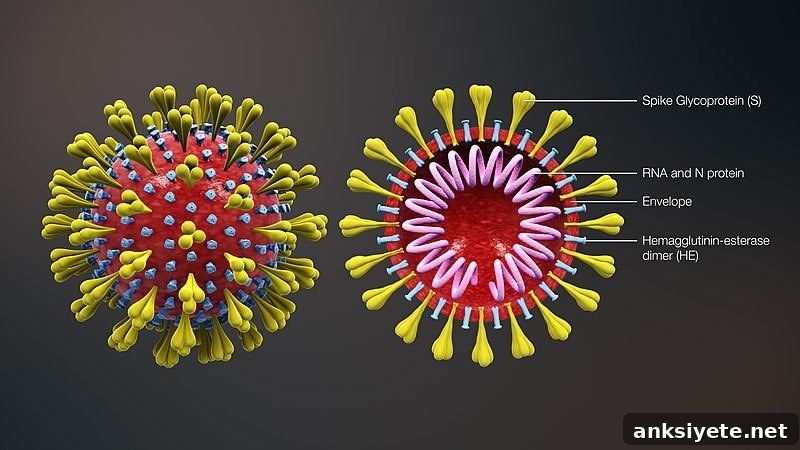
Summary: A Lancet report details the first documented local transmission of SARS-CoV-2 in the United States: a woman who returned from Wuhan, China, and subsequently transmitted the virus to her husband.
Source: The Lancet
Key point: Person-to-person transmission of SARS-CoV-2 occurred between two household members after prolonged, unprotected exposure while the first patient was symptomatic. Despite active monitoring and testing of 372 contacts, no additional cases were detected.
New research published in The Lancet provides a detailed account of the first known secondary transmission of severe acute respiratory syndrome coronavirus 2 (SARS-CoV-2) in the United States. The index patient was a woman in her 60s who had recently returned from Wuhan, China. Her husband, who had not travelled, later tested positive after having frequent close contact with her. Public health teams conducted an intensive epidemiologic investigation, monitoring hundreds of potential contacts and testing those who developed symptoms as well as a sample of asymptomatic healthcare personnel.
On January 23, 2020, the state of Illinois confirmed its first laboratory-diagnosed COVID-19 case in a woman who had travelled to Wuhan in mid-January. Eight days later, on January 30, her husband—who had remained in the United States and had close, ongoing contact with his wife—was confirmed as the first instance of secondary transmission in the USA. Both patients were admitted to hospital with respiratory illness and later recovered.
Public health officials identified a total of 372 people who might have had exposure to either patient. Of these, 347 contacts could be actively monitored and were followed for 14 days after their last exposure. The monitored group included 152 community contacts and 195 healthcare personnel. Twenty-five additional individuals had insufficient contact information to allow active monitoring. A convenience sample of 32 asymptomatic healthcare workers who had contact with the patients was also tested for SARS-CoV-2.
During the 14-day monitoring period, 43 contacts developed fever, cough, or shortness of breath and were classified as persons under investigation; these individuals were isolated and tested. All 75 people who were tested—including the 43 symptomatic contacts and the 32 asymptomatic healthcare personnel—returned negative results for SARS-CoV-2.
The female patient had travelled to Wuhan on December 25, 2019, where she visited a hospitalized relative and other family members who had undiagnosed respiratory illness. She returned to the United States on January 13, 2020, and over the next six days experienced mild fever, fatigue, and cough before being hospitalized with pneumonia and testing positive for SARS-CoV-2. Before her hospitalization she lived with her husband, who had underlying chronic obstructive pulmonary disease (COPD) and a chronic cough, making it difficult to determine precisely when his new symptoms began. Eight days after his wife’s admission, he was hospitalized with worsening shortness of breath and hemoptysis (coughing up blood) and also tested positive for the virus.
Both patients recovered and were discharged to home isolation. The isolation was lifted 33 days after the woman’s return from Wuhan, following two consecutive negative tests for SARS-CoV-2 taken 24 hours apart.
Investigators emphasize that transmission in this instance appears linked to prolonged, unprotected exposure to a symptomatic individual. Dr. Jennifer Layden, Chief Medical Officer of the Chicago Department of Public Health and a co-leader of the study, highlights that this limited local transmission in Illinois contrasts with broader community spread reported in Wuhan and with transmission patterns seen with some other coronaviruses. She stresses the importance of rapid triage and isolation of suspected COVID-19 cases in healthcare settings, together with prompt notification of infection prevention teams and local public health authorities to support testing, clinical management, and containment measures.
Co-lead author Dr. Isaac Ghinai of the Illinois Department of Public Health notes that the lack of detected transmission to healthcare workers in this investigation supports the Centers for Disease Control and Prevention (CDC) guidance on appropriate infection control practices. Dr. Tristan McPherson of the Chicago Department of Public Health adds that household members and caregivers who lack appropriate masks or other personal protective equipment are likely at high risk when exposed to a symptomatic COVID-19 case, and that current CDC recommendations for quarantine after high-risk exposures may help prevent onward spread.
The authors acknowledge several limitations. This report documents a single chain of transmission and therefore may not represent broader transmission dynamics. The contact investigation depended on the couple’s recollection of their activities, contacts, and timing of symptoms, so some exposed individuals may not have been identified. The investigation occurred before subsequent CDC updates that expanded symptom lists and revised exposure classifications; for example, a sore throat was later included as a possible symptom for evaluating healthcare workers. The study also relied on single PCR tests for contacts, and a single negative test may not definitively exclude infection over a full 14-day incubation period, so some infections could have been missed.
The authors recommend that anyone who believes they have been exposed to COVID-19 and who is experiencing fever, cough, shortness of breath, or other compatible symptoms should contact their healthcare provider by phone before seeking in-person care, so that appropriate preventive steps can be taken.
Source: The Lancet
Media contact: Press Office, The Lancet
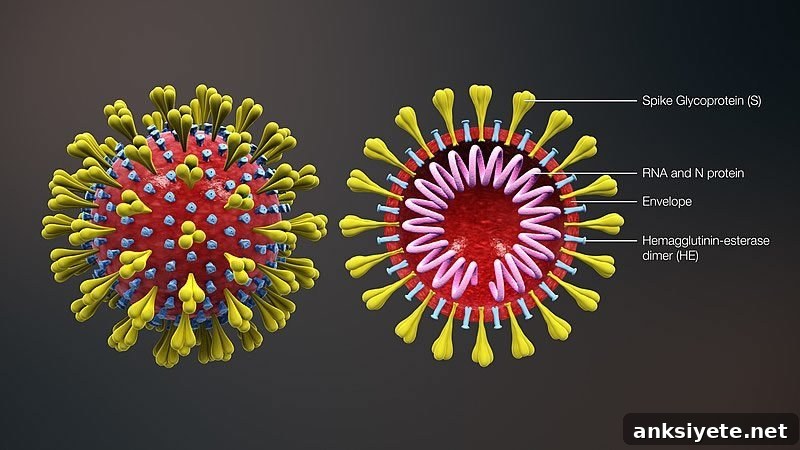
Image credit: ScientificAnimation.com (licensed under CC BY-SA 4.0). The image is noted as public domain in the figure caption.
Original research: Title: “First known person-to-person transmission of severe acute respiratory syndrome coronavirus 2 (SARS-CoV-2) in the USA.” Authors: Isaac Ghinai et al. Journal: The Lancet. DOI: 10.1016/S0140-6736(20)30607-3. Open access PDF available from the journal.
Abstract (condensed)
Background: COVID-19 is caused by SARS-CoV-2 and was first identified in China in December 2019. In January 2020, public health agencies investigated Illinois’s first confirmed case.
Methods: Confirmed cases had positive SARS-CoV-2 tests. Contacts were people exposed to a patient on or after symptom onset and were monitored for 14 days. Symptomatic contacts were tested, and a convenience sample of 32 asymptomatic healthcare personnel was also tested.
Findings: Patient 1, a woman in her 60s, returned from Wuhan and was hospitalized with pneumonia one week later, testing positive. Her husband, who had close contact and no travel history, was admitted eight days later and also tested positive. Of 372 identified contacts, 347 were monitored; 43 developed symptoms and were tested. All 75 tested contacts (including symptomatic contacts and the 32 asymptomatic healthcare workers) were negative for SARS-CoV-2.
Interpretation: Transmission occurred between two household members after prolonged, unprotected exposure while the index patient was symptomatic. Despite comprehensive monitoring and testing of symptomatic and some asymptomatic contacts, no further transmission was detected in this investigation.