
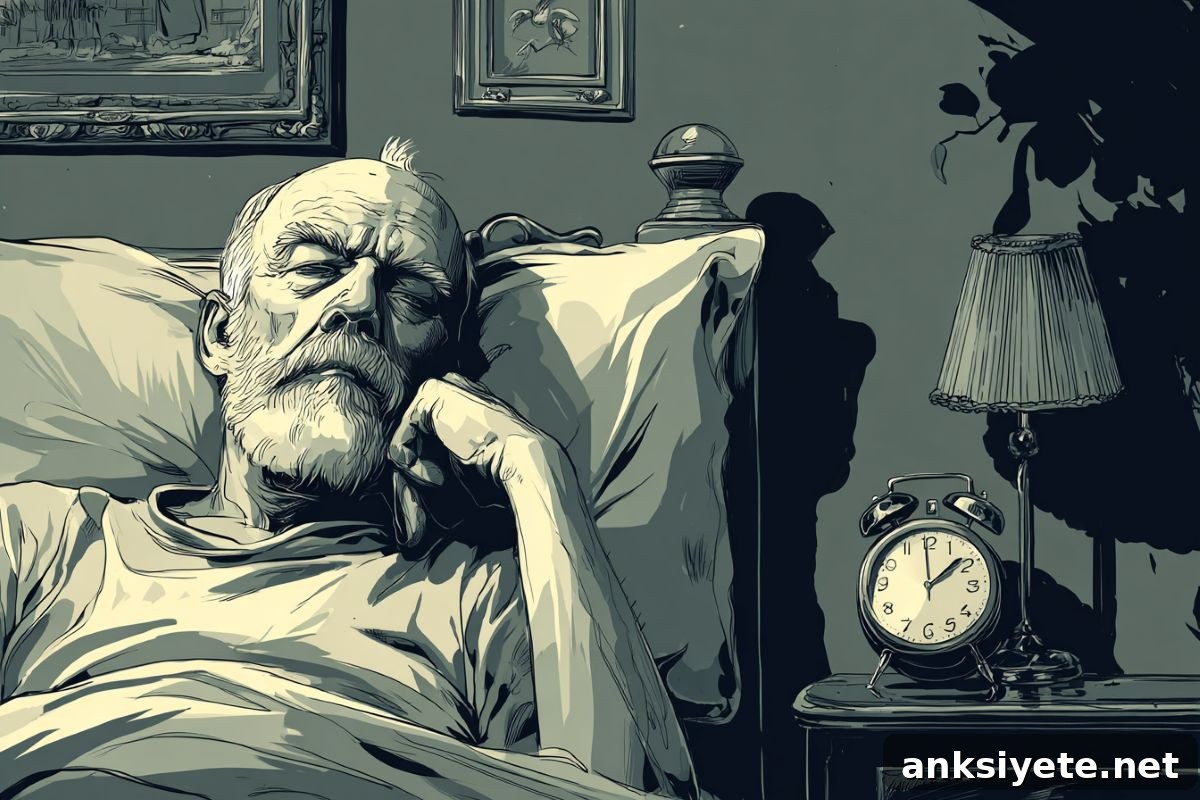
Summary: A new study identifies a powerful psychological factor linked to chronic sleep problems and declining self-reported physical health. The researchers show that “age discrepancy” — the gap between how old someone feels and their actual chronological age — independently predicts worse sleep outcomes, including more severe insomnia symptoms, poorer sleep regularity, and greater daytime impairment.
Across a large adult sample, people who felt older than their years were significantly more likely to report disrupted sleep and daytime problems. Those sleep disturbances, in turn, were associated with poorer self-rated physical health, suggesting a cascading effect that begins with subjective perceptions of aging.
Key Facts
- How age discrepancy was measured: Investigators calculated age discrepancy by subtracting chronological age from subjective age and dividing that difference by chronological age. Positive values indicate feeling older than one’s actual years; negative values indicate feeling younger.
- Large, diverse sample: The analysis used data from 3,177 adults (mean age 42.8 years; 49% female) who completed an online survey covering subjective age, chronological age, insomnia severity, overall sleep health, sleep regularity, daytime sleep impairment, depression, anxiety, and self-reported physical health.
- Independent predictor: Age discrepancy predicted all measured sleep outcomes independently. Associations remained significant after adjusting statistically for chronological age, sex, race, depression, and anxiety, indicating the effect is not simply a byproduct of those factors.
- Consistent pattern of poor sleep: Individuals who felt older reported higher insomnia symptoms, lower sleep regularity, and greater daytime sleep-related impairment — a consistent pattern across multiple sleep metrics.
- Indirect link to physical health: Parallel mediation analyses showed that the relationship between feeling older and poorer self-reported physical health was largely indirect: age discrepancy was associated with sleep problems (greater insomnia severity, irregular sleep, and daytime impairment), and those sleep problems were linked to worse physical health ratings.
- Clinical and public-health implications: Led by Joseph M. Dzierzewski, PhD, Senior Vice President of Research and Scientific Affairs at the National Sleep Foundation, the study suggests that how people perceive their own aging could be an important target for interventions aimed at improving sleep and long-term well-being.
Source: AASM
Study overview: The research, scheduled for presentation at the SLEEP 2026 annual meeting, examined whether subjective age relative to chronological age (age discrepancy) relates to sleep outcomes and, indirectly, to self-reported physical health. The investigators used correlational and regression analyses to test direct links between age discrepancy and sleep measures, and parallel mediation models to evaluate indirect effects on physical health through sleep variables.
Key results show that adults who felt older than their chronological age consistently reported worse sleep across multiple domains: higher insomnia severity, reduced sleep regularity, and greater daytime impairment. These links persisted even after accounting for demographic factors and common mood conditions such as depression and anxiety.
Mediation analyses indicated that the negative relationship between feeling older and lower self-rated physical health operated primarily through sleep problems. In other words, subjective aging appears to influence physical health indirectly by contributing to disturbed sleep, which then undermines daytime functioning and perceived health.
The authors emphasize that sleep is a multi-dimensional health behavior. According to clinical definitions used in the field, healthy sleep requires adequate duration, good quality, appropriate timing and regularity, and the absence of disruptive sleep symptoms or disorders. Insomnia, defined by difficulty falling or staying asleep accompanied by daytime impairment, is a common contributor to poor overall health.
Dzierzewski and colleagues suggest these findings should inform both clinical practice and public-health communications about aging. Assessing and addressing subjective age may add a valuable dimension to approaches that aim to protect sleep and long-term quality of life.
Key Questions Answered:
A: The study suggests that subjective perceptions of aging can influence top-down processes that regulate arousal and stress. When people adopt an identity of being older — and possibly more frail or stressed — it can increase physiological and psychological arousal at night, making it harder to fall and stay asleep and reducing the consistency of sleep timing.
A: The link appears to be indirect and driven largely through sleep. The data show that higher age discrepancy is associated with worse sleep (more insomnia symptoms, irregular sleep, and greater daytime impairment), and these sleep problems are in turn associated with poorer self-reported physical health. Sleep thus functions as a key pathway connecting subjective age to perceived physical decline.
A: While this study is observational and cannot prove causation, the findings indicate that subjective age is a meaningful correlate of sleep health independent of depression and anxiety. This suggests that interventions targeting how people perceive their aging — alongside established sleep treatments — might help improve sleep outcomes and daytime functioning, but clinical trials are needed to confirm this possibility.
Editorial Notes:
- This article was edited by a Neuroscience News editor.
- The journal paper was reviewed in full by the editorial team.
- Additional context and clarifications were added by staff for readability and accuracy.
About this sleep and aging research news
Author: Hannah Miller
Source: AASM
Contact: Hannah Miller – AASM
Image: The image is credited to Neuroscience News
Original Research: The findings will be presented at SLEEP 2026.