
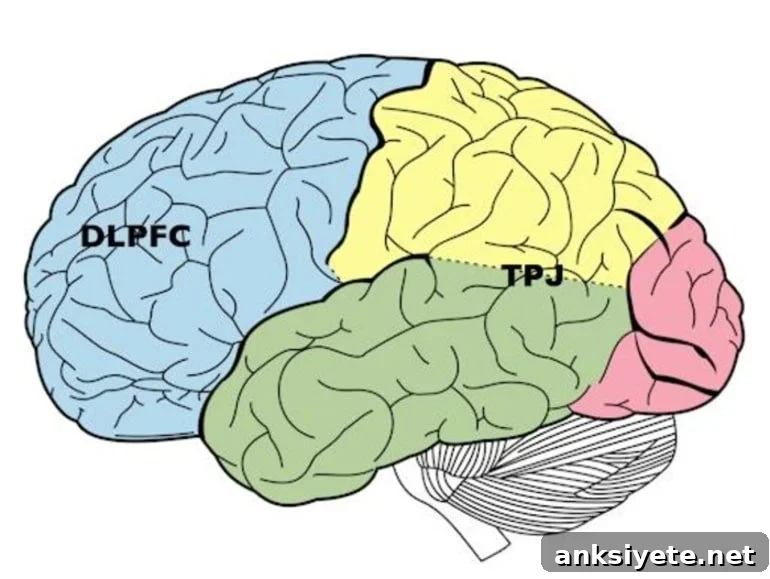
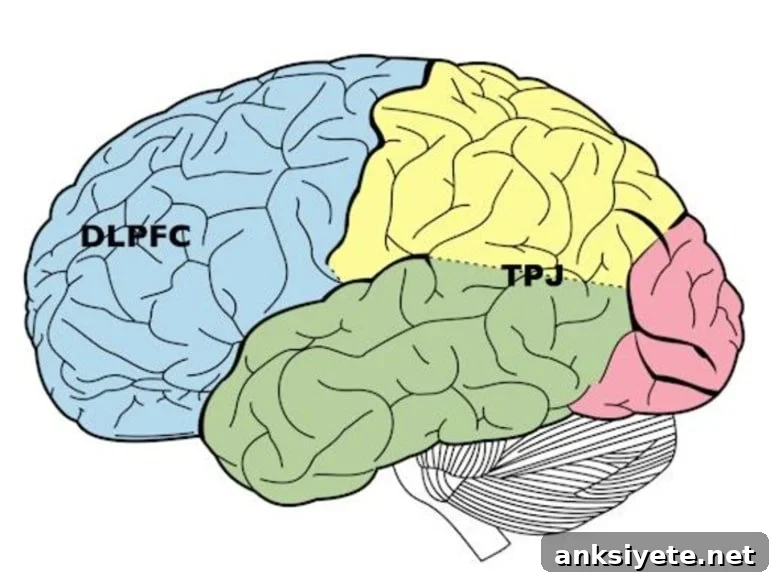
Summary: Stronger functional connectivity between the dorsolateral prefrontal cortex and the temporoparietal junction is associated with a lower tendency to punish others for selfish or unfair actions.
Source: HSE
HSE researchers used resting-state electroencephalography to investigate how intrinsic brain connectivity relates to the willingness of observers to impose punishment on unfair behavior. Their findings indicate that the strength of specific neural connections predicts how likely a person is to spend resources to sanction norm violations.
The study, titled ‘Wired to punish? Electroencephalographic study of the resting-state neuronal oscillations underlying third-party punishment,’ was published in the journal Neuroscience.
Human societies rely on social norms to coordinate cooperative and predictable interactions. Those norms only function if violations are discouraged, and punishment—by victims or uninvolved observers—serves to reinforce acceptable behavior. Third-party punishment, where an uninvolved observer sanctions an offender, is a particularly important mechanism for maintaining social order across groups.
Neuroscience research has identified several brain regions that contribute to decisions about punishing others. Two areas highlighted in this study are the dorsolateral prefrontal cortex (DLPFC) and the temporoparietal junction (TPJ). The TPJ is implicated in evaluating responsibility, intentionality, and the degree of guilt, while the DLPFC is thought to translate those assessments into concrete decisions about punishment.
Given this functional division, the researchers hypothesized that the baseline functional connectivity between TPJ and DLPFC—measured while the brain is at rest—would be associated with individual differences in third-party punishment behavior. In other words, naturally stronger or weaker connections between these areas might predispose a person to be more or less likely to punish unfair actions.
To test this idea, the team ran a neuroimaging experiment in which participants first underwent a ten-minute resting-state electroencephalography (EEG) recording. During this session participants remained inactive; for the final five minutes they sat with their eyes closed. Resting-state EEG provides a window into the brain’s spontaneous activity and allowed the researchers to estimate both local neuronal dynamics and functional connectivity between regions.
Seventeen people completed the full protocol and served as third-party observers in the behavioral portion of the experiment. Immediately after EEG recording, participants watched what they believed were two other players engaging in repeated rounds of the ‘dictator game.’ In each round the dictator received 40 coins and decided how much to keep and how much to give to a receiver. Although the actions of those players were pre-programmed, participants were led to believe they were observing real decisions.
As the observer, each participant had the option to punish the dictator’s unfair offers by spending their own game coins. Any amount the observer invested as a fine reduced the dictator’s payout by twice the invested amount. The remaining money from the game was converted into the participant’s real payment for the study. For example, if a dictator kept 35 coins and gave 5 to the receiver, an observer who invested 10 coins in punishment would cause a 20-coin deduction from the dictator’s earnings for that round.
For each instance of an unfair allocation, the researchers recorded how much game currency the observer chose to spend to punish the dictator. They then correlated these punishment levels with EEG-derived measures of connectivity between the right TPJ and right DLPFC, as well as local resting-state neuronal properties in the TPJ.
The key result showed a negative correlation between the global resting-state connectivity of the right DLPFC and right TPJ and third-party punishment: participants with stronger functional coupling between these regions tended to spend less on punishing unfair offers. The authors interpret this finding to suggest that stronger TPJ–DLPFC connectivity may reflect a neural tendency to accumulate or integrate evidence differently, which in turn reduces the propensity to impose punitive costs as an observer. Further studies are needed to clarify the precise cognitive mechanisms involved.
Additionally, local resting-state dynamics in the right TPJ were predictive of punishment behavior. Participants whose TPJ displayed stronger long-range temporal correlations at rest tended to show lower levels of third-party punishment. Conversely, a more reactive or “sensitive” TPJ at rest could generate a stronger guilt assessment in response to unfair behavior, potentially leading to harsher punitive choices.
About this behavioral neuroscience research news
Author: Ksenia Bregadze
Source: HSE
Contact: Ksenia Bregadze – HSE
Image: The image is credited to Oksana Zinchenko
Original Research: Closed access. “Wired to Punish? Electroencephalographic Study of the Resting-state Neuronal Oscillations Underlying Third-party Punishment” by Oksana Zinchenko et al., Neuroscience.
Abstract
Wired to Punish? Electroencephalographic Study of the Resting-state Neuronal Oscillations Underlying Third-party Punishment
Decades of neuroimaging and brain-stimulation research have probed the neural substrates of third-party punishment, a fundamental mechanism for enforcing social norms. Yet the specific neuronal dynamics that shape individual differences in punitive behavior remain incompletely understood. Prior EEG studies have linked inter-regional connectivity to punishment choices, but the role of local resting-state neuronal states was not fully established.
This study investigated whether resting-state neuronal activity in the alpha frequency range and measures of global connectivity can predict individual differences in third-party punishment. The results revealed a negative relationship between global resting-state connectivity of the right dorsolateral prefrontal and right temporoparietal regions and punishment levels. In addition, stronger local resting-state long-range temporal correlations in the right temporoparietal cortex were associated with lower punishment. Together, these findings support the idea that both global and local neuronal dynamics contribute to how individuals respond to norm violations as third-party observers.