

 Have you ever imagined writing your own obituary? If you paused and considered your life as it stands today—young or old—would you say you have lived well?
That question leads to another: what exactly qualifies as a life well lived?
Interest in this question has grown substantially. Researchers across philosophy and psychology have re-examined ancient ideas to understand what makes life meaningful and fulfilling. One central distinction that has re-emerged in modern research is between eudaimonic and hedonic wellbeing.
In brief, hedonic wellbeing focuses on pleasure, positive emotions, and life satisfaction—seeking to maximize pleasurable experiences and minimize pain. Eudaimonic wellbeing emphasizes growth, purpose, authenticity, and living in line with one’s values and potential. These approaches are sometimes presented as opposites, but contemporary evidence suggests they interact and complement each other in important ways.
This Article Contains:
- What Are Eudaimonic & Hedonic Wellbeing?
- 10 Real-Life (and a Few Fictional) Examples
- Psychological Theories Behind the Concepts
- A Look at Eudaimonic Motivation
- How to Reach Eudaimonic Happiness
- 3 Coaching Activities
- 2 Scales & Questionnaires to Measure Wellbeing
- Recommended Books on the Topic
- A Take-Home Message
- References
What Are Eudaimonic & Hedonic Wellbeing?
Definitions vary, but a practical way to distinguish the two is this: hedonic wellbeing is about pleasure, positive feelings, and satisfaction with life; eudaimonic wellbeing is about meaning, personal growth, virtue, and fulfilling one’s potential.
The word hedonism comes from the Greek hedone (pleasure). Hedonic wellbeing is typically assessed by asking people about their positive and negative emotions and their overall satisfaction with life. Eudaimonia—rooted in the Greek eu (good) and daimon (spirit)—has been translated as flourishing, thriving, or living in accordance with one’s true self.
Aristotle, writing in the fourth century BCE, argued that eudaimonia is the highest human good and is realized through virtuous activity and rational excellence, not through momentary pleasures. Epicurus, in contrast, emphasized pleasure as central to the good life. Modern researchers have built on both traditions to examine how pleasure and purpose each contribute to wellbeing.
| Eudaimonic | Hedonic |
|---|---|
| Self-fulfillment | Maximizing pleasure |
| Virtue- and value-oriented living | Prioritizing enjoyable experiences |
| Long-term flourishing | Short-term gratification |
Contemporary scholars describe eudaimonia as involving purpose, the development of one’s capacities, moral engagement, and a sense that life is worth pursuing. Hedonic wellbeing emphasizes positive affect and the absence of distress. Both are valuable: the healthiest, most flourishing lives tend to include elements of each.
Research shows that hedonic wellbeing is linked to greater positive affect, vitality, and life satisfaction, and can reduce stress and depressive symptoms when pursued sensibly. Yet an exclusive focus on short-term pleasure can undermine long-term flourishing—while a life without enjoyment lacks warmth and vitality.
10 Real-Life (and a Few Fictional) Examples
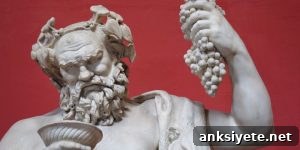 Consider two archetypes: the pleasure-seeker and the virtue-driven achiever. Extreme hedonists prioritize immediate gratification and avoid discomfort, while eudaimonic types tolerate short-term sacrifice for long-term purpose and excellence.
Mythology and culture give vivid images: in Greek myth, Dionysus represents instinct, ecstasy, and revelry, while Apollo stands for order, skill, and measured practice. Historical figures associated with hedonic lifestyles include flamboyant pleasure-seekers and socialites; figures associated with eudaimonia include ascetics, thinkers, spiritual leaders, and disciplined innovators who pursue long-term visions.
Fiction offers sharp contrasts too—think of Jay Gatsby’s endless parties as hedonic excess versus a devoted artist or scientist absorbed in meaningful work and growth. Real-world examples of balanced flourishing include people who combine deep relationships, meaningful work, and moments of joy and leisure—lives rich in both pleasure and purpose.
Psychological Theories Behind the Concepts
The theoretical debate
Researchers disagree about whether eudaimonia should be treated as an orientation, a set of behaviors, a trait, or a state. Some frame it as an orientation toward personal growth and meaningful engagement; others measure it via specific activities and experiences that reflect self-realization and excellence.
Hedonia is more straightforward in psychological terms: it refers to subjective affective states such as enjoyment, positive emotion, and life satisfaction.
Human flourishing
Modern positive psychology often treats flourishing as multidimensional. Scholars such as Seligman have argued that using our strengths for the greater good is central to eudaimonia. Evidence suggests that people who report high levels of both hedonic and eudaimonic wellbeing tend to flourish most; pursuing only one dimension rarely produces sustained thriving.
Flow
The concept of flow—being fully absorbed in challenging, skillful activity—bridges hedonic and eudaimonic experiences. Flow can feel intensely pleasurable yet also supports long-term growth and mastery. Activities that produce flow include playing music, creative work, sports, writing, or any endeavor that challenges and engages skills deeply.
Thus, pleasure and meaning are not always opposed: deeply engaging pursuits can provide both enjoyment and development.
A Look at Eudaimonic Motivation
 Researchers view eudaimonic motivation as a drive toward personal growth, maturity, and using one’s best qualities in ways that align with core values. This can include transcending narrow self-interest and contributing to others or community wellbeing.
Studies comparing people who pursue hedonic motives, eudaimonic motives, both, or neither have found the best outcomes among those who combine both motives: they report more vitality, inspiration, positive affect, meaning, and transcendence. In short, integrating pleasure with purpose yields stronger wellbeing.
How to Reach Eudaimonic Happiness
Practical strategies to cultivate eudaimonic wellbeing include:
- Clarify your values and align daily choices with them.
- Set meaningful long-term goals and take steady steps toward them.
- Practice virtues such as temperance, patience, and integrity.
- Prioritize physical and mental health as the foundation for growth.
- Cultivate deep, supportive relationships and contribute to others.
- Seek activities that create flow and that challenge you to develop skills.
- Balance striving with enjoyment—don’t eliminate pleasure from life.
Combining purposeful pursuits with enjoyable experiences tends to foster the deepest, most resilient forms of happiness.
3 Activities for Your Coaching Sessions
 Coaches can help clients explore their unique definition of flourishing. Here are three practical prompts:
1. Question – The meaning of fulfillment
Ask: What does fulfillment mean to you? Probe why those elements matter and how they connect to deeper values.
2. Question – Feeling fully alive
Invite the client to recall a moment they felt fully alive. Where were they, who was present, and what senses stand out? Analyze what made that experience meaningful and what ingredients could be replicated.
3. Question – Real fun
Ask: When did you last laugh until you cried? What brought that joy, and how can you introduce more of it into daily life?
2 Scales & Questionnaires to Measure Wellbeing
Assessment helps locate where a person stands on hedonic and eudaimonic dimensions. Common measures for eudaimonic wellbeing include Ryff’s Scales of Psychological Well-Being, which assess self-acceptance, positive relations, personal growth, purpose, environmental mastery, and autonomy.
The Questionnaire for Eudaimonic Well-Being focuses on self-discovery, perceived development of one’s potentials, meaning, effort toward excellence, intensive involvement in activities, and personal expressiveness. Hedonic wellbeing is typically assessed via life satisfaction scales and positive/negative affect measures.
Combining these instruments provides a fuller picture of flourishing.
Most Fascinating Books on the Topic
For deeper reading, consider these accessible and scholarly works that explore happiness, virtue, and flourishing from different angles:
1. The Good Life: Lessons from the World’s Longest Scientific Study of Happiness — Robert Waldinger and Marc Schulz
Based on the Harvard Study of Adult Development, this book emphasizes the central role of relationships in long-term health, happiness, and success.
2. Aristotle’s Way: How Ancient Wisdom Can Change Your Life — Edith Hall
A clear, engaging guide to applying Aristotle’s ideas about virtue and the good life to contemporary living.
3. Handbook of Eudaimonic Well-Being — Joar Vittersø (editor)
An academic collection that surveys theory and empirical research on eudaimonia, exploring emotions, health, motivation, wisdom, and more.
A Take-Home Message
Happiness is multidimensional. The best evidence suggests that combining hedonic pleasures with eudaimonic pursuits produces the most durable and enriching form of wellbeing. Strive for meaningful goals, cultivate virtues and relationships, and allow room for enjoyment—together they build a life well lived.
- Aristotle. (2009). The Nicomachean Ethics.
- Bauer, J. J., Schwab, J. R., & McAdams, D. P. (2011). Self-actualizing: Where ego development finally feels good? The Humanistic Psychologist, 39, 121–136.
- Csíkszentmihályi, M. (1990). Flow: The Psychology of Optimal Experience.
- Deci, E. L., & Ryan, R. M. (2008). Hedonia, eudaimonia, and well-being: An introduction. Journal of Happiness Studies, 9(1), 1–11.
- Huta, V., & Waterman, A. S. (2014). Eudaimonia and its distinction from hedonia. Journal of Happiness Studies, 15(6), 1425–1456.
- Keyes, C. L. M. (2002). The mental health continuum: From languishing to flourishing. Journal of Health and Social Behavior, 43, 207–222.
- Nakamura, J., & Csíkszentmihályi, M. (2001). Flow theory and research. In Handbook of Positive Psychology.
- Peterson, C., Park, N., & Seligman, M. E. P. (2005). Orientations to happiness and life satisfaction. Journal of Happiness Studies, 6, 25–41.
- Ryff, C. D. (1989). Happiness is everything, or is it? Journal of Personality and Social Psychology, 57, 1069–1081.
- Waterman, A. S., et al. (2010). The Questionnaire for Eudaimonic Well-Being: Psychometric properties. The Journal of Positive Psychology, 5(1), 41–61.