
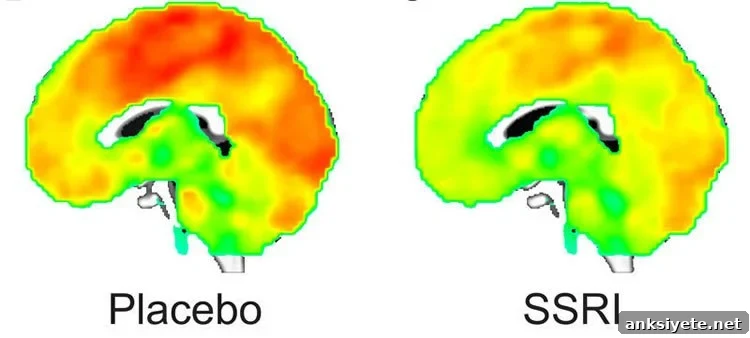
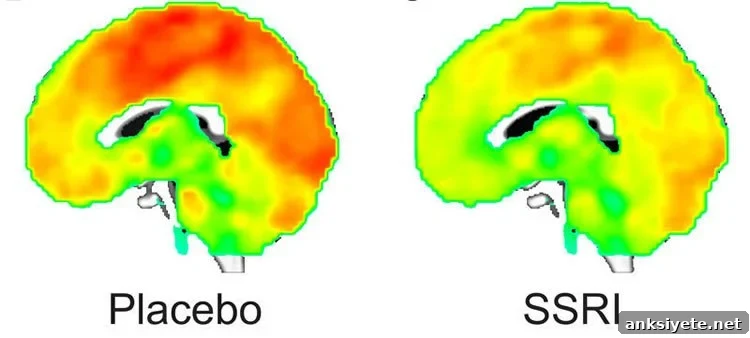
One single dose of the antidepressant escitalopram alters resting-state network connectivity across the brain within hours.
Researchers at the Max Planck Institute for Human Cognitive and Brain Sciences in Leipzig have shown that escitalopram, a commonly prescribed selective serotonin reuptake inhibitor (SSRI), produces measurable changes in brain-wide functional connectivity just a few hours after intake. The active compound in escitalopram increases the availability of the neurotransmitter serotonin, and this modulation appears to reconfigure which resting-state networks in the brain fluctuate together. These rapid, widespread shifts in synchronous activity were unexpected because clinical antidepressant effects typically emerge only after weeks of treatment. The new findings indicate that serotonergic modulation of intrinsic functional connectivity begins long before clinical improvement is observed.
Serotonin is a fundamental neuromodulator involved in sensory processing, cognitive control, emotion regulation, basic bodily functions, and motor activity. Serotonergic neurons are concentrated in brainstem nuclei and project widely to subcortical and cortical regions that support higher cognitive functions. Because serotonin influences many systems, altering its availability can change how separate brain regions communicate at rest.
In the study, healthy volunteers with no prior history of antidepressant use underwent a 15-minute resting-state functional MRI (fMRI) scan three hours after taking a single oral dose of escitalopram. Resting-state fMRI measures blood-oxygen-level-dependent (BOLD) signals and reveals spontaneous, synchronous fluctuations across the brain when participants are not performing any specific task. During scanning, participants were instructed to relax and let their minds wander while the research team reconstructed three-dimensional maps of individual brains and their functional networks.
Advanced, voxel-level network analyses quantified how many connections each brain location had with the rest of the brain and how those connections changed after escitalopram. The investigators found a consistent pattern: a pronounced reduction in resting-state functional connectivity across the majority of cortical and many subcortical regions, accompanied by increased intrinsic connectivity in the cerebellum and thalamus. As Julia Sacher of the Max Planck Institute explains, these results underscore serotonin’s capacity to modulate intrinsic functional coupling across the whole brain rather than only localized regions.
These early, drug-induced reconfigurations of resting-state networks have several important implications. First, they reveal that SSRIs can rapidly influence large-scale brain organization, even though symptomatic relief may take weeks to appear. Second, the specific pattern of decreased cortical connectivity along with increased connectivity in thalamic and cerebellar regions provides clues about the pathways through which serotonergic drugs alter information processing and emotional regulation. Third, resting-state connectivity measures could become a useful biomarker to track early neural responses to antidepressant treatment.
Building on these findings, the research team plans to investigate how resting-state network changes differ across clinical groups. Key future goals include comparing early connectivity shifts between patients who later respond to antidepressant therapy and those who do not. If reliable differences are found, early resting-state fMRI after an initial dose could help predict treatment outcome and guide personalized medication strategies. Such predictive markers would be valuable for reducing trial-and-error prescribing and shortening the time until effective treatment is identified for individuals with depression.
In summary, a single dose of escitalopram induces rapid, brain-wide alterations in resting-state functional connectivity that highlight serotonin’s broad modulatory role. These results open new avenues for understanding SSRI mechanisms and for developing early biomarkers to improve personalized depression treatment.
Contact: Dr. Julia Sacher – Max Planck Institute for Human Cognitive and Brain Sciences
Source: Max Planck Institute press release on escitalopram and brain connectivity
Image credit: Schaefer et al., adapted from Max Planck Institute materials
Original research: “Serotonergic Modulation of Intrinsic Functional Connectivity” by Alexander Schaefer, Inga Burmann, Ralf Regenthal, Katrin Arélin, Claudia Barth, André Pampel, Arno Villringer, Daniel S. Margulies, and Julia Sacher, Current Biology. Published online September 18, 2014. DOI: 10.1016/j.cub.2014.08.024