
Researchers studying stroke survivors who lost the ability to spell have identified the specific brain regions that support written word production.
In a new report appearing in the journal Brain, neuroscientists at Johns Hopkins University connect distinct types of spelling impairments to damage in separate areas of the brain, offering fresh insight into how language and memory work together when we write words.
“Spelling breakdowns are not uniform — different kinds of errors reflect different failures in the brain’s writing system,” said Brenda Rapp, lead author and professor in the Department of Cognitive Sciences. “Depending on which component of the system is disrupted, patients show different error patterns.”
Rapp and colleagues reviewed 15 years of clinical cases, analyzing 33 people who developed spelling impairments after strokes. Some patients showed deficits consistent with impaired orthographic long-term memory — the stored knowledge of how words are spelled — while others showed impairments more consistent with orthographic working memory — the ability to hold and sequence letters during the act of writing.
Patients with long-term memory problems often could not reliably retrieve stored spellings and therefore produced approximations or educated guesses. For example, a predictable word like “camp” might be spelled correctly, but a more irregular word such as “sauce” could become “soss.” In severe cases, attempts at words such as “lion” could yield unrelated forms like “lonp,” “lint,” or even a semantically related word like “tiger.”
By contrast, patients with orthographic working memory deficits generally retained knowledge of letter identities but struggled to select and order those letters correctly during production. Their attempts could show missing, transposed, or extra letters — “lion” might appear as “liot,” “lin,” “lino,” or “liont.” These differences in error type provide behavioral markers that distinguish long-term memory errors from working memory errors.
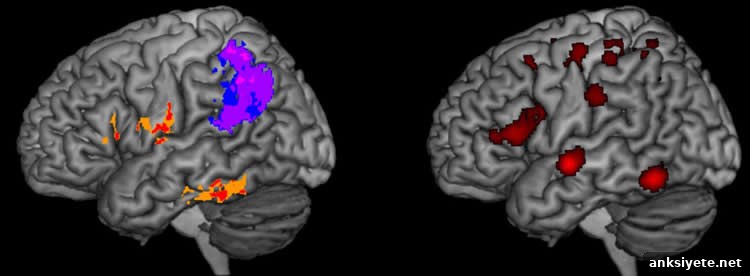
The researchers used computerized lesion-symptom mapping to relate each patient’s pattern of spelling errors to the location of brain damage. They found that orthographic long-term memory impairments were linked to lesions in two distinct regions of the left hemisphere: one in the posterior inferior frontal area and another in the left ventral temporal cortex. In contrast, orthographic working memory deficits were associated primarily with damage in the left parietal cortex, centered on the intraparietal sulcus.
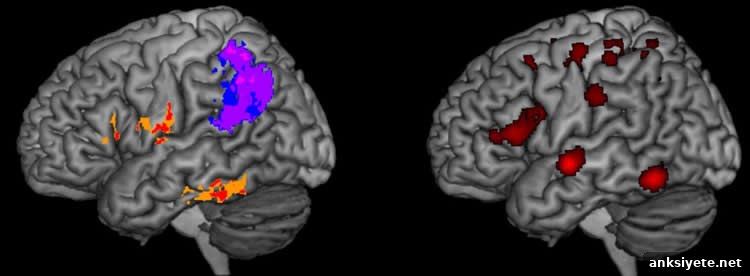
“I was surprised by how spatially separate the regions supporting these two subcomponents are,” Rapp said. “Given how closely these processes interact during normal spelling, one might expect them to be harder to separate anatomically. Instead, the lesion data show clear, distant loci for long-term orthographic knowledge and for the working-memory processes that assemble letters for production.”
These findings extend our understanding of written language by demonstrating that long-term orthographic representations and orthographic working memory depend on different neural substrates. The results help explain why patients with superficially similar spelling problems may require different rehabilitation strategies: interventions that strengthen retrieval of stored spellings should differ from those that support online letter sequencing and temporary storage.
The study’s co-authors are Johns Hopkins postdoctoral fellow Jeremy Purcell; School of Medicine professor Argye E. Hillis; Rita Capasso of S.C.A. Associates in Rome, Italy; and Gabriele Miceli, professor at the University of Trento, Italy. Funding was provided by National Institutes of Health grants DC012283 and DC05375.
Source: Jill Rosen, Johns Hopkins University. Image credit: Researchers / University of Southampton.
Abstract
Neural bases of orthographic long-term memory and working memory in dysgraphia
Spelling requires retrieving information about a word’s letters and their order from long-term memory and maintaining that information in working memory while the motor system produces the serial output. Although prior work has shown that brain lesions can selectively impair these orthographic processes, the precise neurotopographic distribution of the supporting substrates has remained unclear. Using voxel-based lesion-symptom mapping, the authors analyzed 27 individuals with dysgraphia following stroke who showed behavioral profiles indicating selective deficits in either orthographic long-term memory or orthographic working memory, along with six individuals who had deficits affecting both systems. The results provide clear evidence for distinct neural substrates: orthographic long-term memory deficits centered in either left posterior inferior frontal cortex or left ventral temporal cortex, and orthographic working memory deficits arising primarily from lesions of left parietal cortex centered on the intraparietal sulcus. These findings clarify the relationship between written language processes and other cognitive systems such as spoken language and working memory.
Original research: “Neural bases of orthographic long-term memory and working memory in dysgraphia” by Brenda Rapp, Jeremy Purcell, Argye E. Hillis, Rita Capasso, and Gabriele Miceli. Published online December 17, 2015. DOI: 10.1093/brain/awv348.