
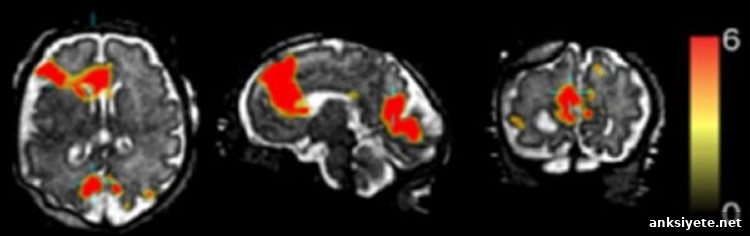
Summary: Researchers have developed a new technique for imaging functional activity in fetal brains, providing clearer insight into how functional brain networks form before birth.
Source: NIH/NIBIB.
Method makes imaging of moving subjects possible
Researchers supported by the National Institute of Biomedical Imaging and Bioengineering (NIBIB) at the University of Washington have introduced a novel approach to image functional activity in individual fetal brains. Their method overcomes a long-standing limitation of functional magnetic resonance imaging (fMRI): image distortion caused by subject motion. Because fetuses and young children move unpredictably, conventional fMRI can blur or mislocalize active regions, making it difficult to study developing brain networks in natural conditions.
By developing motion-correction and reconstruction techniques, the team produced four-dimensional (4D) reconstructions of brain activity in moving subjects. This advance makes it feasible to study subjects who cannot remain still for long periods—especially fetuses during pregnancy and very young infants—and supports investigations of normal brain development as well as how maternal environment, nutrition, or stress might affect fetal functional brain maturation.
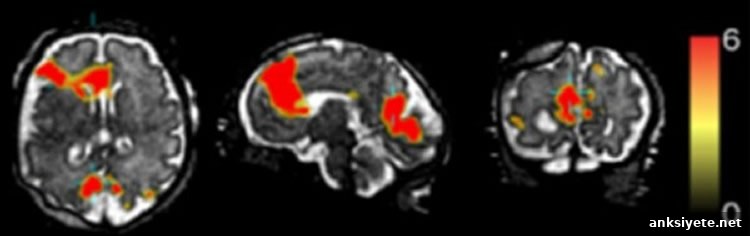
The study focused on the default mode network, a set of brain regions that are active when a person is not engaged in a specific task—during rest, daydreaming, or mind-wandering. Although fetal brains spend much of their time in a resting state, little is known about how the default mode network emerges and organizes during prenatal development. The new technique lets researchers observe this network in individual fetuses without the confound of motion-related artifacts.
“This is one of the first studies to examine the naturally developing default mode network in individual human fetuses,” says Vinay Pai, Ph.D., director of the Division of Health Informatics Technologies at NIBIB. Removing motion as a limiting factor “allows you to study more natural developmental stages.”
To create a 4D “movie” of fetal default mode network activity, the team used functional MRI, which detects regional brain activity by measuring changes in blood flow: active regions recruit more blood. Movement—either from the fetus or from the mother’s breathing—can blur images and shift anatomical focus, obscuring where activity signals originate. Instead of collecting a single measurement per spatial position at each time point, the researchers acquired multiple measurements that captured slightly different perspectives. These overlapping measurements were combined and realigned to estimate what activation patterns would look like over a short time window of a few minutes.
The method was validated first in adults who were asked to move deliberately during scanning. After demonstrating that the approach could recover meaningful brain activity signals in moving adult subjects, the researchers scanned eight fetuses between 32 and 37 weeks of gestation. Prior work has shown that infants born prematurely at that age already exhibit active default mode networks. The reconstructed datasets were compiled into four-dimensional views depicting each fetal brain’s activity across a five-minute interval.
“There has been limited exploration of when activity networks—groups of brain areas that begin to operate together—first appear and in what cell types and tissues they arise,” says Colin Studholme, Ph.D., professor of pediatrics and bioengineering at the University of Washington and senior author of the study. “This work moves beyond collecting single snapshots from many babies and toward building a four-dimensional map of how brain activity should emerge in a normally developing infant.”
The reconstruction and analysis pipeline can be applied broadly. Possible uses include comparing brain development between premature and full-term infants, assessing the prenatal effects of alcohol, drug exposure, or maternal stress, and investigating whether early functional differences precede later neurodevelopmental disorders such as autism. The technique is not limited to brain imaging: the investigators also plan to study placental structure and function and how placental development may influence fetal brain maturation.
Immediate practical benefits are clear: techniques that reduce the impact of motion remove a major obstacle in fetal imaging. “Techniques that minimize the effect of motion resolve a lot of problems,” says Pai. “In fetal imaging, you don’t have too many options.”
Funding: The team received support from the National Institute of Biomedical Imaging and Bioengineering (NIBIB, grant EB017133), the National Institute of Neurological Disorders and Stroke (NINDS, grant NS055064), and the National Center for Advancing Translational Sciences (grant UL1TR000423).
Source: Teal Burrell – NIH/NIBIB
Image Source: NeuroscienceNews.com image credited to S. Seshamani, et al.
Original Research: Abstract for “Detecting default mode networks in utero by integrated 4D fMRI reconstruction and analysis” by Sharmishtaa Seshamani, Anna I. Blazejewska, Susan McKown, Jason Caucutt, Manjiri Dighe, Christopher Gatenby, and Colin Studholme in Human Brain Mapping. Published online August 11, 2016. DOI: 10.1002/hbm.23303
MLA: NIH/NIBIB. “New Technology Reveals Fetal Brain Activity.” NeuroscienceNews. NeuroscienceNews, 13 October 2016.
APA: NIH/NIBIB. (2016, October 13). New Technology Reveals Fetal Brain Activity. NeuroscienceNews.
Chicago: NIH/NIBIB. “New Technology Reveals Fetal Brain Activity.” Accessed October 13, 2016.
Abstract
Detecting default mode networks in utero by integrated 4D fMRI reconstruction and analysis
There is growing interest in detecting functional connectivity in subjects whose motion cannot be controlled during MRI scans, particularly for in utero imaging. Addressing this challenge requires two main advances: multiecho acquisitions and reconstruction methods that accommodate significant between-slice motion in multislice protocols. This work presents a four-dimensional (4D) iterative image reconstruction framework that estimates a spatially and temporally consistent time series from motion-scattered slices in multiecho fMRI datasets. Quantitative MRI corrections for artifacts are integrated into the framework. The approach was evaluated using adult studies with and without deliberate motion to tune parameters and validate the pipeline. Independent component analysis (ICA) was then applied to the 4D reconstructions from both adult and fetal in utero studies where resting-state activity was perturbed by motion. Results show quantitative improvements in reconstruction quality compared with conventional 3D reconstruction approaches and demonstrate the ability to detect the default mode network in moving adults and fetuses at the single-subject and group-analysis levels.
“Detecting default mode networks in utero by integrated 4D fMRI reconstruction and analysis” by Sharmishtaa Seshamani, Anna I. Blazejewska, Susan McKown, Jason Caucutt, Manjiri Dighe, Christopher Gatenby, and Colin Studholme in Human Brain Mapping. Published online August 11, 2016. DOI: 10.1002/hbm.23303