
Summary: Engineers and clinicians have created a flexible, steerable microcatheter that lets neurosurgeons control the tip in any direction while navigating the brain’s intricate arteries and vessels.
Source: UCSD
A multidisciplinary team of engineers and physicians at the University of California San Diego has developed a soft, steerable microcatheter that gives neurosurgeons precise three-dimensional control at the device tip while traveling through the brain’s vasculature. Inspired by natural structures such as insect legs and microbial flagella, the catheter uses microhydraulic actuation to bend and orient its tip inside tiny, tortuous vessels.
The team reports the breakthrough in the Aug. 18 issue of Science Robotics and validated the device in live porcine models at UC San Diego’s Center for the Future of Surgery.
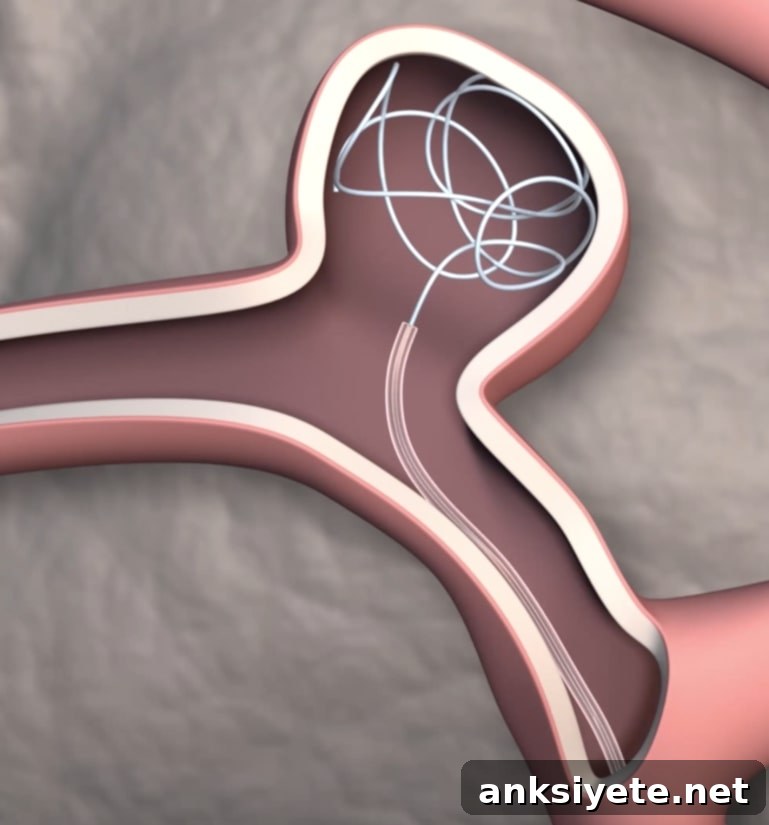
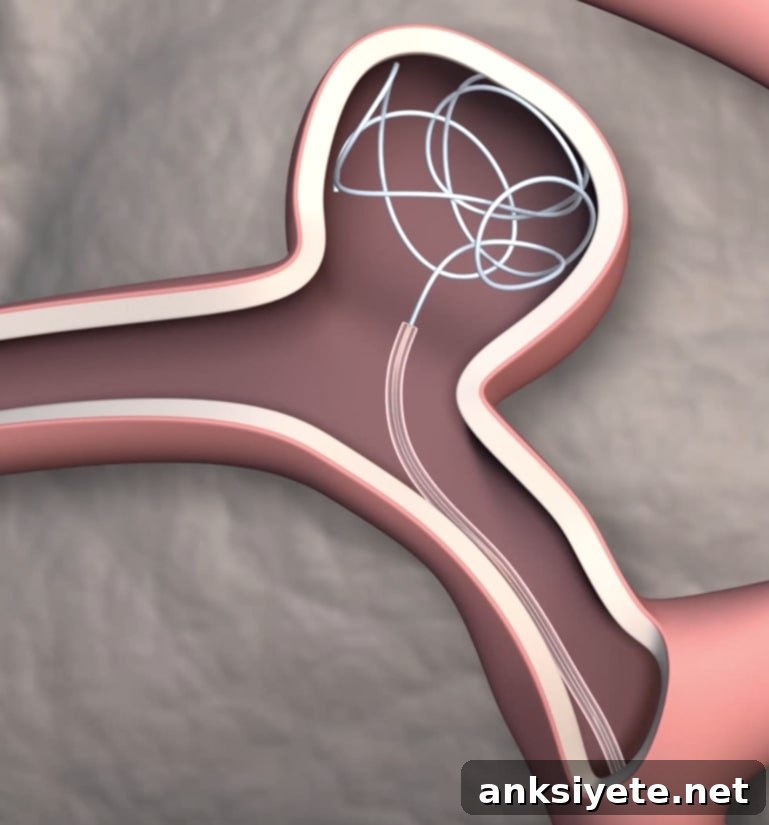
Unruptured intracranial aneurysms—thin, balloon-like bulges on cerebral arteries—affect roughly one in 50 people in the United States and more than 160 million people globally. Many aneurysms are difficult or impossible to reach with current tools: studies indicate up to 25% of cases present access challenges. When aneurysms rupture, outcomes are often catastrophic—more than half of patients with a rupture die, and many survivors face long-term disability.
“One major challenge in neurointervention is steering catheters into the delicate, deep recesses of the brain,” said Dr. Alexander Khalessi, chair of Neurological Surgery at UC San Diego Health. “This soft, steerable catheter demonstrates a proof of concept that could significantly expand our ability to treat aneurysms and other cerebral disorders.”
Current endovascular procedures typically rely on guidewires inserted from an access point near the groin. Surgeons use curved-tip guidewires to navigate arterial branches and junctions, but the guidewire must be withdrawn before certain treatments can be delivered. When the guidewire is removed, the catheter often springs back toward its original shape, losing access to the target and making it hard to deploy coils or other devices reliably.
Commercial steerable catheters are not available for most neurosurgical applications because cerebral vessels are extremely small—submillimeter in diameter—and device lengths must reach tens of centimeters. At that microscale, forces such as gravity, electrostatics, and van der Waals interactions complicate fabrication and handling. “Many critical vessels are among the most tortuous and fragile in the body,” said James Friend, a professor of engineering and medicine and the paper’s corresponding author. “Robotic and deformable devices at the required scale have been lacking.”
Bioinspired, soft-robotic design
To address these challenges, the team combined soft robotics concepts with biological inspiration. “We drew on flagella, insect legs, and other examples of microscale hydraulics and large-deformation structures,” said Gopesh Tilvawala, the study’s first author. That approach led to a hydraulically actuated soft-robotic microcatheter tip capable of controlled, large bending at submillimeter scale.
Novel fabrication and simulation
The researchers developed a new casting method to deposit concentric silicone layers with varying stiffnesses at extremely small scales. The finished catheter is a flexible silicone tube containing four microchannels in its wall, each roughly half the diameter of a human hair. By selectively pressurizing these channels with saline, the tip bends in controlled directions.
Extensive computer modeling guided the catheter’s geometry: the number and placement of internal channels, material stiffness gradients, and the hydraulic pressures required for reliable actuation. Surgeons operate the device using a handheld controller that injects saline into selected channels to steer the tip. Using saline as the working fluid enhances safety, since accidental leakage would introduce harmless fluid into the bloodstream. The steerable tip is radiopaque and visible under X-ray imaging, enabling precise guidance during procedures.
Clinical potential and next steps
Surgeons say the technology could enable maneuvers that are difficult or impossible with current tools, such as sharp 180-degree turns while maintaining stable positioning and minimizing “kick-out” from the parent artery. “This advance may let us treat aneurysms, strokes, and other brain conditions that previously were out of reach,” said Dr. David Santiago-Dieppa, a neurosurgeon at UC San Diego Health.
Physicians expect steerable microcatheters to improve procedural access and efficiency, shorten operative time, reduce radiation exposure, and allow more consistent deployment of embolic devices. The team plans additional statistically powered animal studies followed by first-in-human trials to confirm safety and effectiveness.
Funding: The work received support from the American Heart Association, the American-Australian Association Sir Keith Murdoch Scholarship, UC San Diego’s Galvanizing Engineering in Medicine program, the Chancellor’s Research Excellence Scholarship, and the National Institutes of Health.
About this neurotech research news
Author: Ioana Patringenaru
Source: UCSD
Contact: Ioana Patringenaru – UCSD
Image: The image is credited to UCSD
Original Research: Closed access.
“Soft robotic steerable microcatheter for the endovascular treatment of cerebral disorders” by Alexander Khalessi et al., Science Robotics
Abstract
Soft robotic steerable microcatheter for the endovascular treatment of cerebral disorders
Endovascular catheters commonly lack distal dexterity, creating access challenges in neurointervention. Up to 25% of aneurysm cases are complicated by the inability to maneuver microcatheter tips through highly tortuous cerebral vessels. The authors solve this with submillimeter-diameter, hydraulically actuated hyperelastic polymer structures integrated at the catheter tip to provide active steerability and full 3D orientation under manual control.
Using saline as the working fluid, the system enables guidewire-free navigation, secure access, and coil deployment in vivo, demonstrating safety and practical usability. The device proved capable of navigating vessels and delivering embolization coils in a live porcine model, highlighting the potential of microhydraulic soft robotics to address difficult access and treatment problems in endovascular intervention.