
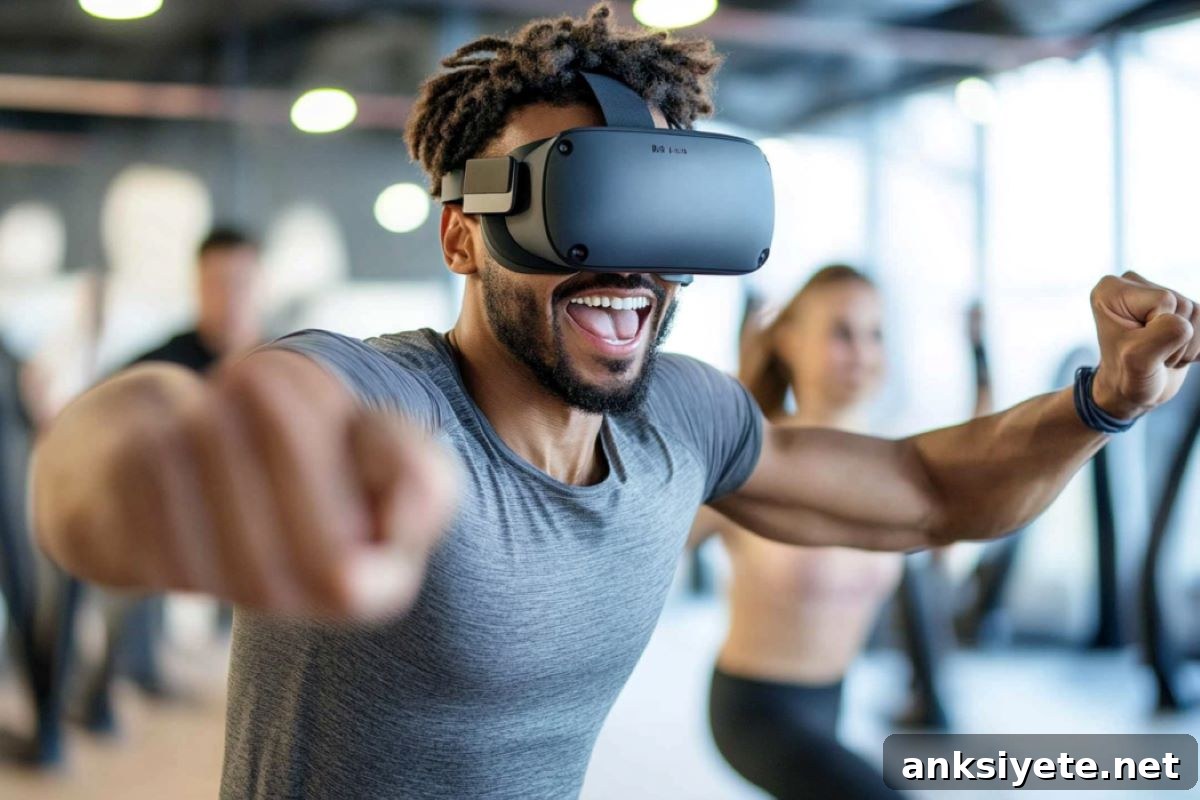
Summary: Adaptive VR exergames that adjust challenge and rewards based on a player’s emotional state can improve motivation, enjoyment, and long-term adherence to exercise. By combining physiological and behavioral sensors—such as heart rate monitors, pupil tracking, facial-expression analysis, and electrodermal activity—these systems can detect frustration, boredom, stress, or engagement in real time and change the game to keep users motivated.
Researchers at the University of Bath tested a set of sensing techniques and signal-processing approaches that make it possible to reliably read emotional signals during physical activity. Their results show that emotionally aware exergames can give extra encouragement when users struggle, and increase difficulty when users are ready, addressing a major barrier to sustained exercise: quitting because workouts become uncomfortable or boring.
Key Facts:
- VR exergames can adapt gameplay and difficulty in real time using emotional data.
- Sensors can track pupil size, facial expressions, heart rate, skin conductance, and sweat to infer emotional states.
- Applying multiple physiological sensors and cleaning noisy signals can improve long-term engagement in fitness routines.
Source: University of Bath
Virtual reality exercise games—known as exergames—combine immersive digital environments with physical movement, offering an engaging alternative to traditional workouts. However, like conventional fitness programs, exergames often struggle with user dropout: when players become uncomfortable, stressed, or bored, they stop playing. Computer scientists at the University of Bath set out to create exergames that respond to a player’s emotional state in real time, adapting the virtual environment and challenge level to sustain engagement.
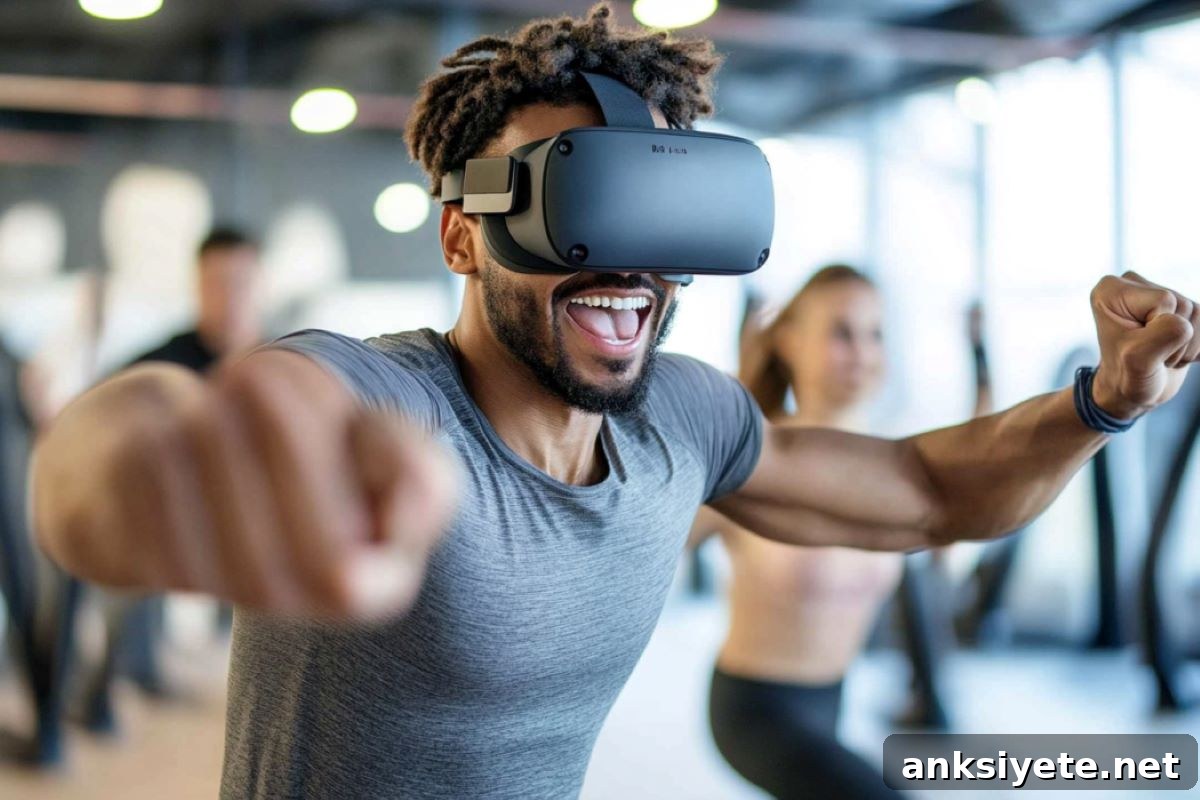
Dr Dominic Potts, lead author of the study, explained the motivation behind the work: “When it comes to physical exercise in all forms, motivation and exercise adherence are huge problems. With exergaming, we can address this issue and maximise a person’s enjoyment and performance by adapting the challenge level to match a user’s abilities and mood. Exercise games that are completely adaptive will sense a person’s emotions and give them more ‘rewards’ when they’re struggling and more obstacles when they’re ready for a new challenge.”
To make emotional adaptation practical during movement, the Bath team combined a range of sensors that can be embedded in VR headsets and common wearables. Historically, many sensing approaches worked well only when users were still; movement and environment-driven changes introduced “background noise” that masked emotional signals. For example, pupil dilation sensors are sensitive to virtual-environment lighting, and sweat or heart-rate readings can be influenced by exercise intensity rather than emotional state alone.
Study design and results
Seventy-two participants took part in a controlled experiment involving a static VR bike race. Researchers monitored pupil size, facial expressions, heart rate, sweating, skin inflammation, and electrodermal activity while participants moved through four virtual environments designed to evoke specific emotions—happiness, sadness, stress, and calm—at low, medium, and high exercise intensities. Combining multiple physiological measures and applying careful signal cleaning allowed the team to create accurate, per-workout profiles of each user’s changing emotional state.
From this work the researchers distilled a set of practical guidelines for developers building emotionally adaptive exergames. Key recommendations include correcting pupil-tracking for luminosity changes in virtual scenes, accounting for baseline sweat and skin conductance levels when predicting stress or arousal, cleaning sensor data in real time to remove motion-related artifacts, and using multiple complementary sensors to improve the reliability of emotional-state predictions.
The study was presented at the CHI Conference on Human Factors in Computing Systems, a leading international forum for human-computer interaction research, where the paper received an honourable mention award. The authors hope these findings will help game designers create more immersive, emotionally intelligent exergames that keep people cycling, running, or lifting longer than they would otherwise.
Dr Christof Lutteroth, director of the REVEAL research centre and co-investigator at CAMERA, commented on the long-term vision: “In the long run, our objective is to make VR exercise emotionally intelligent. We fully expect VR physical activity to explode in popularity in the years ahead—school children are already using them as part of their exercise programmes and they are also being used in rehab and sports science—so it’s important to focus on making technology that’s emotionally intelligent and adaptive to differences between users.”
About this neurotech and exercise research news
Author: Chris Melvin
Source: University of Bath
Contact: Chris Melvin – University of Bath
Image: The image is credited to Neuroscience News
Original Research: The findings were presented at CHI ’24: Proceedings of the CHI Conference on Human Factors in Computing Systems